

Learn the Meaning, Examples, and Feelings of Wabi-Sabi in Japan
What Is Wabi-Sabi?
Have you ever looked at something old or slightly broken and thought, “It’s beautiful”?
That feeling may come from a uniquely Japanese sense of beauty.
Wabi-sabi(侘び寂び)is a special concept in Japanese culture.
It describes the ability to find beauty in imperfection.It also values age, simplicity, and quietness.
This idea is not easy to explain clearly.However, it can be understood through feeling and atmosphere.
As a simple image:
Wabi-sabi = beauty in imperfection and quiet simplicity
This concept expresses beauty in things that are incomplete. It also values simplicity, quietness, and natural imperfection.
The Difference Between Wabi and Sabi
Wabi(侘び) and sabi (寂び)are different words. Each has its own meaning.
When combined, they form the expression wabi-sabi.
Wabi (Simplicity and Modesty)
Wabi refers to beauty in simplicity. It values a simple and modest style.
- Examples:
- A tea room with few decorations
- A small garden
- Simple pottery or dishes
Sabi (Beauty of Age and Time)
Sabi refers to beauty that comes with time. It values age, wear, and natural change.
- Examples:
- An old temple
- A wooden building
- Faded colors, worn wood, or creaking floors
Where Can You Find Wabi-sabi?
Wabi-sabi is not the name of a specific object. It is a way of seeing beauty.
It can be found in tea rooms, gardens, nature, and daily life.
Because of this, the question is not “Where is it?”
What matters is how you feel it.
・Wabi-sabi in Nature
There are many moments of wabi-sabi in nature.
For example, moss, fading flowers, and leaves that have changed color.
Moss is not a noticeable plant. However, it grows quietly over time. It slowly becomes part of the place.
Its calm and modest beauty can move people.
Beauty is not only in full bloom. There is also beauty in things that are fading.
The process of change and the sense of impermanence are also part of wabi-sabi.
・Wabi-sabi in Daily Life
Wabi-sabi is not only found in special places. It also exists in daily life.
Used tools and slightly old objects have a unique charm. They are not new, but they show the passage of time.
Because of this, you can feel a person’s life in them. This quiet beauty is also wabi-sabi.
・Tea Rooms
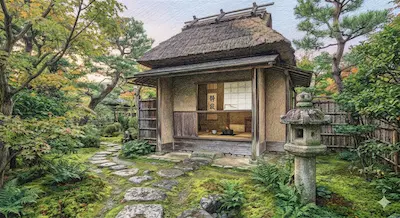
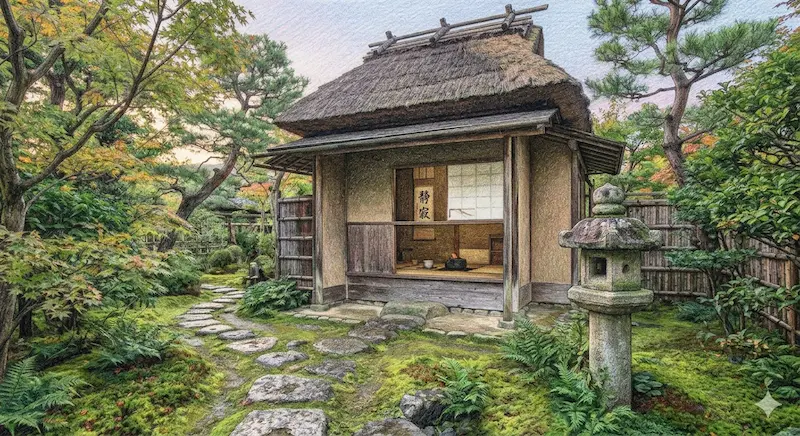
A tea room (chashitsu, 茶室) is a small and quiet space. There are very few decorations.
Natural materials like wood and paper are used. This simple space creates a calm and peaceful beauty.
・Old Buildings
Old buildings show the passage of time. You can see it in wooden pillars and floors.
When we are young, we may think they are old and inconvenient.
However, as we grow older, we begin to see their value.
・Kintsugi
Kintsugi (金継ぎ) is a technique to repair broken pottery with gold. It does not hide the cracks.
Instead, it highlights them.
This idea accepts imperfection. It is closely connected to wabi-sabi.
The Way of Thinking Behind Wabi-sabi
So far, we have seen wabi-sabi in tea rooms, nature, and daily life.
Wabi-sabi is not only about the beauty of objects. It is also deeply connected to how we feel and how we think.
How Do You Feel Wabi-sabi?
You may feel it in a quiet moment. Sometimes, it is simply in the air around you.
It is not something you can clearly see. Instead, it is felt as a quiet atmosphere.
For example, think of a quiet morning. There is little sound. The air feels calm and still.
You can also feel it in moments of change.
For example, flowers after full bloom. Or the air just before a new season begins.
In this way, wabi-sabi is not only about objects. It is also found in time and change.
It is a quiet and subtle beauty. That is the essence of wabi-sabi.
Wabi-sabi and the Japanese Way of Thinking
Wabi-sabi is closely connected to Japanese ways of thinking.
Japan has four clear seasons: spring, summer, fall, and winter. Because of this, people learn to see beauty in change.
Things do not stay the same. Instead of valuing permanence, meaning is often found in change.
In Japan, quietness and subtle expression are also valued. People pay attention to things that do not stand out.
They also notice small changes.
Wabi-sabi comes from this kind of sensitivity. It is a way of seeing beauty in these moments.
It is also related to Zen(禅). In Zen, simplicity and stillness are important.
Because of this, Zen and wabi-sabi share similar ideas.
How to Use the Word Wabi-sabi
This word is not commonly used in everyday conversation. It is mainly used when talking about Japanese culture and beauty.
It does not refer to a specific object. Instead, it describes a way of thinking and a certain atmosphere.
You can think of it as a kind of category or concept. This makes it easier to understand.
Why Wabi-sabi Is Difficult to Understand
This idea is different from the belief that perfection is beautiful. It finds value in old and imperfect things rather than new ones.
Because of this, simple things may seem poor or plain to some people. This can lead to misunderstandings.
It is not easy to understand through words alone. It is better to learn it slowly through feeling and experience.
Conclusion: What Is Wabi-sabi?
Wabi-sabi is something you understand through feeling. Its beauty can be found in tea rooms, old buildings, and simple objects.
Some values are hard to notice when we are young. As we grow older, we begin to see things differently.
Wabi-sabi is an important idea for understanding the depth of Japanese culture.
What kind of moments make you feel wabi-sabi?
Learn more about cherry blossoms in Japan: Why Are Cherry Blossoms So Special in Japan?
Discover Japanese seasonal words: What are Japanese Seasonal Words? A Guide to the Four Seasons
Japanese of the Day / 今日の日本語
- Word:自然 (shizen) – nature
- Meaning:Everything in the natural world, like plants, trees, and the seasons.
- Example:自然の中でリラックスします。(Shizen no naka de rirakkusu shimasu.)
(I relax in nature.) - Fun Fact:Nature is very important in Japanese culture. It is closely connected to ideas like wabi-sabi.
◆ Would you like to talk about Japanese culture? ◆
In the Culture Course, you can learn to speak about Japanese culture with me.
侘び寂びとは?
古くて少し壊れているものを見て、「きれいだ」と感じたことはありますか。
それは、日本独特の美意識かもしれません。
「侘び寂び」は、日本文化を表す特別な言葉です。
完璧ではないものや、古さや静けさの中に美しさを見つける感覚を指します。
この言葉は、はっきりと説明するのが難しいです。しかし、雰囲気や感覚として理解することができます。
イメージとしては、
Wabi-sabi = beauty in imperfection and quiet simplicity
(不完全なものの中にある美しさと、静かでシンプルな美しさ)
と考えるとわかりやすいです。
これは、欠けや不足、そして静かなシンプルさの中にある美しさを表しています。
「侘び」と「寂び」の違い
「侘び」と「寂び」は別々の意味を持つ言葉です。
この2つが合わさって、「侘び寂び」という表現になります。
侘び(wabi)
- 質素でシンプルな中にある美しさ
- 例:飾りが少ない茶室、小さな庭、シンプルな器
寂び(sabi)
- 時間の経過や古さの中にある美しさ
- 例:古い寺、木造の建物、色が変わった柱やきしむ床
侘び寂びを感じるもの
「侘び寂び」は特定の物の名前ではありません。茶室や庭、自然、日常の中に見られる美しさの考え方です。
そのため、「どこにあるか」ではなく、どのように感じるかが大切です。
・自然の中の侘び寂び
自然の中には、侘び寂びを感じる場面が多くあります。
例えば、苔や、散りかけた花、少し色が変わった葉などです。
苔は目立たない存在です。しかし、静かに広がり、長い時間をかけてその場所に根づきます。
その控えめで落ち着いた美しさに、心が引かれることがあります。
また、満開の花だけでなく、散っていく途中にも魅力があります。
変化していく過程や、はかなさの中にある美しさも、侘び寂びの一つです。
・日常の中の侘び寂び
侘び寂びは特別な場所だけでなく、日常の中にもあります。
使い込まれた道具や、少し古くなった物にも味わいがあります。
新品ではないからこそ、その人の時間が感じられます。
そのようなさりげない美しさも、侘び寂びの一つです。
・茶室
茶室は小さく、静かな空間です。華やかな装飾はほとんどありません。
木や紙といった自然の素材が使われています。そのシンプルな空間に、落ち着いた美しさがあります。
・古い建物
古い建物には、時間の流れが残っています。木の柱や床に、長く使われてきた跡が見えます。
子どもの頃は古くて不便だと感じることもあります。
しかし大人になると、その古さに価値を見つけることがあります。
・金継ぎ
金継ぎは、割れた器を金で修理する技術です。傷を隠すのではなく、そのまま残します。
その不完全さを受け入れる考え方が、侘び寂びにつながっています。
侘び寂びの考え方
ここまで、茶室や自然、日常の物の中に見られる侘び寂びを見てきました。
侘び寂びは、物の美しさだけを表す言葉ではありません。
それは、感じ方や考え方とも深く関係しています。
侘び寂びはどのように感じるのか
ふとした瞬間に感じることもあります。空気の中にあるように感じることもあります。
はっきりと見えるものではありません。雰囲気として感じることが多いです。
例えば、静かな朝の時間です。音が少なく、落ち着いた空気があります。
また、変化の途中にも感じることがあります。満開を過ぎた花や、季節が変わる前の空気です。
このように、侘び寂びは「物」だけではありません。「時間」や「変化」の中にもあります。
静かで、はっきりしない美しさです。それが侘び寂びの特徴です。
侘び寂びと日本人の感覚
侘び寂びは、日本人の考え方と深く関係しています。
日本には四季があります。春、夏、秋、冬と、はっきりと季節が変わります。
そのため、変わっていくものに美しさを見つける感覚が育ちました。
ずっと同じであることよりも、変わることの中に意味を見つけます。
そして、日本では静けさや控えめな表現が大切にされることがあります。
目立たないものや、小さな変化に気づくことも重視されます。
そして、「侘び寂び」とはそのような感覚から生まれた美しさの考え方です。
また、日本の禅(Zen)の考え方とも関係があります。
禅では、静けさやシンプルさが大切にされます。そのため、侘び寂びと共通する部分があります。
「侘び寂び」という言葉の使い方
この言葉は日常会話でよく使う言葉ではありません。
主に日本らしさや美しさについて説明するときに使われます。
そして、具体的な物を指す名詞ではありません。美しさの考え方や雰囲気をまとめた名前です。
ジャンルのようなものと考えると、わかりやすいです。
外国人に理解しにくい理由
完璧なものを美しいとする考え方と侘び寂びは違います。
新しいものより、古いものや不完全なものに価値を見つけます。
そのため、シンプルなものが貧しいと誤解されることもあります。
言葉だけで理解するのは難しい考え方です。少しずつ、雰囲気や感覚で覚えていくことが大切です。
まとめ:侘び寂びとは何か
侘び寂びは、感じることで理解する言葉です。茶室や古い建物、器などの中にその美しさがあります。
子どもの頃には気づかなかった価値もあります。大人になると、違った見方ができるようになります。
侘び寂びは、日本文化の奥深さを知るための大切な考え方です。
あなたはどんなことに対して、侘び寂びを感じますか。
日本の桜についてもっと知りたい方はこちら:Why Are Cherry Blossoms So Special in Japan?
日本の四季の言葉についてはこちら:What are Japanese Seasonal Words? A Guide to the Four Seasons