

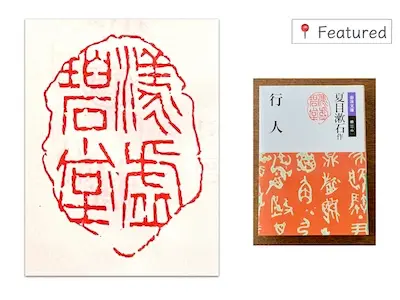
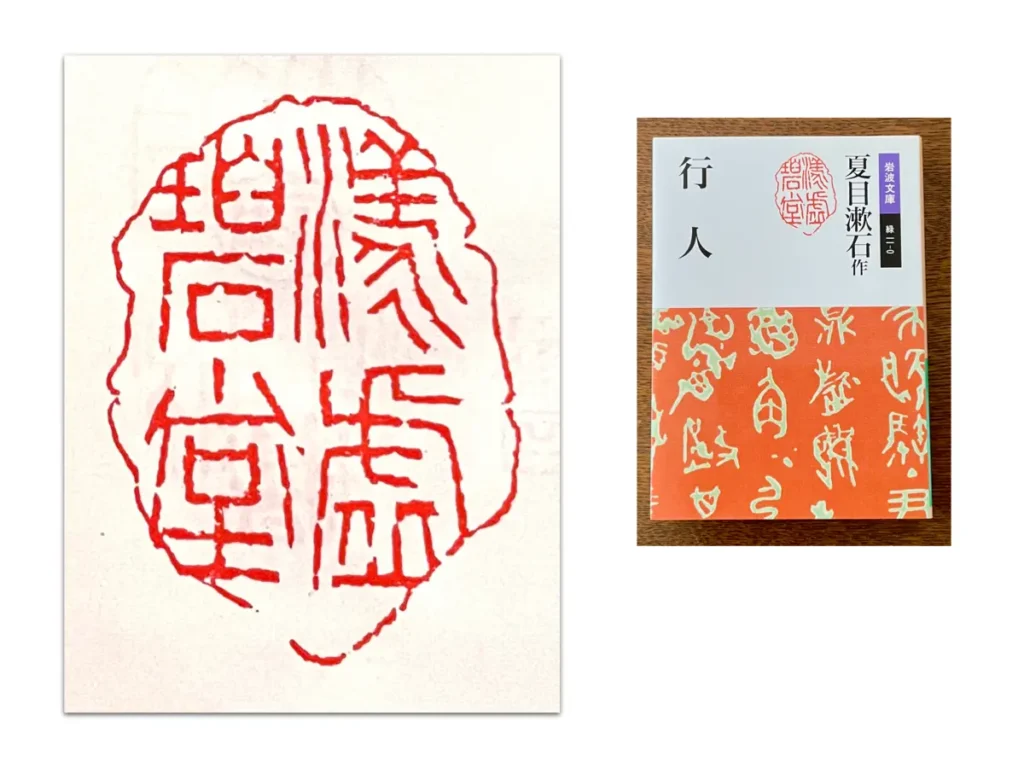
出典:(右)夏目漱石『行人』、岩波書店 / Source: (right)Natsume Sōseki, Kōjin, Iwanami Shoten
The Seal Artist and Natsume Soseki: My Ancestor’s Story
I heard something unexpected at an art exhibition.
I was told, “Kōsho (郊処) also carved seals for Natsume Soseki (夏目漱石).”
Kōsho was a seal artist, and he is my ancestor.
He practiced Tenkoku, a traditional Japanese craft.
This simple sentence sparked my journey.
I began to trace his footsteps to uncover our history.
Records in the Natsume Soseki Digital Archive
I found my ancestor’s name in the Natsume Soseki Digital Archive.
Important seals appear in the records.
Each item links directly to Soseki’s works.
雲無心 (Un-mushin)
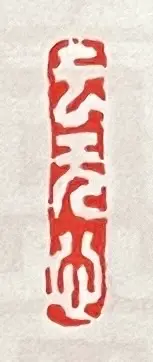
Another seal featuring the characters “Un-mushin (雲無心).”
This is a Zen phrase meaning “clouds floating naturally without attachment to form.”
It symbolizes the natural spirit Soseki cherished.
漾虚碧堂 (Yōkyohekidō)
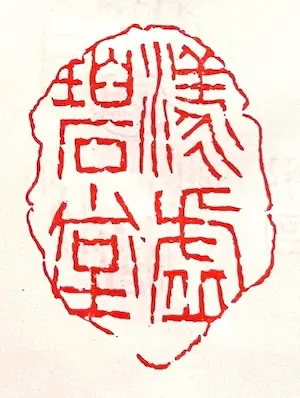
Seal carved with the characters “Yōkyohekidō (漾虚碧堂).“
This was the name of Soseki’s study.
It represents a quiet, spiritual space.
Later, it was adopted as the official verification seal.
It was used for the Sōseki Zenshū (漱石全集, Complete Works of Soseki).
Why Was My Ancestor Chosen?
A look at the historical background reveals a hidden connection.
Kōsho was close friends with the artist Nakamura Fusetsu.
Fusetsu illustrated I Am a Cat (吾輩は猫である), one of Soseki’s famous novels.
Kōsho created many Japanese seals for Fusetsu.
Their bond was very deep.
Kōsho even asked Fusetsu to carve the characters for his gravestone.
This friendship likely led to the request for Soseki’s seals.
The Legacy of the Seal in the Sōseki Zenshū
The seals played a vital role in publishing even after Soseki passed away.
Adoption as a Verification Seal
1916 marked the year Natsume Soseki died.
Shigeo Iwanami founded Iwanami Shoten.
He published the Sōseki Zenshū (漱石全集, Complete Works of Soseki).
Kōsho’s seal, “漾虚碧堂 (Yōkyohekidō),” was chosen for this collection.
It served as the official verification mark.
Local connections existed between Iwanami and my ancestor.
These are said to have influenced this decision.
A Seal Continuing to the Present Day
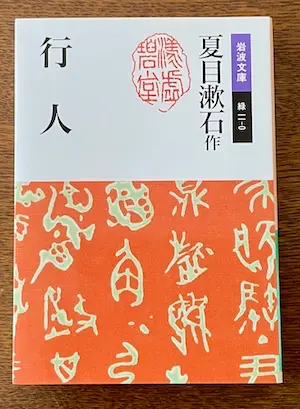
Red impressions of the seal remain on the colophons of those early editions.
Readers can still find the seal today.
It appears on the cover of the Iwanami Bunko edition of Kōjin (行人, The Wayfarer).
“漾虚碧堂 (Yōkyohekidō)” was carved over 110 years ago.
It has been passed down to the present day in various forms.
My Thoughts as a Japanese Teacher
110 years have passed.
I feel that my ancestor’s work and my own path are now aligned.
My ancestor carved each seal with great care.
“What is the background of this word?”
“How can I convey its true beauty?”
My time spent focusing on language mirrors his work from 110 years ago.
I feel a deep connection to him across time.
Connecting Culture to the Next Generation
My ancestor supported Japanese aesthetics through his seals.
As a Japanese teacher, I convey the charm of the Japanese language.
However, my roles in connecting Japanese culture to the next generation are the same.
Curious about Sōseki’s love for seals?
Did Natsume Sōseki Love Seals?
Explore more about Japanese seal art in the Japanese Seal Art category.
Related Posts
 Discover Japan Through Washoku (和食)
「予期せぬ知らせ:先祖と漱石を結ぶ線」
ある展示会で、私は思いがけない言葉を耳にしました。
「郊処は、夏目漱石の印も手がけていた」という話です。
私の先祖には、篆刻家・郊処(こうしょ)という人物がいます。
この一言がきっかけとなり、私は先祖の足跡を辿る調査を始めました。
夏目漱石デジタルアーカイブで見つけた記録
夏目漱石デジタルアーカイブを確認すると、先祖の名前が見つかりました。
登録されていた印は、漱石の作品に関連する重要なものです。
その中には、次の二つが含まれています。
- 雲無心(うんむしん)
「雲が形にとらわれず、自然に漂うように生きる。」という禅の言葉です。
漱石が大切にした、自然体の精神性を象徴する印として残されています。 - 漾虚碧堂(ようきょへきどう)
漱石の書斎の別称です。
静かな空間や精神性を感じさせる言葉として使われました。
後に『漱石全集』の検印としても採用されました。
検印としての役割が広がりました。
なぜ、先祖に依頼がきたのか?
当時の背景を紐解くと、一つの繋がりが見えてきます。
郊処は画家・中村不折氏と親交がありました。
不折氏は、漱石の代表作『吾輩は猫である』の挿絵を描いた人物です。
郊処は不折氏の印章をいくつも手がけていました。
郊処の不折氏に、墓石の文字を依頼するほどの信頼関係があったようです。
こうした不折氏との絆が、漱石の印を担当するきっかけになったのでしょう。
『漱石全集』と印章の継承
歴史を重ねた印章は、漱石の没後も出版の中で重要な役割を果たしました。
検印としての採用
1916年、夏目漱石は亡くなりました。
その後、岩波書店の創業者・岩波茂雄氏によって『漱石全集』が出版されます。
その際、検印として選ばれたのが、郊処の印「漾虚碧堂」でした。
岩波氏と同郷という縁も、その背景にあったと言われています。
現代へ続く印章
当時の全集の奥付には、赤い印が残されています。
そして今も、岩波文庫『行人』の表紙に、その印を見ることができます。
「漾虚碧堂」は、110年以上前に刻まれた印章です。
それが、形を変えながら現代まで受け継がれています。
日本語教師として思うこと
110年の時を超えて、先祖の仕事と私の歩みが重なるように感じます。
先祖は印を一つずつ丁寧に刻みました。
私も日々の授業で言葉を大切に選んでいます。
「この言葉の背景は何か?」
「どうすれば美しさが伝わるか?」
言葉と向き合う時間は、110年前に先祖が印と向き合っていた作業と重なります。
また、時を超えて日本語教師と繋がっている気がします。
先祖は印を通じて、日本の美意識を支えました。
私は日本語教師として、その言葉の魅力を伝えています。
方法は違っても、日本の文化を次世代へ繋ぐ役割は同じです。
夏目漱石は印章を愛したのか?詳細はこちらです。
Did Natsume Sōseki Love Seals?
ハンコ文化についてもっと知りたい方は、Japanese Seal Art カテゴリをご覧ください。