

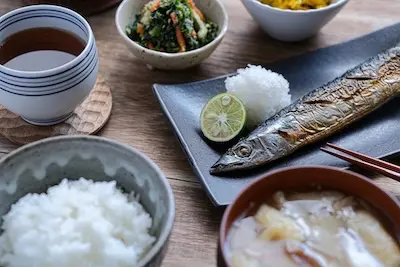
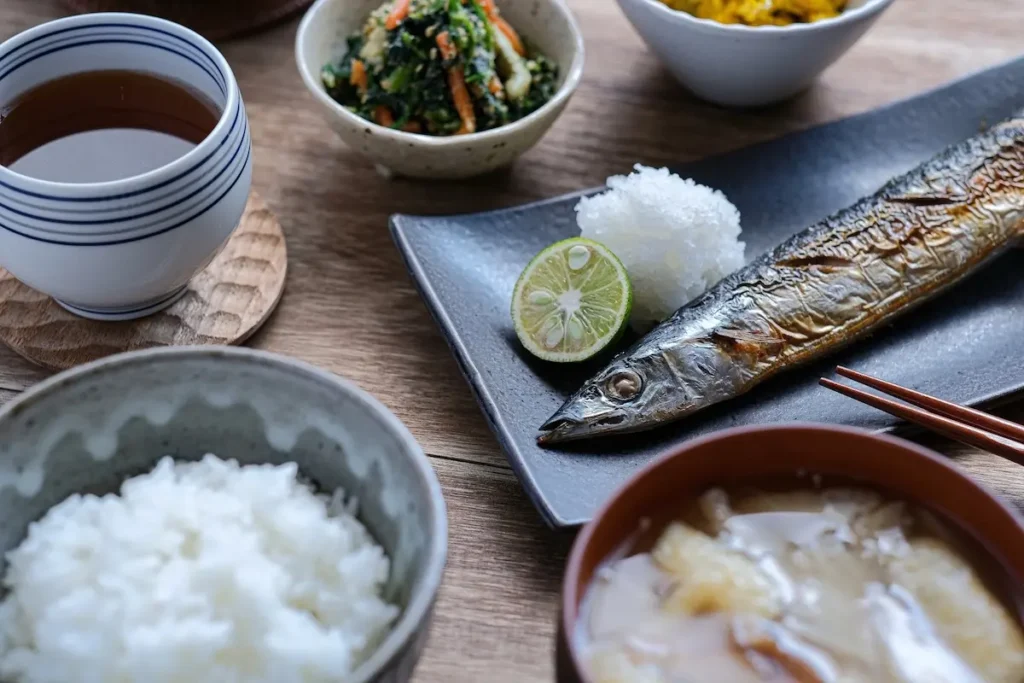
Autumn in Japan is often called 食欲の秋 (Shokuyoku no Aki, the season of appetite).
It is a season when 和食 (Washoku) is especially delicious.
It is a season rich in delicious 旬 (Shun, seasonal) ingredients.
Shun refers to the time when a food tastes its absolute best.
In the fall, grilled fish and simmered dishes fill the table.
Meals made with autumn vegetables are also popular.
Washoku deeply values using these seasonal ingredients.
Try exploring autumn Washoku.
It deepens your understanding of Japanese food culture and values.
Japanese Food Culture in Ichiju-Sansai
The meal format called 一汁三菜 (Ichiju-Sansai) is the foundation of Washoku.
The Basic Menu of Washoku
Ichiju-Sansai is a traditional Japanese meal style.
Rice serves as the staple food.
The meal also features 一汁 (Ichiju, one soup) and 三菜 (Sansai, three side dishes).
One main dish and two side dishes make up the Sansai.
Nutritional balance is excellent in this combination.
Bright colors also make the meal visually appealing.
Ichiju-Sansai is not just about health.
You can enjoy various flavors and textures in small amounts.
It beautifully reflects the Japanese value of harmony.
The Concept of “Mago wa Yasashii”
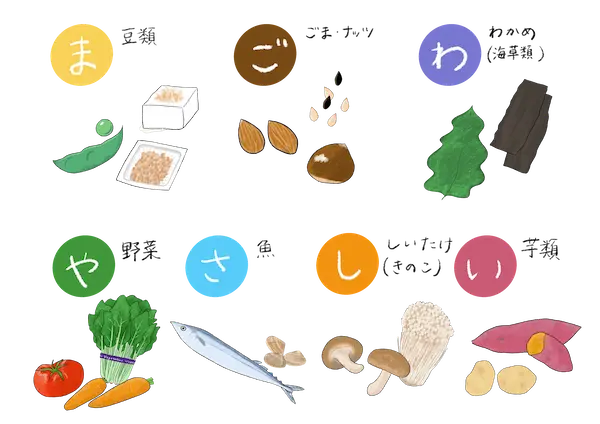
Many Japanese families follow the phrase “まごはやさしい” (Mago wa Yasashii) for home cooking.
Literally, the expression means “Grandchildren are kind.”
It serves as a helpful guide for healthy eating.
- ま (Ma):豆 (Mame, beans)
- ご (Go):ごま (Goma, sesame seeds)
- わ (Wa):わかめ (Wakame, seaweed)
- や (Ya):野菜 (Yasai, vegetables)
- さ (Sa):魚 (Sakana, fish)
- し (Shi):しいたけ (Shiitake, mushrooms)
- い (I):芋 (Imo, potatoes and root vegetables)
Combining these seven food groups creates a balanced diet.
You can easily get a wide range of nutrients this way.
Examples of Autumn Washoku Menus
Autumn Washoku features various dishes using seasonal ingredients.
Rice (Gohan)
ご飯 (Gohan, rice) is the center of the meal.
White rice is common, but mixed grains are also popular.
Chestnut rice and mushroom rice often appear in autumn.
Enjoying seasonal ingredients brings a wonderful sense of the season.
Grilled Fish (Yakizakana – Sanma)
Salt-grilled 秋刀魚 (Sanma, Pacific saury) is a classic autumn dish.
People enjoy the fatty fish prepared as 焼き魚 (Yakizakana, grilled fish).
You usually eat it with grated radish.
This fish has long been loved as a symbol of fall.
Experiencing seasonal fish is how Japanese people enjoy the season.
Simmered Dishes and Small Bowls (Nimono / Kobachi)
Side dishes often include 煮物 (Nimono, simmered dishes).
Various seasonal vegetables and mushrooms are used.
Pumpkin and taro cooked in broth are autumn staples.
Boiled spinach or seaweed often come in 小鉢 (Kobachi, small bowls).
Trying many different dishes in small portions is a unique feature of Washoku.
Miso Soup and Pickles (Misoshiru / Tsukemono)
味噌汁 (Misoshiru, miso soup) is essential to Washoku.
Cooks often use tofu, seaweed, and seasonal vegetables.
Adding mushrooms makes the soup especially popular in the fall.
漬物 (Tsukemono, pickles) also frequently appear on the table.
Daikon radish, cucumbers, and napa cabbage are commonly used.
Foods prepared this way are packed with vegetable nutrition.
Probiotics in them effectively support your gut health.
Tsukemono pair perfectly with Gohan.
The Culture of Dashi Supporting Washoku
出汁 (Dashi, soup stock) creates the foundation of Washoku flavors.
Cooks make it from 昆布 (Kombu, kelp) and かつお節 (Katsuobushi, bonito flakes).
It is widely used in Misoshiru, 煮物 (Nimono, simmered dishes), and 鍋料理 (Naberyori, hot pots).
This broth is rich in うま味 (Umami, savory flavor).
You can enjoy delicious meals even with less salt.
Washoku beautifully highlights the natural flavors of ingredients.
As a result, Dashi is absolutely essential to the cuisine.
Japanese Values Reflected in Washoku
Washoku beautifully reflects Japanese values.
Appreciation for Seasons and Nature
First, it shows a deep appreciation for the seasons.
A sense of gratitude toward nature is also present.
Many expressions in Japanese relate to seasons and food.
The culture of Washoku lies behind these phrases.
Ichiju-Sansai and the Spirit of Harmony
Next, Ichiju-Sansai represents the concept of valuing harmony.
Combining various dishes is key.
This beautifully balances both nutrition and flavor.
Gratitude in “Itadakimasu” and “Gochisosama”
Japanese people also say いただきます (Itadakimasu) and ごちそうさま (Gochisosama).
Greetings like these are used before and after meals.
Both phrases express deep gratitude.
They honor the living ingredients and the people who prepared the food.
It conveys traditional Japanese lifestyles.
See my articles on “Itadakimasu” and “Gochisousama.”
Conclusion
Autumn Washoku features many seasonal ingredients.
Japanese food traditions shine through Ichiju-Sansai.
Dashi also clearly shows these unique traits.
Learning about this cuisine deepens your knowledge.
Your understanding of Japanese culture and language will grow.
Explore more Japanese expressions in the Japanese Words category.
Related Posts

日本の秋は「食欲の秋」とも呼ばれます。
和食がとくに美味しい季節です。
美味しい「旬」の食材が豊富な季節です。
旬とは、その食材が最も美味しい時期のことです。
秋になると、焼き魚や煮物、旬の野菜を使った料理が食卓に並びます。
和食は、季節の食材を取り入れることを大切にしています。
秋の和食を知ることで、日本の食文化や価値観への理解も深まります。
一汁三菜に見る日本の食文化
和食の基本とされているのが「一汁三菜」という食事の形です。
和食の基本となる献立
一汁三菜は、日本の伝統的な食事の形です。
主食である「ご飯」に、「汁物」と3つの「菜(おかず)」です。
3つのおかずは、主菜1品と副菜2品のことです。
栄養バランスが良く、見た目にも彩り豊かな食事になります。
一汁三菜は、健康のためだけの考え方ではありません。
さまざまな味や食感を少しずつ楽しめます。
そこには、日本人が大切にする調和の考え方も表れています。
「まごはやさしい」の考え方
家庭で和食を作る際には、「まごはやさしい」という考え方も参考にされます。
これは健康的な食事の目安です。
- ま:豆
- ご:ごま
- わ(は):わかめなど海藻
- や:野菜
- さ:魚
- し:しいたけなどのきのこ類
- い:芋
これら7つを組み合わせる食事法です。
上手に取り入れることで、幅広い栄養素を摂ることができます。
秋の和食の献立例
秋の和食には、旬の食材を生かしたさまざまな料理があります。
ご飯
ご飯は和食の中心です。
白米だけでなく、五穀米や麦ご飯も人気があります。
秋には栗ご飯やきのこご飯も食卓に並びます。
旬の食材を取り入れることで、季節感を楽しめます。
焼き魚(秋刀魚)
秋の和食を代表する料理のひとつが秋刀魚の塩焼きです。
脂ののった身を香ばしく焼き、大根おろしと一緒にいただきます。
秋刀魚は、秋を感じる食材として長く親しまれてきました。
旬の魚を味わうことは、日本人にとって季節を楽しむことでもあります。
煮物・小鉢
副菜には、季節の野菜やきのこを使った煮物や和え物があります。
かぼちゃの煮物や里芋としいたけの煮物は、秋の定番です。
また、小鉢にはほうれん草のおひたしやひじきの煮物などが並びます。
少しずつさまざまな料理を楽しめるのも和食の特徴です。
味噌汁と漬物
味噌汁は和食に欠かせない存在です。
豆腐やわかめ、季節の野菜などがよく使われます。
秋には、きのこを入れた味噌汁も人気です。
漬物には、大根やきゅうり、白菜などの野菜がよく使われます。
これらは、野菜の栄養が凝縮されています。
乳酸菌が豊富で、健康を支える役割があります。
ご飯やおかずとの相性も抜群です。
和食を支える出汁の文化
和食の味を支えているのが「出汁」です。
昆布やかつお節から出汁を取ります。
味噌汁、煮物、鍋料理など幅広く使われます。
出汁には豊かなうま味があります。
そのため、塩分を控えても美味しく食べられます。
和食は、素材そのものの味を生かします。
そのため出汁は、和食に欠かせない存在です。
和食から見える日本人の価値観
和食には、日本人の価値観が表れています。
季節と自然への感謝
まずひとつは、季節を大切にする心や、自然への感謝の気持ちです。
日本語には、季節や食べ物に関する表現がたくさんあります。
その背景には、この和食の文化があります。
一汁三菜と調和の心
次に、「一汁三菜」には、調和を大切にする考え方があります。
さまざまな料理を組み合わせることで、栄養や味のバランスを整えます。
感謝を伝える
さらに、食事の前後に言う「いただきます」や「ごちそうさま」。
これらの言葉にも、命ある食材や、料理を作った人への感謝が込められています。
このように、和食は日本の文化や暮らし方を伝える大切な存在です。
まとめ
秋の和食には、旬の食材が多く使われています。
一汁三菜や出汁には、日本の食文化の特徴が表れています。
和食を知ることで、日本文化や日本語への理解も深まるでしょう。
日本語表現についてもっと知りたい方は、Japanese Words カテゴリをご覧ください。