

Why has Hello Kitty become a symbol of kawaii around the world?
- Why is “Kawaii” so popular around the world?
- How Hello Kitty spread “kawaii” around the world
- From “Sexy” to “Cute”: Changing values
- The meaning and use of “kawaii”: its link to Japanese culture
- Conclusion: Adults can enjoy “kawaii” too
- 「かわいい」はなぜ世界で人気なのか?
- ハローキティが「かわいい」を世界に広げた理由
- 「Sexy」から「Cute」へ:変化した価値観
- 「かわいい」の意味と使い方: 日本文化との関係
- まとめ: 大人こそ、「かわいい」を楽しもう
Why is “Kawaii” so popular around the world?
Today, kawaii (かわいい: cute) is popular around the world.
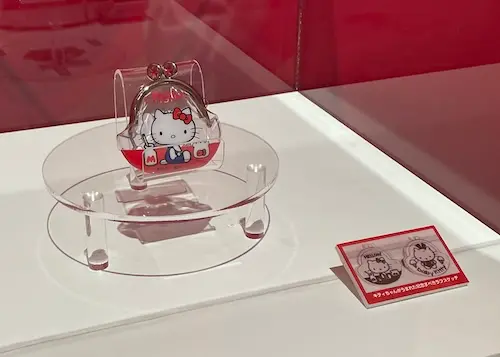
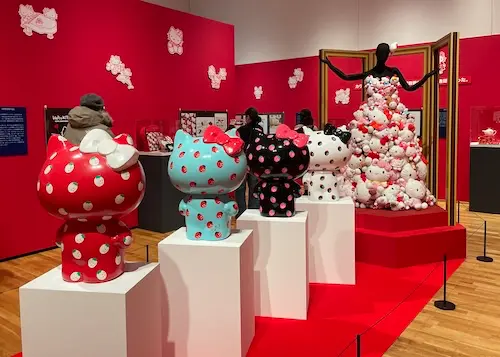
Recently, I visited a museum. I saw an official exhibition by Sanrio called the “Sanrio Exhibition.”
There were many characters and goods on display. Among them, Hello Kitty left the strongest impression on me.
Hello Kitty has always been familiar to me. This time, I saw those changes again.
In the past, I thought Hello Kitty was for children. However, today Hello Kitty is popular with young women and adults.
My first surprise outside Japan
I once saw Hello Kitty in Vancouver, Canada. A young woman was carrying a Hello Kitty bag.
At that time, Hello Kitty was seen as a children’s character outside Japan. Hello Kitty was not widely known.
So, I was surprised. At the same time, I felt happy.
I was glad to see a Japanese character abroad.
Kawaii is a Japanese word. However, today it is understood around the world.
It is now known as “Kawaii culture.”
In this article, I will explain the meaning of kawaii (かわいい: cute).
How Hello Kitty spread “kawaii” around the world
Hello Kitty was created in Japan in 1974. At first, Hello Kitty was a product for children.
In Japan, Hello Kitty is called “Kitty-chan (キティちゃん).” Outside Japan, Hello Kitty is known as “Hello Kitty.”
The key point is this. Hello Kitty helped spread the image of kawaii (かわいい: cute) around the world.
Some feelings are difficult to express with words. Hello Kitty showed those feelings in a visual way.
Hello Kitty expressed the meaning of kawaii.
Sanrio has a concept called “Small Gift, Big Smile.” It means a small gift can bring happiness.
Many people connected with this idea.
Hello Kitty does not have a strong story. So, people can add their own meaning.
This is one reason Hello Kitty is accepted across cultures.
Why does Hello Kitty have no mouth?
Hello Kitty has no mouth. This is a key feature.
The expression is not fixed. So, it reflects the viewer’s feelings.
People feel happy, and Hello Kitty looks happy. People feel sad, and Hello Kitty looks calm and gentle.
The meaning changes depending on the viewer. This flexibility is one feature of kawaii.
How Hello Kitty’s design changed
At first, Hello Kitty faced sideways. This gives a slightly shy impression.
Over time, more designs show Hello Kitty facing forward. Hello Kitty became a stronger icon.
This change is connected to the spread of kawaii.
From “Sexy” to “Cute”: Changing values
In the 2000s, a shift in values took place in the United States.
Before that, adult women were expected to be “sexy.” However, this idea began to change.
Gwen Stefani and Britney Spears, for example, adopted Hello Kitty.
Because of this influence, kawaii gained a new meaning.
It was no longer only for children. It became one way to express individuality.
This was a major change.
As a result, the focus shifted. It was no longer about how others see you.
Could it be more about how you want to be?
Differences between Japan and overseas
In Japan, Hello Kitty is part of everyday life.
Hello Kitty appears on stationery and daily items.
Hello Kitty is everywhere. It is hard to find a day without seeing Hello Kitty.
In contrast, in the United States, Hello Kitty is often used in fashion.
People choose Hello Kitty to express their style and individuality.
Even with the same character, the meaning can change across cultures.
This is also a feature of kawaii culture.
The meaning and use of “kawaii”: its link to Japanese culture
Kawaii comes from kaohayushi (顔映ゆし). It means you feel shy and cannot look at something because it is so lovely.
This word means something is so lovely that you cannot look at it directly.
So, kawaii is not only about appearance. It also includes gentle feelings toward small or weak things.
When people see a small child or an animal, they feel calm. They may also feel a desire to protect it.
There is a sense of empathy.
In Japanese culture, this feeling has long been valued. People find value not only in strength or size.
They also value smallness and delicacy.
Hello Kitty expresses this feeling in a natural way.
How to use “kawaii”
In Japan, the word kawaii is used very often. It is especially common in daily conversation.
For example:
- このバッグ、かわいいね!(Kono baggu, kawaii ne! )
(This bag is cute!) - その服、すごくかわいいね。(Sono fuku, sugoku kawaii ne.)
(That outfit is very cute.) - このカフェ、かわいいね。(Kono kafe, kawaii ne.)
(This café is cute.)
The word is used not only for things.The word is also used for people and places.
It is not limited to appearance. It also describes atmosphere and impression.
“Kawaii” as a compliment for Japanese high school and college girls
Japanese high school girls and college girls often say kawaii when they shop.
They enter a store and say, “kawaii.” When they see an item, they say, “This is also kawaii.”
Another item catches their eye, and they say, “kawaii” again.
They also say it when they see something their friend has. They say, “kawaii ”.
For them, kawaii is a strong compliment.
Conclusion: Adults can enjoy “kawaii” too
Words can change how we see things.
The word kawaii (かわいい: cute) helps us notice small things in everyday life.
As adults, it is easy to feel we must act a certain way. However, that is not the only right way.
Kawaii culture teaches a freer way of thinking. Saying you like what you like is a way to take care of yourself.
What did you find kawaii today? Try to value that feeling. And why not share that kawaii with someone else?
You can also explore modern Japanese expressions in pop culture.
For example, see how “anata vs. ANATA” is used in Ado’s song “I’m Invincible” to show subtle differences in meaning.
Japanese of the Day / 今日の日本語
- Word: 優しい (yasashii) – gentle / kind
- Meaning: Shows warmth or care.
- Example: 彼女は とても 優しいです。
(Kanojo wa totemo yasashii desu.)
(She is so kind.) - Fun Fact: Yasashii can describe both people and things.
◆ Would you like to practice speaking Japanese? ◆
In my lessons, you can use Japanese a lot and learn to speak naturally with me.
「かわいい」はなぜ世界で人気なのか?
「かわいい」は、なぜ世界で広がったのでしょうか。
先日、ある美術館で、サンリオの公式「サンリオ展」を見てきました。
会場には多くのキャラクターやグッズが並んでいました。
中でも印象に残ったのは、Hello Kittyです。
キティちゃんは、私にとって昔から身近な存在でした。そして、今回、改めてその変化を見ることができました。
以前は、キティちゃんは子どものものだと思っていました。しかし今では、若い女性や大人にも広く受け入れられています。
実は昔、カナダのバンクーバーで見かけたことがあります。若い女性がキティちゃんのバッグを持っていました。
その頃、海外ではまだ子ども向けのキャラクターというイメージが強かったです。
そして全然、知られていなかったと思います。ですので、とても驚きました。
それと同時に、日本のキャラクターを海外で見ることできて、嬉しかったです。
「かわいい」は日本語です。しかし今では、世界で理解されています。
「Kawaii culture」として、広く知られるようになりました。
この記事では「かわいい」という言葉を、ひも解いていきたいと思います。
ハローキティが「かわいい」を世界に広げた理由
ハローキティは1974年に日本で生まれました。
もともとは子ども向けの商品でした。
日本では「キティちゃん」と呼ばれています。海外では「Hello Kitty」として知られています。
ここで大切なのは、キティちゃんが「かわいい」という言葉のイメージを世界に広げた存在だということです。
言葉だけでは伝わりにくい感覚があります。
それを形にして見せました。「Kawaii」の意味を、視覚的に伝えました。
サンリオには「Small Gift, Big Smile」という考え方があります。
小さな贈り物で人を笑顔にするという意味です。この考えが、多くの人に共感されました。
キティちゃんは強いストーリーを持ちません。そのため、使う人が自由に意味を重ねることができます。
この特徴が、異なる文化の中でも受け入れられる理由でしょう。
なぜキティちゃんには口がないのか?
キティちゃんには口がありません。これは大きな特徴です。
そして、表情が決まっていません。そのため、見る人の気持ちを映します。
うれしいときは笑っているように見えます。そして、悲しいときは静かに寄り添っているように見えます。
見る人によって意味が変わります。この柔らかさが、「かわいい」の特徴の一つです。
キティちゃんのデザインの変化
初期のキティちゃんは横向きでした。少し恥ずかしそうな印象があります。
いつからか、正面を向いたデザインが増えました。より強いアイコンとして認識されるようになりました。
この変化は、「かわいい」が広がる過程とも関係しています。
「Sexy」から「Cute」へ:変化した価値観
2000年代、アメリカで価値観の変化が起きました。
それまで、大人の女性は「セクシーであるべき」と考えられていました。
しかし、その考えは変わり始めます。
グウェン・ステファニー、ブリトニー・スピアーズなどのスターがキティちゃんを取り入れました。
その影響で、「かわいい」は新しい意味を持ちました。
子どもだけのものだけではなくなりました。自分らしさを表す方法の一つになりました。
これは大きな変化です。
「どう見られるか」ではなく、「どうありたいか」が重視されるようになったのではないでしょうか。
日本と海外でのキティちゃんの違い
日本では、キティちゃんは日常の中にあります。文房具や生活用品として自然に使われています。
見かけない日はないというくらい日常生活にあふれています。
一方、アメリカではファッションとして使われることが多くあります。個性やスタイルの表現として選ばれます。
同じキャラクターでも、文化によって意味が変わります。これも「Kawaii culture」の特徴です。
「かわいい」の意味と使い方: 日本文化との関係
「かわいい」という言葉は、「顔映ゆし (かおはゆし) 」から来ています。
これは「見ていられないほど愛おしい」という意味です。
つまり、「かわいい」の意味は外見だけではありません。
小さいものや弱いものに対するやさしい気持ちも含まれています。
小さな子どもや動物を見ると、自然に心がやわらぎます。守りたいという気持ちが生まれます。
そこには共感があります。
日本文化では、この感覚が大切にされてきました。強さや大きさだけでなく、小ささや繊細さにも価値を見つけます。
このような感覚を、キティちゃんのような存在は自然に表現しています。
「かわいい」の使い方と例文
日本では「かわいい」という言葉がよく使われます。特に日常会話で頻繁に使われます。
たとえば、次のように使います。
・このバッグ、かわいいね!
・その服、すごくかわいいね。
・このカフェ、かわいいね。
物だけでなく、人や場所にも使えます。見た目だけでなく、雰囲気や印象にも使える言葉です。
「かわいい」は最高の褒めことば
日本の女子高生や女子大生は、買い物に行くと「かわいい」を何度も言います。
店に入ってすぐ「かわいい」と言います。商品を見て「これもかわいい」と言います。
別のものを見て、また「かわいい」と言います。
また、友達の持っているものを見た時も、「それ、かわいいね!」と言います。
彼女たちにとって、「かわいい」ということばは、最高の褒めことばなのです。
まとめ: 大人こそ、「かわいい」を楽しもう
言葉は、ものの見方を変えます。「かわいい」という言葉は、日常の中の小さな価値に気づかせてくれます。
大人になると、「こうあるべき」という考えにとらわれやすくなります。
しかし、それだけが正しいわけではありませんよね。
「Kawaii culture」は、もっと自由な考え方を教えてくれます。
好きなものを好きと言うことは、自分を大切にすることです。
今日、あなたが「かわいい」と思ったものは何でしょうか。その気持ちを大切にしてみてください。
そして、その「Kawaii」を誰かとシェアしてみませんか?
ポップカルチャーでの現代日本語も学べます。
例えば、Adoの「あなた vs アナタ (anata vs. ANATA)」 in Ado’s 『私は最強』 (I’m Invincible)」から、意味の微妙な違いを確認してみましょう。