

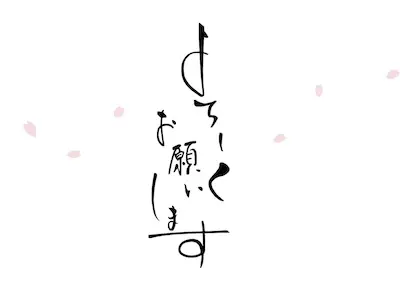
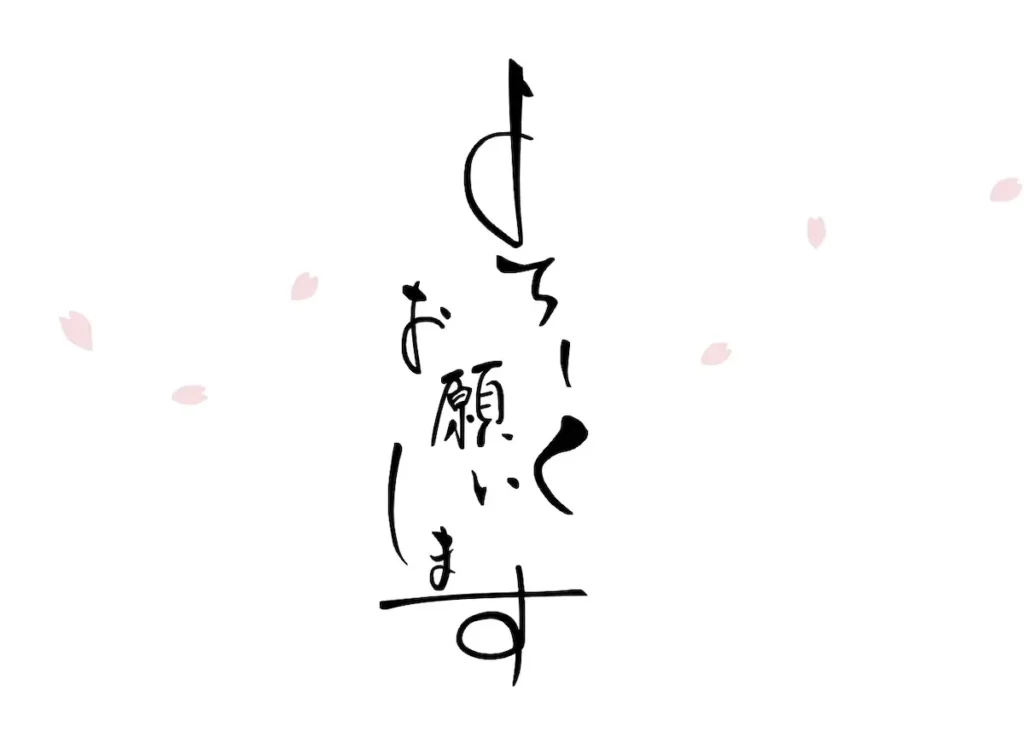
There is an important phrase for Japanese learners.
Please remember Yoroshiku Onegaishimasu (よろしくおねがいします) first.
This is the most essential expression for your self-introduction.
This phrase is like a magic word.
It makes human relationships smoother.
In this article, I will explain its use clearly.
I will share tips from a Japanese teacher’s perspective.
The Meaning and Origin of “Yoroshiku”
This phrase has two parts.
They are “Yoroshiku (よろしく)” and “Onegaishimasu (おねがいします).”
First, let’s look at the original meaning of “Yoroshiku.”
“Yoroshiku”: Aiming for the Best Outcome
“Yoroshiku (よろしく)” is an adverb.
It comes from the adjective “Yoroshii (よろしい).”
It means “appropriately” or “in a proper way.”
The Message Within the Word
Literally, it means “Please handle this well for us.“
You do not decide everything yourself.
Instead, you trust the other person’s judgment.
This is the core nuance of Yoroshiku Onegaishimasu.
Showing Respect: Differences from “Please”
In English, “Please” is often used to make a personal request.
In contrast, “Yoroshiku” shows respect for the other person’s judgment.
It implies a deep respect for them.
It means, “I want you to handle this in a way that is best for you.“
Using “Yoroshiku” in Daily Life
The meaning of “appropriately” appears in other greetings too.
For example, consider the phrase, “Yamada-san ni yoroshiku otsutae kudasai.”
This means “Please say hello to Mr. Yamada.”
It is a polite message.
It means, “Please convey my regards to him in a respectful way.”
Why “I” is Omitted with Yoroshiku Onegaishimasu
In English, you always state the subject.
For example, you say “I am TOMO.”
However, natural Japanese is different.
It is common to omit “Watashi wa (私は) ” in self-introductions.
Differences Between English and Japanese Rules
Japanese is a “high-context” language.
The speaker is the obvious subject.
Therefore, we often omit it.
This creates a natural and rhythmic flow.
In contrast, English always pairs a “Subject + Verb.”
But Japanese is different.
We hide the subject to value harmony with others.
Understanding this makes learning Japanese more fun.
Because of this rule, Japanese people often forget the subject.
This happens even when they speak English.
What Happens If You Use the Subject Too Much?
Repeating “Watashi wa… desu” and “Watashi wa… kara kimashita” can sound a bit childish.
Also, emphasizing “Watashi” in every sentence can seem too assertive.
It may give the wrong impression to your listener.
Tips for Natural Conversations
Omitting the subject shows humility.
This style is often used with Yoroshiku Onegaishimasu in Japan.
It shows that you value social harmony.
Try to practice speaking without using the subject too much.
Just focus on the main point of your sentence.
Self-Introduction by Level
The secret to a great introduction is simple.
You should build up your information bit by bit.
Please choose the content that matches your level.
Beginner Level: Starting with the Basics
First, let’s start with the basics.
Share your greeting, name, and hometown accurately.
- Structure:
Greeting + Name + Hometown + Closing - Ex. はじめまして。ともです。日本から きました。よろしくお願いします。
(Hajimemashite. Tomo desu. Nihon kara kimashita. Yoroshiku onegaishimasu.)
(Nice to meet you. I’m Tomo. I come from Japan. I look forward to your kindness.)
Pre-intermediate Level: Finding Common Ground
By adding your occupation or hobbies, you make it easier for others to ask questions.
This helps create a smooth conversation flow.
- Structure:
Beginner level content + Occupation + Hobby + Closing - Ex.
はじめまして。ともです。日本語教師です。
(Hajimemashite. Tomo desu. Nihongo kyoushi desu.)
(Nice to meet you. I’m Tomo. I’m a Japanese language teacher.
趣味は、神社やお寺を巡って御朱印を集めることです。よろしくお願いします。」
(Shumi wa, jinja ya otera o megutte goshuin o atsumeru koto desu. Yoroshiku onegaishimasu.)
(My hobby is visiting shrines and temples to collect Goshuin stamps. I look forward to your kindness.)
Intermediate Level: Deepening Trust / 中級(Intermediate)
By sharing your background or expertise, you can build deeper relationships.
- Structure:
Pre-intermediate content + Background/Expertise + Closing - Point:
Adding “Douzo” (どうぞ) shows deep respect.
It conveys your sincere wishes to the other person. - Ex.
はじめまして。ともです。
(Hajimemashite. Tomo desu.)
(Nice to meet you. I’m Tomo. )
日本語教師として、日本文化や歴史の魅力を世界に発信しています。
(Nihongo kyoushi toshite, nihon bunka ya rekishi no miryoku o sekai ni hasshin shite imasu. )
(As a Japanese language teacher, I share the charm of Japanese culture and history with the world. )
どうぞよろしくお願いします。」
(Douzo yoroshiku onegaishimasu.)
(I look forward to your kindness. )
Professional Tips: Names and “Douzo”
There are two important points for a polite introduction.
this example, I only used my first name (Tomo).
However, in business or formal settings, using your family name is common.
Please choose the best way to introduce yourself based on the situation.
You can use your full name, family name, or just your first name.
Choosing the Right Introduction for the Situation
Choose the perfect words based on your relationship with the person you are meeting.
| Expression | Audience & Situation | Nuance |
| Yoroshiku!(よろしく!) | Close friends and family. | Casual and friendly. |
| Yoroshiku onegaishimasu(よろしくお願いします) | Standard. First meetings and colleagues. | Polite and universal. |
| Yoroshiku onegai-itashimasu(よろしくお願いいたします) | Bosses, clients, and seniors. | Humble and Formal |
Replying with “Kochira-koso”
Do not just learn the words. Please understand the matching actions too. This shows your sincerity.
If the other person speaks first, you should give a reply.
Say, “Kochira-koso, yoroshiku onegaishimasu (こちらこそ、よろしくおねがいします).”
“Kochira-koso (こちらこそ)” means “on my part too.”
It means “I am the one who should say that.”
This phrase shows the Japanese feeling of “Otagaisama (おたがいさま).”
It means that both people share the same respect.
Conclusion: Mastering Yoroshiku Onegaishimasu
“Yoroshiku onegaishimasu (よろしくおねがいします)” is a phrase to show respect.
First, please practice the basic pattern: “Name + Hometown + Yoroshiku Onegaishimasu.“
Adding just one personal detail makes your introduction much warmer.
Japanese has many unique greetings.
“Okagesama” is another great example.
What Does “Okagesama (おかげさま) ” Mean?
Explore more Japanese expressions in the Japanese Words category.
Related Posts
日本語を学ぶ際、最初に覚えてほしい大切な言葉があります。
それは「よろしくお願いします」です。
この一言で、人間関係がとてもスムーズになります。
そんな魔法の言葉です。
今回は、日本語教師の視点で、その使い方を分かりやすくお伝えします。
「よろしく」の語源
このフレーズは、「よろしく」と「お願いします」に分けられます。
まず「よろしく」の本来の意味を知っておきましょう。
ちょうどよい具合に
「よろしく」は、形容詞の「よろしい」から生まれた副詞です。
意味は、「ちょうどよい具合に」や「適切に」ということです。
言葉に込められたメッセージ
直訳すると、「いい具合になるように、お願いします」となります。
自分一人で物事を決めるのではありません。
相手の配慮に物事を委ねる、というニュアンスを含んでいます。
相手を尊重する敬意の形:英語の “Please” との違い
英語の “Please” は、自分のことをお願いするための言葉です。
それに対し、「よろしく」は、相手の判断を尊重する言葉です。
「あなたにとって良いように、扱ってほしい」という敬意が込められています。
日常生活での「よろしく」活用例
「適切に」という意味は、他の挨拶でも使われます。
例えば、「山田さんによろしくお伝えください」という表現です。
これは「山田さんに、失礼のないように伝えてください」という丁寧な伝言です。
なぜ「私は」を言わないの?
英語では “I am TOMO.” のように主語を必ず言います。
しかし、自然な日本語の自己紹介では、「私は」を省くのが一般的です。
英語と日本語のルールの違い
日本語は「高コンテクスト(状況依存)」な言語です。
自分が話しているの以上、主語が自分であるということは明白。
あえて主語を省くことで、リズムの良い自然な表現になります。
英語は必ず「主語+動詞」がセットで話されます。
しかし日本語はあえて主語を隠すことで、相手との調和を大切にします。
この違いを理解すると、日本語がもっと楽しくなりますよ。
そのため、日本人は英語を話すときに、主語を忘れがちです。
主語を使いすぎると?
「私は〜です。私は〜から来ました。」と繰り返すと、幼い印象になります。
また、一文ごとに「私」を強調すると、自己主張が強く伝わることもあります。
自然な会話を楽しむためのコツ
主語を省くことで、相手に「謙虚さ」を伝えることができます。
これは、周囲との調和を大切にする日本社会で好まれるスタイルです。
まずは主語を削ぎ落として話す練習をしてみましょう。
レベル別自己紹介
自己紹介は、情報を少しずつ積み上げていくのがコツです。
ご自身のレベルに合わせて、内容を考えてみてください。
初級(Beginner):まずは基本から
挨拶、名前、出身を正確に伝えることから始めましょう。
- 構成:
挨拶 + 名前 + 出身 + 結び - 例文: はじめまして。ともです。日本から きました。よろしくお願いします。
初中級(Pre-intermediate):共通点を見つける
仕事や趣味を加えると、相手が質問しやすくなります。
- 構成:
初級の内容 + 職業 + 趣味 + 結び - 例文:
はじめまして。ともです。日本語教師です。
趣味は、神社やお寺を巡って御朱印を集めることです。よろしくお願いします。
中級(Intermediate):信頼を深める
活動の背景や専門性を語ることで、より深い関係を目指します。
- 構成:
初中級の内容 + 背景・専門性 + 結び - ポイント:
「どうぞ」をつけると、相手を敬う気持ちと「心からの願い」がこもった響きになります。 - 例文:
はじめまして。ともです。日本語教師として、日本文化や歴史の魅力を世界に発信しています。
どうぞ、よろしくお願いします。」
※ここでは、下の名前(TOMO)だけ伝えています。
本来、ビジネスやフォーマルな場面では、苗字(Family Name)を伝えるのが一般的です。
相手や状況に合わせて、フルネーム、苗字のみ、下の名前のみと使い分けましょう。
場面ごとの使い分け
相手との関係に合わせて、ぴったりの言葉を選んでみましょう。
| 表現 | 対象・場面 | ニュアンス |
| よろしく! | 親しい友人、家族 | 親愛・カジュアル |
| よろしくお願いします | 【標準】 初対面、同僚 | 礼儀・汎用性 |
| よろしくお願いいたします | 上司、顧客、目上の人 | 謙虚・フォーマル |
「こちらこそ」
言葉だけでなく、付随する所作を理解することで、より誠実さが伝わります。
相手が先に言った場合は、「こちらこそ、よろしくお願いします」と返答するといいでしょう。
「こちらこそ」とは、「私の方こそ」という意味です。
「私の方こそ、よろしくお願いします」と伝えます。
このことからも日本人の「お互いさま」という気持ちが込められています。
まとめ
「よろしくお願いします」は、相手への敬意を伝えるための言葉です。
まずは「名前 + 出身 + よろしくお願いします」の基本から練習してみましょう。
あなたの情報をひとつ加えるだけで、自己紹介はより温かなものに変わります。
「よろしくお願いします」と同じように、日本語には独特のあいさつや表現があります。
『おかげさま』もそのひとつです。
→What Does “Okagesama (おかげさま) ” Mean?
日本語表現についてもっと知りたい方は、Japanese Words カテゴリをご覧ください。