

- What Does "Yabai" Really Mean? Understanding Japanese Slang
- The Dark Origins: The Edo Period
- The Generational Gap: The 1990s vs. Today
- How to Use "Yabai" (ヤバい) in Real Life
- Summary: Advice for Japanese Learners
- 「ヤバい」本当はどういう意味?
- 語源を知ろう:江戸時代のダークな起源
- 1990年代後半〜2000年代:言葉の広がりと世代の壁
- 世代による違い(2000年前後 vs 現在の話)
- 【実践】今の日本人はどう使っている?
- まとめ:学習者はどう向き合えばいい?
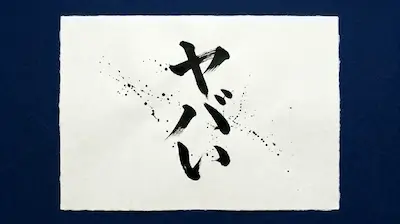
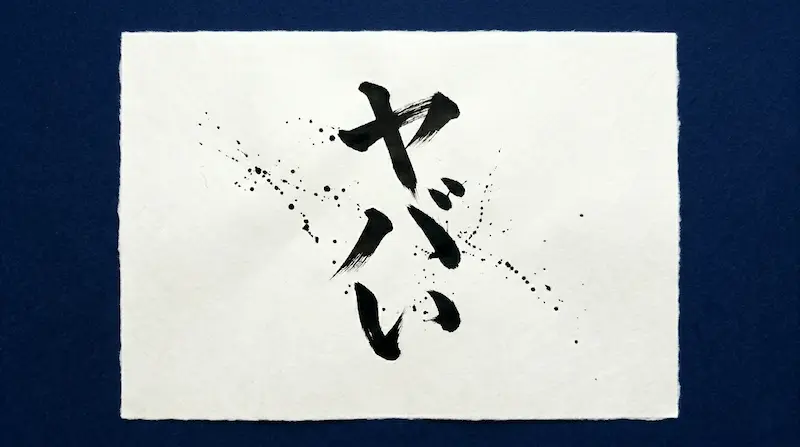
What Does “Yabai” Really Mean? Understanding Japanese Slang
Why does “yabai (ヤバい, crazy/bad/awesome) ” mean both good and bad?
Yabai is one of the most mysterious words in Japanese.
It can mean crazy, bad, or even awesome.
Today, people often use it in a positive way.
You will also hear it frequently in anime and manga.
Two Opposite Meanings of “Yabai” (ヤバい)
Yabai (ヤバい) has two meanings.
This can be very confusing for learners.
In this article, we will look at its history and how the meaning shifted.
Currently, there are two main ways to use it:
- Negative: Bad, dangerous, or “I’m in trouble.”
- Positive: Amazing, impressive, or “cool.”
Originally, only the negative meaning existed.
The positive meaning became popular much later.
Recently, more people use it as a compliment.
It depends on the speaker’s intent
The meaning is not always decided by the context alone.
The speaker’s intent is very important.
If the voice is bright and they are smiling, it is positive.
If the voice is low and they look worried, it is negative.
The Dark Origins: The Edo Period
Yabai (ヤバい) started as a strictly negative word.
It was very different from how people use it today.
The word “Yaba” (厄場, prison)
There are several theories about its origin.
The strongest theory is the word Yaba (厄場, prison).
This referred to a place to catch criminals or a jail.
It was a dangerous place that people wanted to avoid.
Because of this, Yabai (ヤバい) began to mean danger or trouble.
People used this expression when someone was about to get caught or in a bad situation.
The word meant “This is bad” or “I have a problem.”
Also, it was not a common word back then.
Certain groups used it as “secret slang” only among themselves.
Becoming an Adjective
Grammatically, the “i” sound was added to Yaba.
It became ani-adjective (イ形容詞).
Now, it is used widely to express personal feelings and evaluations.
The Generational Gap: The 1990s vs. Today
Yabai (ヤバい) spread quickly between the late 1990s and the early 2000s.
This happened because of changes in Japanese society and culture.
Youth Culture and TV
During this time, youth culture became very influential in Japan.
“Gyaru (ギャル) culture ” and street fashion became popular.
Young people started using unique slang to feel connected to their friends.
TV shows also helped spread these words across Japan.
Yabai (ヤバい) is short and easy to say.
It can express strong emotions with just one word.
Different Meanings for Different Ages
There is a big difference between generations.
People who were young around the year 2000 are now in their 40s.
At that time, “Yabai” (ヤバい) was 100% negative slang.
Therefore, people in their 40s often still see it as a “bad” word.
However, the younger generation today uses it positively.
Like the word Kawaii (かわいい, cute), they use it as a high compliment.
People in their 40s may feel confused when they hear young people use it in a good way.
They remember using it only for “bad” things when they were young.
How to Use “Yabai” (ヤバい) in Real Life
1. As a Positive Compliment
- Seeing someone very cute:
彼女、ヤバいよね。
(Kanojo, yabai yone)
(She is so pretty, right?) - Seeing a friend’s new item:
それ、ヤバいね。
(Sore, yabai ne)
(That is so cool/cute!)
2. In a Negative Situation
- Seeing heavy rain:
雨、ヤバいよね。
(Ame, yabai yone)
(The rain is crazy. It looks dangerous.) - Seeing a bad test score:
ヤバッ! (Yaba!)
(Oh no! I’m in trouble!).
3. Asking for Agreement: “Yabakunai?” (ヤバくない?)
Yabakunai? (ヤバくない?) is a way to ask, “Don’t you think this is crazy/amazing?”
- Beautiful scenery:
ヤバくない?
(Yabakunai?)
(Isn’t this amazing?) - Running late for a meeting:
ヤバくない?
(Yabakunai?“)
(Isn’t this bad?)
Summary: Advice for Japanese Learners
Yabai (ヤバい) is very common in casual conversation.
However, you should never use it in formal or business situations.
But, if you are a student, it is okay to use it with friends your own age.
Using slang can help you build a “sense of belonging” with your peers.
Just observe the situation and the person you are talking to.
Choose your words wisely and enjoy communicating in Japanese!
Learn how to use “Guruguru suru” and dive deeper into the world of Japanese onomatopoeia:
[Exploring Japanese Onomatopoeia: “ぐるぐるする”(Guruguru Suru)]
Explore more Japanese expressions in the [Japanese Words] category.
Related Posts
「ヤバい」本当はどういう意味?
「ヤバい」は、日本語の中でも特に不思議な言葉です。
一つの言葉なのに、時代によって使い方が変わってきました。
そして今では、ポジティブな意味で使われる場面が増えています。
また、アニメや漫画の中でもよく使われる表現です。
魔法の言葉「ヤバい」には、正反対の2つの意味がある
「ヤバい」は2つ意味があります。
そのことが、分かりにくい言葉にしています。
この記事では、「ヤバい」の語源と広がり、そして意味の変化を見ていきます。
現在の「ヤバい」には、主に次の二つの意味があります。
- よくない、危ない、まずい
- とてもすごい、強く印象に残る
このように、正反対の意味が2つあります。
ただし、もともとは前者の意味だけでした。
後者の意味は、あとから広がったものです。
最近では、ポジティブな意味で使われることが多くなっています。
また、この言葉は文脈だけで意味が決まるとは限りません。
実は、使っている本人の意図によって、意味が変わります。
ここが難しいです。
明るい声で笑顔ならポジティブ、低い声で暗い顔ならネガティブな意味です。
語源を知ろう:江戸時代のダークな起源
「ヤバい」は、もともと否定的な意味だけを持つ言葉でした。
現在の使い方とは大きく異なります。
牢屋を指す言葉「厄場(やば)」
語源にはいくつかの説がありますが、有力とされるのが「厄場(やば)」です。
これは、犯罪者を捕らえる場所や牢屋を指します。
つまり、近づきたくない危険な場所です。
このような場所は、避けるべきものとして認識されていました。
このようなことから、「ヤバい」は危険や不都合を表す言葉になります。
捕まる可能性がある状況や、関わると問題になる場面で使われました。
「まずい」「都合が悪い」という意味です。
また、「ヤバい」一般的な言葉ではありませんでした。
隠語として使われ、限られた人々の間で広まりました。
そのため、長い間、「ヤバい」は日常的な表現ではありませんでした。
イ形容詞としての誕生
言葉の形としては、「厄場」に形容詞の「い」をつけて「ヤバい」となったと考えられます。
気持ちを表すイ形容詞になりました。
そのため、「ヤバい」は人の感情や評価を表す言葉として広く使われています。
1990年代後半〜2000年代:言葉の広がりと世代の壁
「ヤバい」は、1990年代後半から2000年前後にかけて急速に広まりました。
この背景には、社会と文化の変化があります。
若者文化とテレビの影響
この時期、日本では若者文化が大きな影響力を持ちます。
ギャル文化やストリート文化が広がりました。
そして、話し方にも変化が生まれました。
若者は、仲間内で独自の言葉を使うことで、一体感を作ります。
「ヤバい」はその中で自然に使われるようになります。
さらに、テレビやバラエティ番組が言葉の拡散を後押ししました。
若者の言葉が全国に広がるようになります。
「ヤバい」は短く、言いやすく、強い感情を一言で表せます。
そのため、会話の中で使いやすい言葉でした。
また、詳しく説明しなくても、状況を共有できるという特徴もあります。
この曖昧さが便利さにつながりました。
世代による違い(2000年前後 vs 現在の話)
「ヤバい」の使い方には、世代による違いも見られます。
2000年前後に若者だった世代(今の40代くらい)にとって、「ヤバい」は100%悪い意味のスラングでした。
そのため、現在でもその世代の人は、この言葉をネガティブな意味で受け取ることが多くあります。
一方で、今の若い世代は、ポジティブな意味でもこの言葉を使います。
前回の記事で紹介した「かわいい」と同じように、褒め言葉として使うこともあります。
今の40代は、若者が使う「ヤバい(=いい意味)」を聞くと、少し違和感を持ちます。
それは、彼らが若い頃、この言葉を「悪い意味」として一生懸命に使っていたからです。
このように、同じ言葉でも世代によって意味の捉え方や使い方が大きく異なります。
【実践】今の日本人はどう使っている?
使い方にも特徴があります。
ポジティブな褒め言葉として
- (とてもかわいい人を見て)
「彼女、ヤバイよね」
→このときは、「彼女、とてもかわいいよね」という意味で使われることが多いです。 - (友達の持っているものを見て)
「それ、ヤバいね」
→これは、褒め言葉として、使っています。「それ、とてもいいよね。かわいいよね」という意味です。
マイナスなピンチの状況で
- (大雨の様子を見て)
「雨、ヤバイよね」
→雨がとても降っていて、危ない、大変。のような意味です。 - (テストの結果を見て)
「ヤバッ!」
→テストのテストの結果がよくないときに言います。
「ヤバッ」は、「ヤバい」の短縮形です。
便利なリアクション「ヤバくない?」「ヤバッ!」
おまけとして知っておきたいのが「ヤバくない?」という形です。
これは相手に同意(Agree)を求める言葉です。
- 綺麗な景色を見て「ヤバくない?(=すごく綺麗だよね?)」
- 遅刻しそうな時に「ヤバくない?(=本当にまずいよね?)」
このように、場面によって中身が180度変わります。
まずは、日本人がどんな顔をしてこの言葉を言っているか、よく観察してみてください。
このように、「ヤバい」は一言で強い印象を伝えるリアクションとしても使われます。
いちばん大切なことは、2つの意味があるということです。
そして、どちらの意味か分からなかった場合は、相手に確認することがいちばんです。
まとめ:学習者はどう向き合えばいい?
「ヤバい」は、日常会話で非常によく使われる言葉です。
一方で、フォーマルな場面では使われません。
同世代の友達と仲良くなりたいときは、使ってみるのもいいでしょう。
なぜなら、共通の若者言葉を使うことで、仲間意識を高めることができるからです。
相手や場面に合わせて、上手に言葉を選んでみてくださいね。
「ぐるぐるする」を覚えて、もっと楽しいオノマトペの世界へ!:
[Exploring Japanese Onomatopoeia: “ぐるぐるする”(Guruguru Suru)]
ほかの日本語表現については、 [Japanese Words] カテゴリーをご覧ください。