

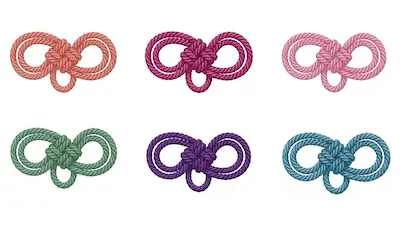
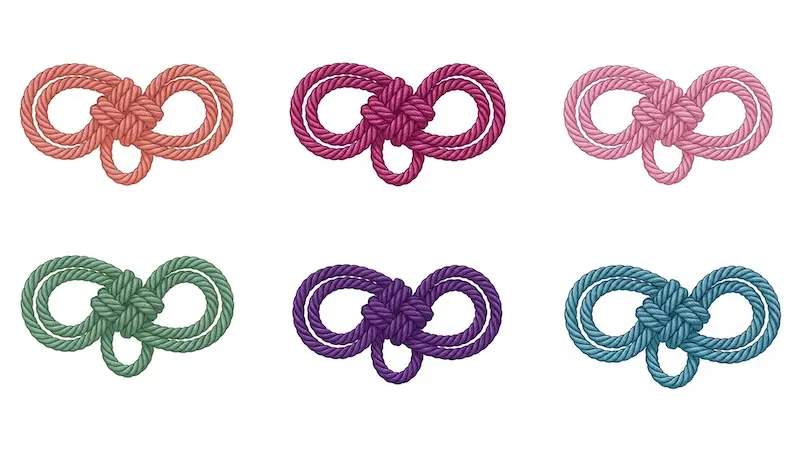
Visit any Japanese convenience store or supermarket.
You will find おむすび (omusubi, rice balls) on the shelves every day.
This name comes from the word 結ぶ (musubu, to tie).
Last time, we explored the theme of 包む (tsutsumu, to wrap).
Today, let’s take the next step by focusing on the act of musubu.
From Tsutsumu to Musubu
You wrap something in a 風呂敷 (furoshiki, traditional wrapping cloth).
However, it will easily come loose as it is.
So, you musubu the ends of the cloth.
Tying completes the final shape.
It also protects the items inside.
In Japan, musubu is not just about securing things.
It brings scattered pieces together into one form.
It also means to organize everything beautifully.
Musubu: The Power to Create Something New
There is an ancient Japanese word, 産霊 (musuhi, spiritual power of creation).
It means “to produce new life or power.”
This word consists of two parts.
産 (musu, to produce) means “to be born” or “to create.”
霊 (hi, mystical power) represents a mysterious force.
The verb musubu comes from this word musuhi.
Originally, it meant creating new forms and connections.
Over time, tying strings or threads also became known as musubu.
Musubu Also Connects People
The word musubu also appears in modern works.
Think of the anime movie 『君の名は。』 (Kimi no Na wa, Your Name).
The word musubi is used impressively there.
It describes the connection between people, time, and memories.
Musubu does not just secure things.
It also represents these invisible connections.
If you like Your Name., you may also enjoy this article:
[Lake Suwa & “Your Name.” — Landscapes and Language]
Connection to the Food Omusubi
One of Japan’s most famous foods is omusubi.
There are several theories about the origin of this name.
One theory says it means to 結び合わせる (musubiawaseru, to tie together) rice grains.
The name comes from connecting each grain into one.
The Difference Between Omusubi and Onigiri
Omusubi and おにぎり (onigiri, rice balls) are the same thing.
The difference is their names and origins.
Onigiri comes from the word 握り飯 (nigirimeshi, squeezed rice).
This action of squeezing rice simply became its name.
There is also a theory about triangle omusubi.
It represented the shape of a mountain.
In the past, people believed gods lived in mountains.
Today, onigiri is used more often in daily life.
However, some people feel a softness and warmth in the sound of omusubi.
Musubu at Shrines: Connecting Fate
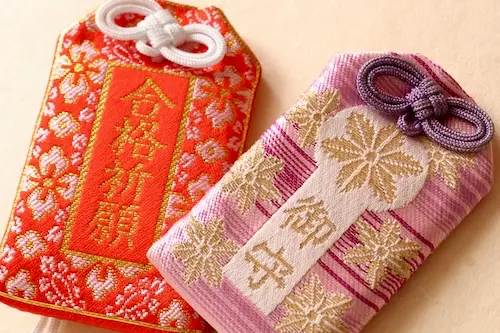
You can find お守り (omamori, lucky charms) at Japanese shrines.
Look at the strings on their bags.
They have a unique knot.
This is a traditional knot called 二重叶結び (nijukanou-musubi).
The front of the knot looks like the kanji 口 (kuchi, mouth).
The back looks like the kanji 十 (ju, ten).
Together, they form the kanji 叶 (kanau, to come true).
The characters are hidden in the knot so your wishes will come true.
Omikuji and Enmusubi (Tying Fate)
You will see many おみくじ (omikuji, paper fortunes) tied at shrines.
Visitors tie them with their wishes.
This action means ご縁を結ぶ (goen o musubu, to tie your fate) with the gods.
The Japanese word 縁 (en, fate or connection) means the bond between people.
It also means destined encounters with things in life.
Where to Tie Omikuji and Etiquette
You should tie omikuji at a designated
おみくじ結び所 (omikuji-musubidokoro, fortune-tying place).
This rule protects the shrine’s trees and scenery.
Also, you do not always have to tie your omikuji.
Some people take them home as a guide for daily life.
Everyday Japanese Expressions Using “Musubu”!
Finally, let’s look at some expressions using “musubu” that you can use in daily conversations.
実を結ぶ
Romaji: Mi o musubu
Meaning: To bear fruit
This means that your hard work pays off and produces good results.
Ex. 長年の努力が実を結んだ。
(Naganen no doryoku ga mi o musunda.)
“Years of hard work bore fruit. / Years of hard work paid off.”
手を結ぶ
Romaji: Te o musubu
Meaning: To join hands / To partner up”
This means to cooperate and work together with someone.
Ex. 他の会社と手を結ぶ。
(Hoka no kaisha to te o musubu.)
“To partner with another company.”
結びの言葉
Romaji: Musubi no kotoba
Meaning: Closing words / Concluding remarks
The final greeting or closing statement at the end of a speech or written text.
Conclusion
“Musubu” means more than just a physical action.
Learning these backgrounds makes Japanese feel closer to you.
This culture is deeply built into the language.
Discover more about Japanese culture in the Japan & Culture category.
Related Posts


 Why Do Japanese People Wrap Things?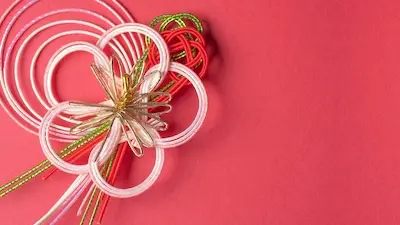
日本のコンビニやスーパー。
毎日のように「おむすび」が並んでいます。
その名前は、「結ぶ」という言葉から来ています。
前回、「包む」というテーマについて考えました。
今回はその次のステップ、「結ぶ」という行為に目を向けてみます。
「包む」から「結ぶ」へ
何かを風呂敷で包みます。
しかし、そのままではすぐに解けてしまいます。
そこで、最後に紐や布の端を「結ぶ」のです。
結ぶことで、初めて形が完成します。
中身もしっかり守られます。
日本の「結ぶ」は、ものを固定するだけではありません。
バラバラなものを一つの形にまとめます。
そして、全体をきれいに整えるという意味があります。
「結ぶ」:新しい形を生み出す力
古い日本語に、「むすひ(産霊)」という言葉があります。
これは、「新しい生命や力を生み出す」という意味です。
この言葉は、2つの意味から成り立っています。
「むす(産)」は、「生まれる」「生み出す」という意味です。
「ひ(霊)」は、神秘的な力を表す言葉です。
動詞の「むすぶ」は、この「むすひ」が語源だと言われています。
もともとは、新しい形やつながりを生み出す意味を持っていました。
そこから、紐や糸をつなぐことも、「結ぶ」と呼ばれるようになりました。
「結ぶ」は、人と人の縁にもつながる
「結ぶ」という言葉は、現代の作品にも登場します。
アニメ映画『君の名は。』
そこでは、「結び」という言葉が印象的に使われています。
人と人、時間、記憶のつながりを表す言葉として描かれていました。
「結ぶ」は、ものを固定するだけではありません。
こうした「目に見えないつながり」も表しています。
『君の名は。』が好きな方は、こちらの記事もおすすめです。
[Lake Suwa & “Your Name.” — Landscapes and Language]
食べ物の「おむすび」との関係
日本を代表する食べ物に「おむすび」があります。
この名前の由来には、いくつかの説があります。
その中の一つが、ご飯粒を「結び合わせる」という説です。
一粒一粒を一つに結んだことから、この名がついたと言われています。
「おむすび」と「おにぎり」の違い
おむすびとおにぎりは同じものです。
違いは名前とその由来です。
「おにぎり」の語源は「握り飯(にぎりめし)」だとされています。
「ご飯を握る」という動作が、そのまま名前になりました。
また、三角形のおむすびを山の形に見立てていたという説もあります。
昔は、山に神様が宿ると考えられていたためです。
現在では、「おにぎり」の方が日常的によく使われます。
しかし、「おむすび」という響きに、やわらかさや温かさを感じる人もいます。
ご縁をつなぐ神社の「結び」
日本の神社にある「お守り」。
その袋の紐を見てください。
少し変わった結び目があります。
これは「二重叶(かのう)結び」という伝統的な結び方です。
結び目の表は「口」の字に見えます。
裏は「十」の字に見えます。
2つを合わせると「叶(かなう)」という漢字になります。
願いが叶うように文字を隠しています。
おみくじと「縁結び」
神社には、たくさんの「おみくじ」が結ばれています。
参拝客が、願いを込めて結んだものです。
これには、神様と自分の「ご縁を結ぶ」という意味があります。
日本語の「縁(えん)」とは、人と人との繋がり。
ものごととの巡り合わせのことです。
おみくじを結ぶ場所とマナー
おみくじは、境内にある「おみくじ結び所」に結びます。
神社の木や景観を守るためです。
また、おみくじは必ず結ぶ必要はありません。
日々の生活の参考にするために持ち帰る人もいます。
日常で使える!「結ぶ」を使った日本語表現
最後に、会話で使える「結ぶ」を使った表現を紹介します。
- 実を結ぶ(みをむすぶ)
努力して、良い結果が出ること。
例:長年の努力が実を結んだ。 - 手を結ぶ(てをむすぶ)
誰かと協力して、一緒に何かをすること。
例:他の会社と手を結ぶ。 - 結びの言葉(むすびのことば)
スピーチや文章の最後の挨拶。
まとめ
「結ぶ」には、動作以上の意味があります。
言葉の背景を知ると、日本語がもっと身近に感じられます。
日本語には、このような文化や感覚が込められています。
日本文化についてもっと知りたい方は、Japan & Culture カテゴリをご覧ください。