


- Is Lake Suwa the Real-Life Inspiration for "Your Name."?
- The Nuance of "Kimi" (You) in Japanese
- The "Path of the Gods" Appearing on the Lake
- Yatsurugi Shrine: A Place to Welcome the Gods
- Tateishi Park: A Popular Scenic Spot for Fans
- Experience Japanese Culture Through the Language
- 諏訪湖(すわこ)─『君の名は。』の湖のモデル?
- 「君」という呼び方
- 湖に現れる「神の通り道」
- 八剣神社──神を迎える祈りの場所
- 立石公園──ファンに人気の絶景スポット
Is Lake Suwa the Real-Life Inspiration for “Your Name.”?
The world-famous anime film Your Name.(君の名は。) was released in 2016.
Have you seen it yet?
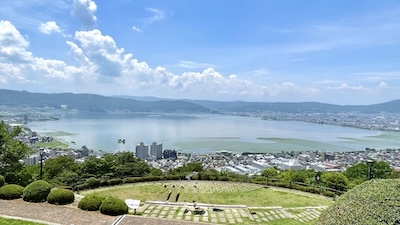
Many believe Lake Suwa (諏訪湖) is one of the real-life models for the lake in the movie.
It is a peaceful lake surrounded by beautiful mountains.
The film’s stunning sky and cloud depictions clearly reflect the scenery of Shinshu (Nagano Prefecture).
The director, Makoto Shinkai (新海誠 ), is actually a native of Nagano.
Because of this, the natural beauty and landscapes of Nagano often appear in his work.
The Nuance of “Kimi” (You) in Japanese
In daily conversation, Japanese people rarely use the word kimi (君).
It means “you.”
Friends and partners usually call each other by name.
They often add the suffix -san (-さん) too.
You will often see kimi in movie titles like Your Name. or hear it in song lyrics.
The word has a literary feel and creates a poetic atmosphere.
There are almost no situations to use kimi in real life.
However, you can enjoy its unique ring in movies and songs.
In Japanese, the context is very important.
Who is speaking and what is the situation?
Understanding these nuances makes learning Japanese more fun.
Note: Both kimi and anata are rarely used in daily life.
For more on anata, check out this article.
「あなた vs アナタ (anata vs. ANATA)」 in Ado’s 「私は最強」 (I’m Invincible)
The “Path of the Gods” Appearing on the Lake
In winter, the surface of Lake Suwa freezes.
Sometimes, the ice rises from the south shore to the north shore.
It looks like a white mountain range.
This phenomenon is called Omiwatari (御神渡り).
Legend says a god lives at the Kamisha (Upper Shrine).
His name is Takeminakata no Kami (建御名方命).
He crosses the frozen lake to visit a goddess.
Her name is Yasakatome no Mikoto (八坂刀売命 ).
She lives at the Shimosha (Lower Shrine).
This story is a famous myth from the Suwa Taisha Shrines.
Takeminakata no Kami is a male deity.
Yasakatome no Mikoto is a female deity.
Scientifically, the ice cracks due to extreme cold.
However, people saw this as the “Path of the Gods.”
Sensing gods in nature is an important part of Japanese culture.
Yatsurugi Shrine: A Place to Welcome the Gods
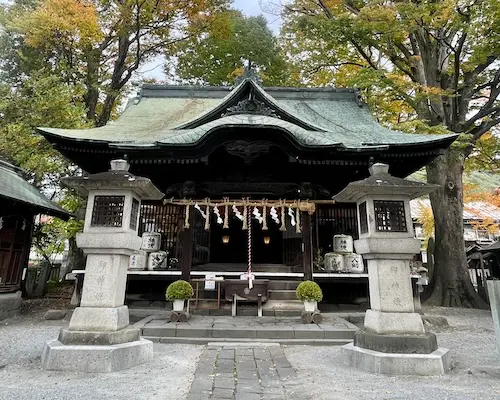
Yatsurugi Shrine (八剣神社 ) sits on the eastern side of Lake Suwa.
This shrine has a deep connection with Omiwatari (御神渡り).
The shrine holds a special ritual called Owatari Shinji (御渡り神事).
Priests examine the path in the ice.
They then officially recognize it as Omiwatari.
This ritual shows a unique Japanese belief.
People feel the presence of gods through changes in nature.
In 2018, people could see the Omiwatari.
However, the lake rarely freezes now due to global warming.
Now, seeing the Omiwatari is difficult.
Japan has a rich culture found in nature, myths, and traditions.
These elements still live on today.
Tateishi Park: A Popular Scenic Spot for Fans
Tateishi Park (立石公園) sits on a hill overlooking Lake Suwa.
From this height, you can see the entire lake stretching out before you.
Many people believe this view inspired the lake in the film Your Name.
Because of this, the park has become a very popular destination for fans.
The scenery is especially stunning when the sun sets over the lake.
During this time, you will often see many people taking photographs.
Additionally, the Former Okaya City Hall is located near Lake Suwa.
It was used as a filming location for the movie Godzilla Minus One.
Visit the “Godzilla Minus One” Set: Discover Showa Retro Architecture
Lake Suwa also appears in the film Banjo no Himawari.
Banjo no Himawari: The Sunflower on the Shogi Board – Movie Review and Locations
Experience Japanese Culture Through the Language
Many people became interested in Japan after watching Your Name.
Learning Japanese helps you understand the language.
It also reveals the cultural background.
For example, you can feel the unique ring of the word kimi.
You can also learn about the belief of finding gods in nature.
You will feel the culture behind the words.
This is one of the true joys of learning Japanese.
Discover more about Japanese culture in the Japan & Culture category.
Related Posts
 Japanese Onomatopoeia in Summer(夏の空とオノマトペ)
 The 3 Meanings of “Sumimasen”(すみません) in Japanese
諏訪湖(すわこ)─『君の名は。』の湖のモデル?
世界的に有名なアニメ映画『君の名は。』は、2016年に公開されました。
あなたはこの作品を観ましたか?
諏訪湖(すわこ)は、映画『君の名は。』に出てくる湖のモデルの一つだといわれています。
山々に囲まれた静かな湖です。
そこに広がる空と雲の描写には、信州(長野県)の風景が色濃く投影されています。
監督をつとめたのは、長野県出身の新海誠(しんかい まこと)監督です。
彼の作品には、長野の自然や風景が登場します。
「君」という呼び方
日本語の 「君(きみ)」 は、普段の会話ではあまり使われません。
親しい友達や恋人でも、名前(+さん)で呼ぶことが多いです。
「君」は『君の名は。』のような映画のタイトルや歌詞の中でよく使われます。
この言葉は、文学的で詩的な雰囲気があります。
普段の会話では、「君」を使う場面はほとんどありません。
映画や歌で見かけたときに、その特別な響きを楽しむことができます。
日本語では、言葉そのものだけでなく、「誰が・どんな場面で使うか」も大切です。
こうしたニュアンスを知ると、日本語の面白さがもっと感じられます。
* 『君』と『あなた』、どちらも普段はあまり使わない日本語の呼び方です。
「あなた」については記事はこちらをご覧ください。
「あなた vs アナタ (anata vs. ANATA)」 in Ado’s 「私は最強」 (I’m Invincible)
湖に現れる「神の通り道」
冬の諏訪湖では、南の岸から北の岸へかけて氷が盛り上がります。
それは白い山脈のように見えます。
これは「御神渡り(おみわたり)」と呼ばれます。
諏訪大社上社の建御名方命(たけみなかたのかみ)が、下社の八坂刀売命(やさかとめのみこと)のもとへ通った伝えられています。
建御名方命は男神 (おとこがみ)です。
八坂刀売命は女神 (おんながみ) です。
この話は、諏訪大社に伝わる神話の一つです。
自然現象と見ると、寒さによる氷の膨張でできる裂け目です。
しかし、人々はそこに「神の通り道」を見ました。
自然の中に神の存在を感じるという考え方は、日本文化を理解するうえでも大切な視点です。
八剣神社──神を迎える祈りの場所
諏訪湖の東側にある八剣神社(やつるぎじんじゃ)があります。
この神社は、「御神渡り」と深く結びついています。
ここでは「御渡り神事(おわたりしんじ)」が行われます。
神職が氷の道筋を確認し、「御神渡り」と認定します。
この行事は、自然の変化を通して神の存在を感じる、日本人の信仰が表れています。
2018年には、御神渡りを見ることができました。
しかし近年は、地球の温暖化の影響で諏訪湖が凍りにくくなっています。
そのため、御神渡りを見ることは難しくなっています。
このように、日本には自然や神話、伝統行事を通して感じられる文化の豊かさがあります。
立石公園──ファンに人気の絶景スポット
立石公園(たていしこうえん)は、諏訪湖を見下ろす高台にあります。
ここからは、諏訪湖全体を一望できます。
この景色は映画『君の名は。』に登場する湖のモデルの一つといわれます。
そのため、多くの人が訪れる人気スポットになりました。
特に、湖に夕陽が沈んでいく時間帯はとてもきれいです。
写真を撮る人の姿も多く見られます。
諏訪湖の近くには、旧岡谷市役所もあります。
映画『ゴジラ-1.0』の撮影にも使われました。
Visit the “Godzilla Minus One” Set: Discover Showa Retro Architecture
映画『盤上の向日葵(Banjo no Himawari)』にも、諏訪湖がロケ地として使われました。
Banjo no Himawari: The Sunflower on the Shogi Board – Movie Review and Locations
日本語を通して感じる日本文化
『君の名は。』をきっかけに、日本に興味を持った人も多いかもしれません。
日本語を学ぶと、映画の言葉や、日本文化の背景も少しずつ見えてきます。
たとえば、「君」という言葉の響きや、自然の中に神を感じる考え方です。
言葉だけではなく、その奥にある文化も感じられるようになります。
それも、日本語を学ぶ楽しさの一つです。
日本文化についてもっと知りたい方は、Japan & Culture カテゴリをご覧ください。