



What Does Banjo no Himawari Mean?
Banjo no Himawari (盤上の向日葵) is a Japanese movie released in 2025.
It is known internationally as THE FINAL PIECE.
Did you have a chance to watch it yet?
Interestingly, it premiered in Busan before its Japanese release.
Within its quiet tension, the story carefully depicts deep human emotions.
It is a truly moving film that stays in your heart.
Which Came First: The Book or the Movie?
I always hesitate.
Should I read the book first or watch the movie?
For this title, I chose the movie first. Afterward, I read the original novel.
Which do you prefer?
Do you read the book first?
Or do you watch the movie first?
Some like imagining the world through words before seeing the visuals.
Others prefer feeling the atmosphere on screen before returning to the text.
Each choice offers a different kind of joy.
The Golden Age of Shogi
The story takes place from the late Showa era (昭和時代) to the early Heisei era (平成時代).
In Japan, this spans from the late 1980s to the early 1990s.
At that time, many star players appeared in the Shogi world.
People even watched their matches on TV.
Shogi was often called a “mind sport.”
It was much more popular than it is today.
During this era, the game truly captured the nation’s heart.
The movie beautifully reflects the atmosphere of that period.
As times changed, people’s values began to shift as well.
The story quietly explores themes like loneliness and the meaning of life.
It is fascinating to experience the unique vibe of the Showa and Heisei eras through this film.
“Banjo” and “Himawari”
The word Banjo (盤上) literally means “on the board.”
It usually refers to games played on a wooden board, such as Shogi or Go (called “Igo” in Japanese).
However, in this movie, Banjo feels like more than just a Shogi board.
It represents the stage of life itself.
It is a place where people struggle, make choices, and face their destiny.
The word seems to carry these deep, overlapping meanings.
“Banjo” and Human Life
In this film, Banjo (盤上) feels like more than a game board.
It is a stage where characters risk their lives.
Within the quiet world of Shogi, they fight for their beliefs and pride.
Each move on the board reflects their hesitation and inner struggles.
It also carries heavy memories from their past.
“Himawari”: Hope and Loneliness
The sunflower, or Himawari (向日葵), always grows toward the sun.
To me, this flower represents the characters’ passion and hope.
However, I also sensed their loneliness and sadness.
Because the flower is so bright, the shadows behind it become even more visible.
This contrast left a deep impression on me.
Learn more about the word “Himawari” and its Kanji:
What Is This in Japanese? —A Guide to Natural Phrases and Asking Etiquette
The Meaning of Banjo no Himawari
The title Banjo no Himawari suggests both light and shadow.
On the flip side of the bright sunflower, there is deep loneliness.
The characters live with pain and solitude.
Nevertheless, they still try to move toward the light.
Their resilience reminds me of the sunflower, which always faces the sun.
Furthermore, Japanese words are deeply connected to the meanings of their Kanji (漢字).
Words like Banjo (盤上) and Himawari (向日葵) carry literal meanings, but they also evoke deep emotions.
This film is a perfect way to learn the depth of the Japanese language.
I highly recommend it to all learners.
Filming Location: Former Okaya City Hall
One specific building served as the venue for the Shogi tournament.
It is the Former Okaya City Hall, built in 1936.
The architecture has a stately presence.
At the same time, it feels nostalgic.
Interestingly, this building was also featured in the movie Godzilla Minus One.
Even at the same location, the impression changes completely depending on the film.
In Banjo no Himawari, the building reflects the atmosphere of the late Showa era.
Meanwhile, in Godzilla Minus One, it shows life in the late 1940s.
It is fascinating how one building supports stories from different eras.
The Former Okaya City Hall truly shaped the world of the film.
Visit the “Godzilla Minus One” Set: Discover Showa Retro Architecture
Lake Suwa and the Story Setting
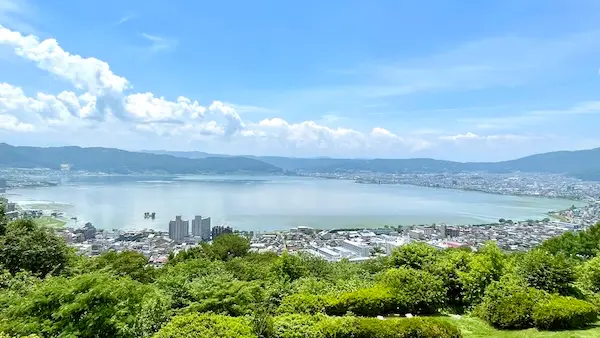
The movie features several scenes of Lake Suwa.
These views echo the protagonist’s childhood and leave a quiet impression.
Lake Suwa is also famous for its appearance in the anime Your Name. (君の名は。)
It is a small lake with a circumference of about 16 km.
Interestingly, the film likely uses the same viewpoint as the anime.
While the movie and anime portray the lake differently, both capture its serene beauty.
Explore the landscapes of Lake Suwa and Your Name.
Lake Suwa & “Your Name.” — Landscapes and Language
Conclusion
I believe Banjo no Himawari is a story about life told through Shogi.
The characters struggle on their own “boards.”
Even when they hesitate, they keep searching for answers.
In the quiet matches, I felt both human strength and weakness.
Like sunflowers facing the light, the characters continue moving forward.
This film also reminded me how deeply Japanese language and culture are connected.
Discover more about Japanese culture in the Japan & Culture category.
Related Posts

『盤上の向日葵』とは?
2025年に日本で公開され、大きな反響を呼んだ映画『盤上の向日葵』。
あなたはもうご覧になりましたか?
この映画は、日本よりも先に韓国の釜山国際映画祭で上映されたそうです。
静かな緊張感の中で、人の心の奥が丁寧に描かれていました。
心に残る、とてもいい映画でした。
原作と映画、どちらが先?
私はいつも迷います。
原作を先に読むか、映画を先に見るかです。
今回は、映画を先に見て、後から原作を読みました。
あなたは先に原作を読みますか?
それとも先に映画を見ますか?
原作で想像を広げてから映像を見るか。
それとも、映画で世界観を感じてから文字に戻るか。
それぞれに違う楽しみがありますね。
将棋の黄金期
この作品の舞台は、昭和時代(1926年〜1989年)の終わりから平成時代(1989年〜2019年)の初めです。
当時は将棋界に多くのスター棋士が多くいました。
テレビでも対局が放送されていることもありました。
将棋は「知のスポーツ」と呼ばれ、今よりももっと身近でした。
また、将棋が熱い存在だった時代です。
映画からも、当時の空気を感じました。
時代が変わっていく中で、人々の価値観も少しずつ変化していきます。
この作品は、「孤独」や「生きること」を静かに問いかけているようでした。
また、昭和や平成という時代感覚に触れられることも興味深いです。
『盤上』と『向日葵』の意味
「盤上」とは、「盤(ばん)の上」という意味です。
将棋や囲碁のように、盤を使うゲームで使われる言葉です。
しかし、この映画の「盤上」は、ただの将棋盤ではないように感じました。
人生の舞台。
あるいは、人が悩み、選択し、運命と向き合う場所。
そんな意味も重なっているように思います。
『盤上』と人生
この作品の「盤上」は、登場人物たちが人生をかけて生きる「舞台」のようでした。
将棋という静かな世界の中で、彼らは自分の信念や誇りをかけて戦います。
一手一手には、迷いや葛藤が込められているように感じました。
そこには、過去の記憶も重なっています。
『向日葵』と希望と孤独
「向日葵(ひまわり)」は、太陽に向かって伸びる花です。
私は、この花が登場人物たちの希望や情熱を表しているように感じました。
しかし同時に、孤独や悲しさも感じます。
明るい花だからこそ、その裏にある影も見えてくる。
そんな印象が残りました。
「向日葵」ということばと漢字。
What Is This in Japanese? —A Guide to Natural Phrases and Asking Etiquette
タイトルの意味
『盤上の向日葵』というタイトルには、光と影の両方が感じられます。
登場人物たちは、苦しみや孤独を抱えながら生きています。
それでも、少しでも光の方へ進もうとしています。
その姿が、「向日葵」という言葉と重なって見えました。
また、日本語の言葉は、漢字の意味が深く結びついている言葉です。
「盤上」や「向日葵」という言葉には、漢字の意味があります。
そして、そこに感情やイメージも重なっているように感じました。
この作品は、その深さを学ぶうえでも、日本語学習者に紹介したい一作です。
旧岡谷市役所(ロケ地)
映画の中で、将棋大会の会場として使われていた建物があります。
昭和11年(1936年)に建てられた「旧岡谷市役所庁舎」です。
重厚感がありますが、どこか懐かしい雰囲気もあります。
この建物は、『ゴジラ-1.0』にも使われていました。
同じ場所でも、作品によって印象が大きく変わります。
『盤上の向日葵』では昭和の終わり頃の空気を感じました。
一方、『ゴジラ-1.0』では、昭和20年代の様子を知ることができます。
ひとつの建物が、異なる時代の物語を支えているのが印象的でした。
映画の世界観を支えた旧岡谷市役所庁舎。
Visit the “Godzilla Minus One” Set: Discover Showa Retro Architecture
諏訪湖と物語の風景
映画の中には、諏訪湖が映る場面もありました。
主人公の少年時代の風景と重なり、静かな余韻を残しています。
諏訪湖は、『君の名は。』に登場した湖としても知られています。
1周が16kmの、小さな湖です。
おそらく『君の名は。』と同じ場所から見た景色も使われていました。
映画とアニメで諏訪湖の使われ方は違います。
それでも、どちらも静かな美しさがります。
『君の名は。』のモデルといわれる諏訪湖。
Lake Suwa & “Your Name.”: Landscapes and Language
まとめ
『盤上の向日葵』は、将棋を通して、「生きること」を描いた作品だと思います。
登場人物たちは、それぞれの「盤上」で悩みます。
迷いながらも、自分の答えを探しています。
静かな対局の場面の中に、人の心の強さと弱さが伝わってきました。
そして「向日葵」のように、少しでも光の方を見ようとする姿が印象的でした。
日本語教師としても、言葉の力と生きることの深さを感じた作品でした。
観る人それぞれが、自分の中にある「盤上」と「向日葵」を見つけられる映画です。
日本文化についてもっと知りたい方は、Japan & Culture カテゴリをご覧ください。