

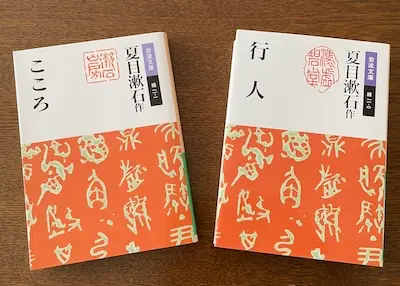
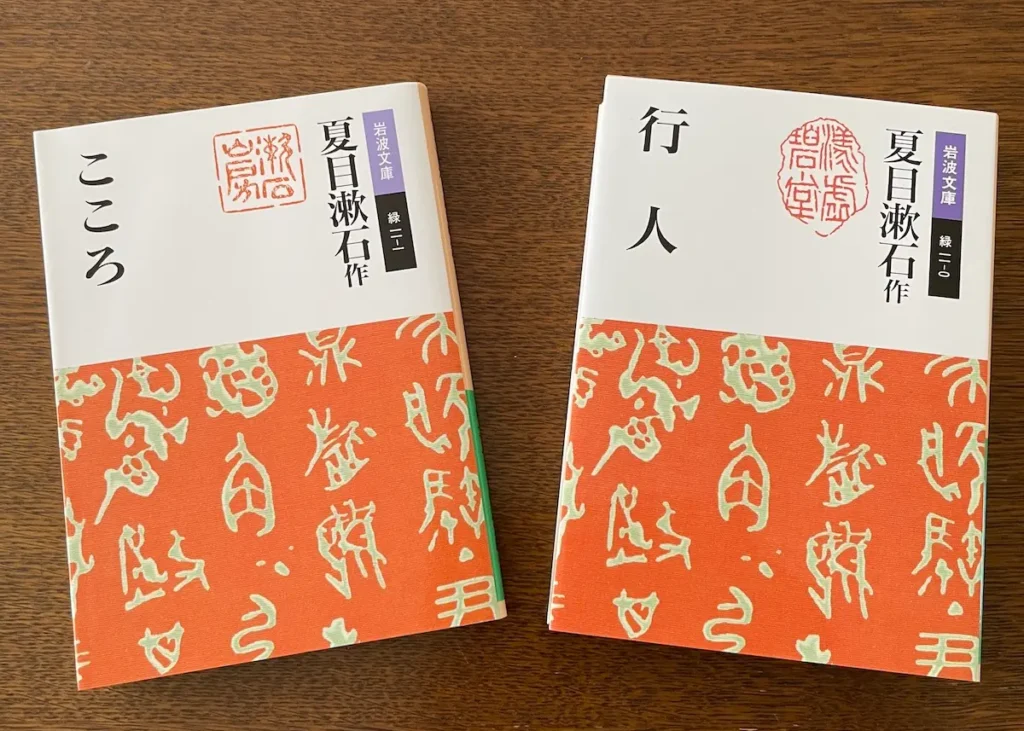
出典:(左)夏目漱石『こころ』、岩波書店 / (右)夏目漱石『行人』、岩波書店
Source: (left) Natsume Sōseki, Kokoro, Iwanami Shoten / (right) Natsume Sōseki, Kōjin, Iwanami Shoten
- The Real Natsume Soseki (夏目漱石): A Talent Born from Solitude
- Soseki’s Masterpieces: From Botchan to Kojin
- “The Moon is Beautiful, Isn’t It?”: The Aesthetics of Japanese
- The Meiji Beauty Soseki Loved
- Conclusion: Discovering the Beauty of Japanese with Soseki
- 漱石の素顔:孤独が育てた才能
- 漱石の代表作:『坊っちゃん』から『行人』まで
- 「月がきれいですね」:日本語の美学
- 漱石が愛した「明治の美」
- まとめ:今こそ漱石を。日本語を再発見する
The Real Natsume Soseki (夏目漱石): A Talent Born from Solitude
Ask anyone to name the most famous Japanese novelist.
Most would say Natsume Soseki (夏目漱石, 1867–1916).
His face even appeared on the 1,000-yen bill.
Born in Tokyo in 1867, Soseki lived through a time of great change in Japan.
The name he was given at birth was Kinnosuke.
Soseki’s life was not easy.
He was sent to foster parents as a young child.
At age nine, he returned to his biological family, but his home life was complex.
The loneliness he felt during this time deeply shaped his later work.
Friendship and Study Abroad
At university, Soseki met the poet Masaoka Shiki (正岡子規, 1867–1902).
They formed a deep bond and shared their passion for literature.
After graduating, Soseki became an English teacher.
Later, in 1900, he moved to London to study.
However, life in a foreign land was incredibly lonely.
This suffering became the catalyst for his birth as a writer.
Soseki’s Masterpieces: From Botchan to Kojin
After returning to Japan, Soseki began to write.
Writing helped him heal his troubled mind. Here are some of his most famous works:
- Wagahai wa Neko de aru (吾輩は猫である / I Am a Cat):
A humorous look at human society through a cat’s eyes. - Botchan (坊っちゃん / Botchan):
A lively story about a teacher with a strong sense of justice. - Sanshiro (三四郎 / Sanshiro):
A bittersweet story of youth that everyone can relate to. - Kojin (行人 / The Wayfarer):
A deep look into the isolation of the modern intellectual. - Kokoro (こころ / Kokoro):
An eternal masterpiece of Japanese literature.
His “failure” in London was essential to his work.
He looked deep into himself while living in an unknown world.
“The Moon is Beautiful, Isn’t It?”: The Aesthetics of Japanese
In Japanese language education, Soseki’s words are a frequent topic.
The most famous example is the “The moon is beautiful, isn’t it?” episode.
Why We Don’t Put “Love” into Words
Soseki famously opposed translating “I love you” as “Ai shite iru (愛している).”
Instead, he suggested a different phrase to his students.
It was “Tsuki ga kirei desu ne (月がきれいですね / The moon is beautiful, isn’t it?).”
Japanese people often avoid expressing feelings directly.
Instead, they entrust their emotions to beautiful scenery.
This reflects a subtle Japanese sense of modesty called Okuyukashisa (奥ゆかしさ).
It is the beauty of being refined and reserved.
Soseki and I: A Century-Old Bond Through Seals
Soseki was very particular about his personal seals.
In Japan, these are called insho (印章) or hanko.
In fact, my ancestor was one of the craftsmen who carved a seal for Soseki.
Please look at the main image of this article.
It shows the novel Kojin (行人).
The seal you see there was made by my ancestor.
I feel a deep connection that transcends 100 years of time.
Read More:
[Discovering My Roots: My Ancestor’s Secret Connection to Natsume Soseki]
The Meiji Beauty Soseki Loved
From the Meiji to Taisho eras, Japan westernized rapidly.
However, Soseki continued to love traditional Japanese beauty.
Soseki Sanbo (漱石山房): A Refined Study
His study, called Soseki Sanbo, was a space where Japanese and Western styles harmonized perfectly.
He surrounded himself with favorite stationery and seasonal flowers.
His attention to detail shines through each item.
When you learn about the culture of that time, his stories become even more vivid.
Mokuyokai (木曜会): Where Akutagawa Admired Him
Many students gathered around Soseki.
Every Thursday, he held a salon called Mokuyokai.
The name literally means “Thursday Club.”
They discussed literature and philosophy late into the day.
Young talents like Akutagawa Ryunosuke (芥川龍之介, 1892–1927) admired him deeply.
Soseki was a strict but warm person. He was the ideal teacher.
Conclusion: Discovering the Beauty of Japanese with Soseki
Why do we still read Soseki today?
Even now, his masterpiece Kokoro (こころ) is featured in Japanese high school textbooks.
Words That Stay Close to Modern Loneliness
The loneliness and struggles Soseki wrote about overlap with our problems today.
Although eras change, the essence of human nature remains the same.
His words transcend time and stay close to our hearts.
Touching the “Richness” of Japanese
Soseki’s writing has a beautiful rhythm.
Reading his work helps you rediscover the delicacy of the language.
By understanding the culture behind the words, you can master natural and expressive Japanese.
Explore more about Japanese seal art in the Japanese Seal Art category.
Related Posts

 Why Do We Whisk (tateru) Matcha?
漱石の素顔:孤独が育てた才能
日本で最も有名な小説家といえば、夏目漱石(1867–1916)でしょう。
かつては千円札の肖像にもなりました。
彼は1867年、激動の東京に生まれました。
本名は「金之助」といいます。
漱石の人生は平坦ではありませんでした。
幼い頃、一度養子に出されています。
その後、9歳で実家に戻りますが、家庭環境は複雑でした。
この時期に味わった孤独感は、後の作品に大きな影響を与えました。
友情とロンドン留学
大学では正岡子規(1867-1902)と出会います。
二人は深い友情で結ばれ、共に文学を語り合いました。
卒業後、漱石は英語教師になります。そして1900年に、ロンドンへ留学しました。
しかし、異国での生活は孤独を極めました。
この苦しみこそが、作家・漱石を誕生させるきっかけとなったのです。
漱石の代表作:『坊っちゃん』から『行人』まで
帰国後、漱石は文章を書き始めました。
書くことは、傷ついた心を癒やすことでもありました。
ここで、彼の代表的な作品をいくつかご紹介します。
- 『吾輩は猫である』: 猫の視点で、人間社会の面白い姿を描いています。
- 『坊っちゃん』: 正義感の強い先生が活躍する、元気が出る物語です。
- 『三四郎』: 誰もが共感できる、甘く切ない青春のストーリーです。
- 『行人』: インテリが抱える孤独を深く見つめた作品です。
- 『こころ』: 日本文学の中で、今もなお愛され続けている傑作です。
ロンドンでの「挫折」は、彼の文学に欠かせないものでした。
知らない世界で、自分を見つめ直した経験。
「自分とは何か」という問い続けたことが、作品の大切なテーマとなりました。
「月がきれいですね」:日本語の美学
教育の現場でも、漱石の言葉はよく話題にのぼります。
特に有名なのが「月がきれいですね」というエピソードです。
なぜ「愛」を言葉にしないのか
漱石は “I love you” を「愛している」と訳すことに反対しました。
代わりに、学生たちには、「月がきれいですね」と訳しなさい、と教えたという話があります。
日本人は、気持ちを直接言葉にするのを避ける傾向があります。
代わりに、美しい景色に想いを託すのです。
これは、控えめで奥深い日本の美意識「奥ゆかしさ」を表しています。
留学生も驚く「奥ゆかしさ」
先日、中国からの留学生と話していた時のことです。
彼から「先生、夏目漱石は、『I love you』をどう訳したか知っていますか」と聞いてくれました。
実は、漱石は中国でも非常に有名です。
国を越えて、この繊細な感性が共有されていることに驚きました。
ストレートな表現も良いです。
しかし、「行間を読む」美しさは、世界中の人の心に響くのだと感じました。
漱石と私:100年を越える「印章」の絆
漱石は「印章(ハンコ)」に強いこだわりを持っていました。
実は、私の先祖も漱石の印を彫った職人の一人でした。
この記事のメイン画像を見てください。小説『行人』が写っています。
そこに見える印は、私の先祖が作ったものです。
100年の時を超えて、深いつながりを感じています。
あわせて読みたい :
[Discovering My Roots: My Ancestor’s Secret Connection to Natsume Soseki]
漱石が愛した「明治の美」
明治から大正へ、日本は急速に西洋化しました。
しかし、漱石は伝統的な日本の美しさを愛し続けました。
漱石山房:洗練された書斎
漱石の書斎「漱石山房」には、和洋が調和した場所でした。
お気に入りの文房具。季節の花々。
一つひとつの持ち物に、漱石のこだわりが感じられます。
当時の文化を知ると、彼の物語はもっと生き生きと感じられます。
木曜会:芥川龍之介が憧れた場所
漱石のもとには多くの弟子が集まりました。
毎週木曜日に「木曜会」を開き、文学や哲学が語り合いました。
芥川龍之介(1892-1927)のような若くて才能ある人も、漱石を慕っていました。
彼は厳しくも温かい人で、理想的な先生でした。
まとめ:今こそ漱石を。日本語を再発見する
なぜ今も、私たちは漱石を読むのでしょうか。
今でも日本の高校の国語の教科書に『こころ』が掲載されています。
現代の孤独に寄り添う言葉
漱石の描く孤独や葛藤は、現代の私たちが抱える悩みと重なります。
時代が変わっても、人間の本質は変わりません。
彼の言葉は、時を超えて私たちの心に寄り添ってくれます。
日本語の「豊かさ」に触れる
漱石の文章は、リズムが整っていて美しいです。
現代の「書き言葉」の基礎を作った彼の作品を読むと、日本語の繊細さを再発見できます。
単語の意味を覚えるだけでなく、その背景にある日本人の考え方や美意識を学ぶ。
これこそが言語学習の楽しさだと感じ、この記事を書きました。
ハンコ文化についてもっと知りたい方は、Japanese Seal Art カテゴリをご覧ください。