

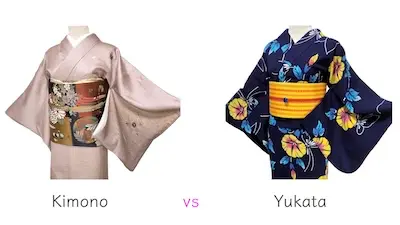
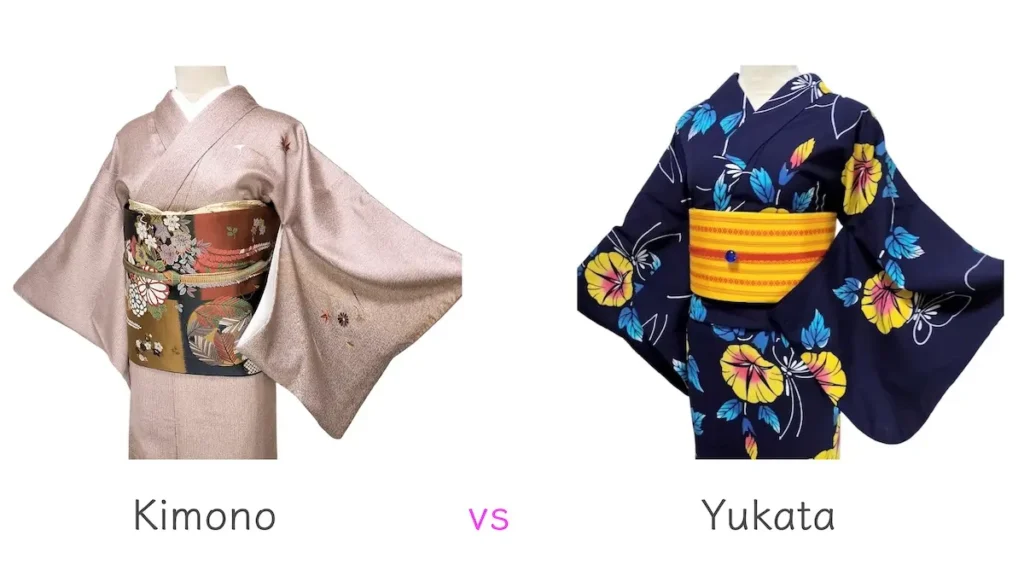
What is the difference between kimono (着物) and yukata (浴衣) in Japan?
Many Japanese language learners may ask this question at least once.
They look very similar.
However, their history, occasions, and meanings are very different.
In this article, we will clearly explain these differences.
Kimono – A Traditional Japanese Formal Wear
Kimono is a traditional Japanese formal outfit.
It once was everyday clothing in Japan.
Today, it is mainly worn for special occasions such as weddings and graduation ceremonies.
Kimono Materials and Style
Silk is often used for kimono fabric.
Careful tailoring and the way the obi (belt)(帯) is tied give kimono its elegant look.
One of the most well-known styles is the furisode (振袖).
Furisode is the most formal kimono for unmarried women.
Its beautiful and colorful design represents the elegance of Japanese culture.
For more about Japanese coming-of-age ceremonies and furisode:
[Seijin-shiki: Why do Japanese Women Wear Furisode?]
At weddings, guests may wear black tomesode kimono (黒留袖) or furisode (振袖).
Brides may also choose to wear shiromuku (白無垢), a traditional white wedding kimono.
Shiromuku symbolizes purity.
It represents a traditional Japanese wedding style.
Yukata – A Casual Kimono for Enjoying Summer in Japan
Yukata is a traditional Japanese outfit that represents summer in Japan.
Its origin dates back to the Heian period (794-1185) and a garment called yukatabira (湯帷子).
It was originally worn after bathing.
Today, yukata is widely worn at summer festivals and fireworks events.
It is usually made of cotton.
Cotton fabric is breathable and keeps people cool in hot weather.
The dressing style is also simple.
Because of this, yukata has become an easy and casual type of kimono for anyone to wear.
For more details about yukata, see this article:
[The Yukata (ゆかた): Japan’s Traditional Summer Robe, Its Meaning, and Japanese Words to Learn]
The Story of “Kimono” and “Yukata” Through Kanji
“Kimono” and “yukata” may seem similar at first.
Let’s look at their meanings through the kanji characters.
Each word reflects its history and role in Japanese culture.
1. Kimono – The Basic Clothing in Japan
First, let’s look at the kanji for kimono.
- 着る (kiru): to wear or put on
- 物 (mono): thing
Literally, it means “a thing to wear.”
In the past, people in Japan wore traditional clothing in daily life.
At that time, kimono did not refer to a specific style.
It simply meant clothing itself.
Later, during the Meiji period (1868–1912), Western clothing was introduced to Japan.
Japanese traditional clothing was then called “wafuku (和服)” to distinguish it from Western clothes.
The word “kimono” still reflects Japan’s long cultural history with clothing.
2. Yukata – A Garment Born from Bathing Culture
Next, let’s look at the kanji for yukata.
- 浴びる (abiru): to bathe or wash with water
- 衣 (koromo): clothing
In the Heian period, people wore special clothing for bathing.
This garment was called yua-mi katabira (湯浴み帷子).
Over time, the word was shortened to “yu-kata.”
Later, kanji with a similar meaning were added.
This is how the word “浴衣 (yukata)” was formed.
As the kanji suggests, yukata was originally used for bathing (abiru in Japanese).
Nobles used steam baths instead of modern bathtubs.
Yukata was worn to cover the body and absorb sweat.
In the Edo period (1603–1868), public bathhouses became popular.
Yukata became casual clothing worn after bathing.
Today, it is a symbol of summer in Japan.
But its origin is bath-related clothing.
How Are Kimono and Yukata Different? [Comparison Table]
Kimono and yukata are traditional Japanese clothing
However, they have different roles and uses.
| Feature | Kimono | Yukata |
|---|---|---|
| Occasion | Formal events such as weddings and graduation ceremonies | Summer festivals and fireworks displays |
| Material | Usually silk | Usually cotton |
| Layers | Multiple layers | Single layer |
| Season | Worn year-round | Summer only |
| Formality | Formal and traditional | Casual and relaxed |
Conclusion
Kimono is formal traditional wear for important life events.
It represents tradition and formality in Japanese culture.
Yukata is a casual summer outfit for festivals and seasonal events.
It reflects Japan’s connection to everyday culture and nature.
Both are important parts of Japanese culture.
Explore more about Japanese Traditional Garments.
Visit my [Kimono & Traditional Fashion] category.
Discover more about Japanese culture in the Japan & Culture category.
Related Posts
 Did Natsume Sōseki Love Seals?
 Why Do We Whisk (tateru) Matcha?
日本の「着物(きもの)」と「浴衣(ゆかた)」には、どのような違いがあるのでしょうか。
日本語を学ぶ多くの方が、一度は疑問に思うかもしれません。
見た目はよく似ています。
しかし、歴史や着る場面、意味は大きく異なります。
ここでは、その違いをわかりやすく見ていきます。
格式と美しさをもつ「着物」
着物(きもの)は、日本を代表する伝統的な正装です。
かつては日常着として広く親しまれてきました。
そして、現代では主に結婚式や卒業式など、特別な場面で着られることが多いです。
素材には絹が使われることが多いです。
また、丁寧な仕立てや帯の結び方が、全体の装いに品格を与えます。
中でも「振袖(ふりそで)」は、未婚女性の第一礼装として知られています。
その華やかな姿は、日本文化の美しさを象徴しています。
*日本の成人式の振袖について。
[Seijin-shiki: Why do Japanese Women Wear Furisode?]
また、結婚式では、参列者が黒留袖や振袖を着ることもあります。
また、花嫁は白無垢を選ぶこともあります。
白無垢は清らかさを象徴し、日本の伝統的な結婚式を表す衣装です。
夏を楽しむカジュアルな和装「浴衣」
浴衣(ゆかた)は、日本の夏を象徴する衣装です。
そのルーツは平安時代の「湯帷子(ゆかたびら)」にあります。
もともとは、お風呂上がりに着るものでした。
現代では、夏祭りや花火大会などで広く親しまれています。
素材は主に木綿です。
通気性が良く、夏でも涼しく過ごせます。
また、着付けも比較的シンプルです。
そのため、誰でも気軽に着られる和服として定着していま
* 浴衣について詳しくはこちらの。
The Yukata (ゆかた): Japan’s Traditional Summer Robe, Its Meaning, and Japanese Words to Learn
漢字から見る「着物」と「浴衣」の物語
「着物」と「浴衣」。
この二つの違いを、漢字の成り立ちから見てみましょう。
それぞれの言葉に込められた意味や、役割と確認していきましょう。
1. 「着物(KIMONO)」:日本人の基本の衣服
まずは「着物」という漢字の構成です。
- 着る(きる):身にまとう(to wear / to put on)
- 物(もの):もの(Thing)
文字通り「着るもの」という意味です。
かつて日本では、日常的に和装が着られていました。
そのため「着物」は特定のスタイルではなく「衣装そのもの」を指す言葉でした。
その後、明治時代に入り、西洋の服(洋服)が入ってきました。
そこで、日本の伝統的な服を「和服」と呼んで、区別するようになりました。
「着物」という言葉には、日本人が大切にしてきた衣装の文化がそのまま残っています。
2. 「浴衣(YUKATA)」:お風呂文化から生まれた服
次に「浴衣」という漢字の構成です。
- 浴びる(あびる):水や湯を浴びること
- 衣(ころも):衣服、ころも
もともとは平安時代、お風呂のときに着る服がありました。
それは、「湯浴み帷子(ゆあみ・かたびら)」と呼ばれていました。
この言葉が簡略化され、「ゆ・かた」という読み方だけが残りました。
そこに、意味が合う漢字として「浴衣」を当てはめられました。
「浴衣」という漢字からもわかる通り、本来、お風呂(浴びる)のためのものでした。
当時の貴族は、現代のような湯船ではなく、蒸し風呂を使っていました。
その際、肌を隠し、汗を吸い取るために着たのが始まりです。
その後、江戸時代なると、銭湯文化が広がります。
浴衣は、風呂上がりのリラックスウェアとして庶民にも定着しました。
現代では夏の風物詩となっていますが、もともとは「お風呂のための服」でした。
着物と浴衣はどう違う?【比較表】
着物と浴衣は、日本の伝統的な衣服です。
しかし、役割や使われ方には違いがあります。
| 特徴 | 着物 | 浴衣 |
|---|---|---|
| 着る場面 | 結婚式や卒業式などの式典 | 夏祭りや花火大会 |
| 素材 | 絹が多い | 木綿が多い |
| 重ね方 | 複数の層 | 1枚のみ |
| 季節 | 一年を通して着用 | 夏のみ |
| 格式 | フォーマル | カジュアル |
まとめ
着物と浴衣は、それぞれ異なる役割を持つ日本の衣装です。
着物は、結婚式や卒業式、成人式など、人生の大切な節目で着られる正式な衣装です。
伝統や格式を重んじる場面で選ばれます。
一方、浴衣は夏を楽しむためのカジュアルな衣装です。
夏祭りや花火大会など、季節の行事でよく着用されます。
着物と浴衣は、使われる場面が異なります。
どちらも日本の文化を身近に感じさせる大切な衣装です。
日本文化についてもっと知りたい方は、Japan & Culture カテゴリをご覧ください。