

Japan’s “Seijin-shiki” vs. the American “Prom”
In Japan, “Seijin-shiki (成人式)” takes place every January.
It is held on the second Monday to celebrate new adults.
This event is similar to the American “Prom.”
Both ceremonies mark important milestones in life.
However, their styles are different.
Prom is a social dance for couples.
In contrast, the Japanese ceremony also serves as a class reunion.
Young people return home to celebrate with childhood friends.
Adulthood is 18. But the Ceremony is at 20?
In April 2022, Japan’s legal age of adulthood changed.
It was lowered from 20 to 18 years old.
This was the first change in about 140 years since the Meiji era.
This is a major shift for Japan to meet global standards.
It also reflects Japan’s wish to include young voices in society.
Here are some things that have changed for 18-year-olds:
- Marriage: Both men and women can now get married at 18.
- Voting: They now have the right to vote.
- Contracts: They can sign contracts alone.
However, some important rules remain the same.
Drinking and smoking are still only for those 20 and older.
Alcohol and tobacco laws vary by country.
If you are visiting Japan around age 20, please be careful!
Why is the ceremony still at 20?
Until 2020, every city held the ceremony for those turning 20.
In Japan, students in the same grade celebrate together.
This is why the ceremony feels like a class reunion.
Even after the law changed, most cities still hold it at age 20.
There are two main reasons for this.
First, it was physically difficult to hold the ceremony for three generations at once.
This includes everyone aged 18, 19, and 20.
Second, age 18 is a very busy time for students.
They are often preparing for university exams or job hunting.
Because of these reasons, the ceremony is still held for 20-year-olds.
Furisode vs. Standard Kimono
Most Japanese people rarely wear a Kimono (着物) in daily life.
However, many women wear a special type called “Furisode” (振袖) for the ceremony.
On the other hand, most men wear suits.
But some men choose traditional “Montsuki-hakama (紋付き袴)” (formal kimono for men).
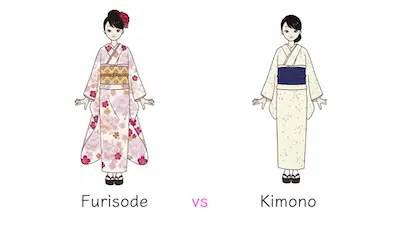
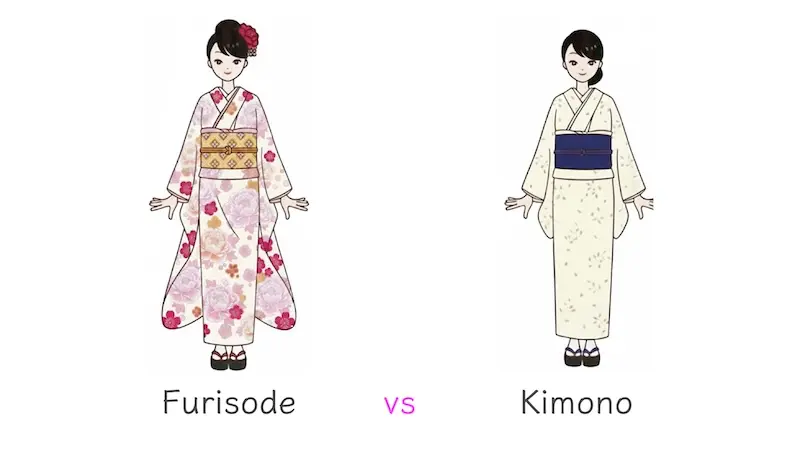
Furisode vs Standard Kimono
In modern Japan, people rarely wear a Kimono (着物) in daily life.
However, many women wear a special type called “Furisode (振袖)” for the ceremony.
Most men wear suits, but some choose traditional “Montsuki-hakama (紋付袴).”
Main Differences: Furisode vs. Standard Kimono
- Sleeve Length
- Furisode: Very long (reaches the ankles).
- Standard Kimono: Short and easy to move in.
- Who Wears It
- Furisode: Only unmarried women.
- Standard Kimono: Anyone can wear it.
- Occasions
- Furisode: Formal celebrations like weddings.
- Standard Kimono: Funerals, tea parties, or casual outings.
- Accessories and Decorations
- Furisode: Very colorful and gorgeous.
- Standard Kimono: Simple and elegant
Furisode is the highest rank of formal wear.
It is only for unmarried women.
This style is much more ornate than other Kimonos.
It beautifully celebrates this milestone.
The Highest Rank of Formal Wear
Overall, Furisode is more gorgeous than a standard Kimono.
Many have feminine colors like pink or red.
In Japan, Furisode is the highest level of formal wear for unmarried women.
How to Prepare a Furisode?
There are three main ways to prepare a Furisode for the ceremony.
In each case, families put a lot of heart into the preparation.
It is a special gift to celebrate their daughter’s new journey.
1. Buying a Brand-New Furisode
Buying a Furisode is a very expensive purchase.
However, wearing your own favorite dress brings exceptional joy.
You can freely choose from the latest designs.
Usually, parents or grandparents buy it as a special gift.
2. “Mama-furi”: Inheriting a Mother’s Furisode
In this style, a daughter inherits her mother’s Furisode.
It is recently called “Mama-furi (ママ振り).”
This is short for “Mama’s Furisode.”
It is a beautiful tradition of passing a precious dress from mother to daughter.
Kimono patterns have trends.
Therefore, a mother’s design may look different from modern ones.
Because of this, your look will be unique and original.
It is easy to add a modern touch by picking new accessories.
Changing the belt or hair ornaments creates a personalized look.
This is a wonderful way to create a unique, one-of-a-kind style.
3. The Most Common “Full Set Rental”
Renting is not always cheap.
It often costs 200,000 to over 300,000 yen for a single use.
This price usually includes the rental fee for the Furisode.
Additionally, professional dressing (Kitsuke), makeup, and hairstyling are often part of the package.
For families with three sisters, buying one Furisode can be more cost-effective.
It is often cheaper than paying for a rental three separate times.
This is a smart way to manage the total cost for the family.
“Mae-dori”: Preserving the Special Moment of 20
Age 20 is a precious, once-in-a-lifetime milestone.
Most people want to preserve this beautiful moment in photos.
A pre-ceremony shoot called “Mae-dori (前撮り)” is very popular.
It offers a relaxed session before the busy ceremony.
Some even enjoy wearing different Kimonos for the shoot and the event.
The photography fee is often included in a package.
However, albums and digital data require extra costs.
Depending on the photos, the price can exceed 100,000 yen.
Still, these images are “treasures for a lifetime.”
Families prepare these photos with great care and love.
Extra: Coming-of-Age Ceremony for Men
Most men wear suits for the ceremony.
Many use the same suit they bought for university or job hunting.
Some choose to buy a new tie to refresh their look for the big day.
Almost no men do “Mae-dori” (pre-ceremony photo shoots).
Compared to women, the preparation for men is very simple.
This big difference between men and women is a unique part of the tradition.
Why is it Called “Furisode”? (The Meaning of “Furu”)
The name “Furisode” comes from the Japanese verb “Furu (振る)” (to swing).
In ancient Japan, people believed that swinging long sleeves had a mysterious power.
For example, waving sleeves was a ritual for “Yakuyoke” (driving away bad luck).
Sleeves became long to protect young women from illness and misfortune.
In the past, women also used their sleeves to send secret signals of love.
Waving sleeves side-to-side meant “I love you.” Waving them front-to-back meant “No.”
This is the origin of the modern Japanese romantic terms “Furu” and “Furareru.”
Modern Japanese still uses these words with deep roots.
Ancient Kimono traditions inspired them.
It is truly fascinating!
Conclusion
Japan’s Seijin-shiki is a special ritual to celebrate life’s milestones.
A Furisode carries wishes for happiness and protection from bad luck.
Behind the gorgeous fashion, there is deep love from the family.
I hope you feel the “heart” behind Japanese words by learning about these traditions.
Do you know the key differences between Furisode and Yukata?
Kimono vs Yukata: Key Differences and the Meaning of Their Kanji
Discover more about Japanese culture in the Japan & Culture category.
Related Posts
 Hatsumode in Japan: New Year Traditions at Shrines and Temples
 How to tell “Daijobu” (だいじょうぶ) YES from NO
日本の「成人式」とアメリカの「プロム」
日本では毎年1月に「成人式」が行われます。
これは、新成人をお祝いするための大切な行事です。
アメリカの高校生活にある「プロム」とよく似ています。
どちらも人生の大きな「節目」をお祝いする儀式です。
しかし、この2つには面白い違いもあります。
プロムは「カップル」でダンスを楽しむ社交の場。
それに対して日本の成人式は「同窓会」の側面もあります。
地元の友達と再会し、みんなで大人になった喜びを分かち合います。
成人は18歳。でも式典は20歳(はたち)?
2022年4月、日本の成人(成年)年齢は20歳から18歳に変わりました。
約140年間も続いてきたルールが、変更されました。
これは世界基準に合わせた、日本にとって大きな変化です。
そして、「もっと若者の意見を社会に反映させよう」という願いも込められています。
次のようなことが、変わりました。
- 男女ともに結婚できる年齢が18歳になった
- 選挙権が与えられた
- クレジットカードや賃貸契約など、自分一人でできるようになった
しかし、成人が20歳の時と変わらないこともあります。
「お酒とタバコは20歳から」です。
ただし、変わらないルールもあります。
それは、「お酒とタバコは20歳から」です。
お酒などのルールは国によって大きく違います。
20歳前後で日本へ来る方は、間違えないようにお気をつけくださいね。
どうして式典は20歳のままなのか?
2020年までは、どの地域でも「20歳になる年度」に成人式を行っていました。
日本の学校は4月から始まるため、同じ学年の仲間が集まります。
これが、成人式が「同窓会」のように盛り上がる理由です。
成人年齢が18歳に下がった後も、多くの自治体は20歳で式典を開いています。
それには、いくつか理由があります。
まず、18歳・19歳・20歳の3世代分を同時に開催するのは、物理的に難しかったからです。
また、18歳は受験や就職を控えた、とても忙しい時期でもあります。
こうした背景から、今でも多くの場所で「20歳」を対象に式典が行われています。
振袖 vs 一般的な着物
今の日本では、ふだんの生活で着物を着る機会は少なくなりました。
しかし、成人式では多くの女性が特別な「振袖」を着ます。
男性はスーツが一般的ですが、伝統的な「紋付袴」を選ぶ人もいます。
振袖と着物の違いを、簡単にまとめてみました。
- 袖の長さ
- 振袖:手首から下へ長く垂れ下がっています。
- 着物:短くて動きやすいのが特徴です。
- 着用する人
- 振袖:未婚の女性だけが着る特別な服です。
- 着物:性別や既婚・独身を問わず、誰でも着られます。
- 着る場面
- 振袖:成人式や結婚式など、おめでたい席で着ます。
- 着物:お葬式やお茶会、お出かけなど、場面に合わせて選びます。
- 小物と装飾
- 振袖:髪飾りやバッグも、華やかでカラフルです。
- 着物:全体的にシンプルで、落ち着いた美しさがあります。
振袖は「未婚女性が着るなかで最も格式が高い服」とされています。
そのため、他の着物よりずっと豪華です。
お祝いの気持ちがたっぷりと込められています。
振袖をどう準備する?
成人式に着る振袖の準備には、大きく分けて3つの方法があります。
どれも、ご家族が娘さんの新しい門出を祝って、心を込めて準備します。
1. 自分だけの一着を「新しく購入する」
振袖はとても高価な買い物です。
しかし、自分だけのお気に入りの一着を身にまとう喜びは、格別なもの。
最新のデザインから自由に選べるのも、購入ならではの魅力です。
この場合は、ご両親や祖父母からのお祝いとして準備されることが多いです。
2. 母親の想いを受け継ぐ「ママフリ」
母親の振袖を、娘が受け継ぐスタイルです。
「ママの振袖」を略して、最近では「ママ振」と呼ばれています。
母から娘へ……。
大切な想いも一緒に受け継ぐ、素敵な伝統です。
着物の柄には流行があるため、お母さんの振袖は今とは少しデザインが違います。
だからこそレンタルとは違い、誰かと被ることがありません。
帯や髪飾りなどの小物を新しくするだけで、今の流行を取り入れることができます。
自分らしさをプラスして、世界に一つだけの着こなしを楽しむのも素敵ですね。
3. 最も一般的な「フルセットレンタル」
最も多くの人が利用するのがレンタルです。
最新の柄や小物を自由に選べるのが嬉しいポイントですね。
ただし、人気のデザインは2年前〜1年前には予約が必要なこともあります。
レンタルといっても、1回で20万円から30万円以上かかることも珍しくありません。
この価格には、振袖のレンタル代が含まれています。
さらに、プロによる「着付け・メイク・ヘアセット」がセットになっていることが多いです。
実は、3人姉妹のご家庭などでは、1着購入した方がお得な場合があります。
毎回レンタルを繰り返すよりも、総額を抑えられると言われているからです。
20歳という特別な瞬間を写真に残す「前撮り」
20歳は人生に一度しかない大切な瞬間です。
その美しい晴れ姿を、写真に残したいと願う人は少なくありません。
そのため、成人式の当日ではなく、あらかじめ撮影を行う「前撮り」がとても人気です。
なかには、前撮りと成人式当日で、違う振袖を選んで楽しむ人もいます。
撮影料そのものはプランに含まれていることもあります。
しかし、アルバムや写真データの購入には、別途費用が必要になります。
枚数によっては、アルバム代だけで10万円以上かかることも珍しくありません。
それでも、多くのご家族にとって、この晴れ姿は「一生の宝物」です。
ふだんは着物を着ないからこそ、最高の一枚を形にしたいですよね。
多くのご家族が、特別な想いを込めて準備を進めています。
番外編:男性の成人式
男性の成人式では、多くの方がスーツを着用します。
大学の入学式や就職活動のスーツを、大切に着る人も多いです。
心機一転、ネクタイだけ新しく新調するのも素敵ですね。
また、男性で前撮りをする人はほとんどいません。
準備に時間をかける女性に比べると、男性の成人式はとてもシンプルです。
男女で過ごし方がこれほど違うのも、日本の成人式の面白いところですね。
なぜ「振袖」という名前なの?(「振る」の由来)
振袖」という名前は、動詞の「振る」からきています。
昔の日本では、長い袖を「振る」動きには不思議な力があると信じられていました。
たとえば、袖を振ることで悪い運気を追い払う「厄除け(やくよけ)」の意味があります。
大切な娘を病気から守るため、袖が長くなったと言われています。
また、昔は言葉の代わりに袖を振って、相手に想いを伝える合図にしていました。
袖を左右に振れば「好き」、前後なら「嫌い」というサインです。
現代の恋愛で使う「振る・振られる」という言葉は、ここから生まれたとされています。
まとめ
日本の成人式は、人生の節目を祝う大切な儀式です。
振袖には厄除けや幸せへの願いが込められています。
その華やかな姿の背景には、ご家族の深い愛情があります。
日本の伝統を知ることで、言葉の背景にある「心」を感じてもらえたら嬉しいです。
成人式の「振袖」と夏の「浴衣」の違いをご存知ですか?
Kimono vs Yukata: Key Differences and the Meaning of Their Kanji
日本文化についてもっと知りたい方は、Japan & Culture カテゴリをご覧ください。