

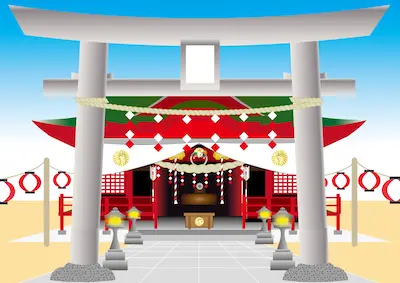
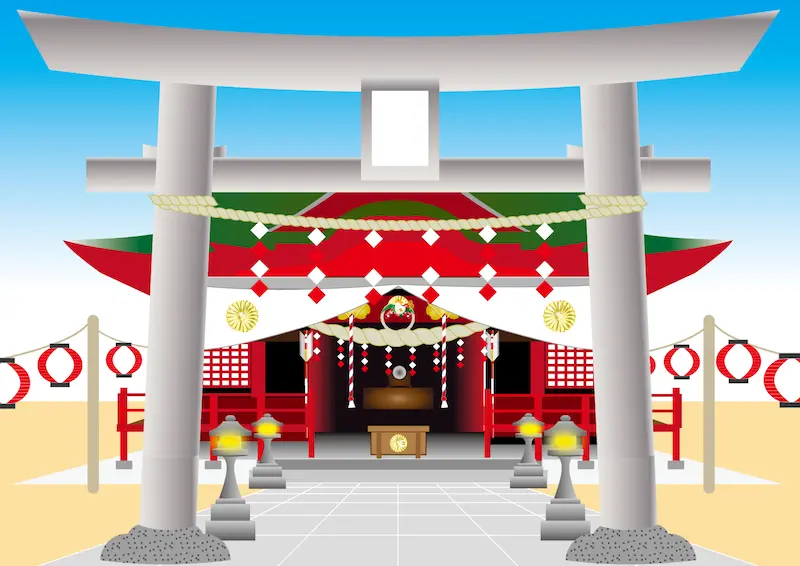
Celebrating the First Visit of the Year
Hatsumode (初詣) is a traditional Japanese visit to a shrine or temple.
Many people go during the New Year.
Even those who do not usually visit shrines participate.
It is a very common sight in the Japanese winter.
Hatsumode is an event to welcome the new year with a fresh mind.
People visit to greet the gods.
They often say, “Please watch over me again this year.”
This article explains the meaning of this tradition.
I will also show you how to enjoy Omikuji (おみくじ, fortune slips).
What Is Hatsumode?
The word Hatsumode is written as “初めての詣” (Hajimete-no-mode).
This literally means “the first visit of the year.”
It refers to your first visit to a shrine or temple in the new year.
In Japan, Hatsumode is an important event to start the year.
People visit to greet the gods or Buddha.
Also, it is a quiet time to reflect on the beginning of the year.
What is the Difference Between Sanpai and Omairi?
Both words mean “visiting a shrine or temple to pray.”
The basic meaning is the same.
However, people use them in different situations.
- Omairi (お参り)
This is a common and friendly word.
The “O” prefix makes the sound soft.
It is natural to use with family or friends.
Example:
かぞくで ちかくの じんじゃへ おまいりに いきました。
(Kazoku de chikaku no jinja he omairi ni ikimashita.)
“I went for omairi at a nearby shrine with my family.” - Sanpai (参拝)
This is a formal and stiff word.
It is often used on signs or in the news.
Use this when you want to show deep respect.
Example:
おおくの ひとが なりたさんに さんぱいに おとずれました。
(Okū no hito ga Naritasan he sanpai ni otozuremashita.)
“Many people visited Naritasan for sanpai.”
Toshigami-sama — The Deity of the New Year
The tradition of Hatsumode is related to the deity Toshigami-sama (年神さま).
This god visits every home during the New Year.
Japanese people believe Toshigami-sama brings various types of happiness:
- Yearly good fortune
- Family health
- A rich harvest
Because of this, people prepare to welcome the god.
They clean their houses thoroughly in December.
They also decorate with Kadomatsu (門松) and Kagamimochi (鏡餅).
Then, after the new year starts, they visit a shrine to greet the god.
Discover more about Japanese cleaning culture.
Learn About 大掃除 (Osouji) – Japanese Year-End Cleaning and Culture.
The Origin of Hatsumode — “Toshigomori”
From the Nara period to the Heian period, people practiced Toshigomori (年ごもり).
This was a custom of staying at a shrine or temple.
Specifically, people stayed from New Year’s Eve to New Year’s Day.
People stayed there specifically to pray throughout the night.
Through this tradition, people expressed gratitude for the past year.
Furthermore, they prayed for a good harvest and family safety.
This custom has divided into two parts in modern times.
These are Joya-mode (除夜詣) and Hatsumode (初詣).
Joya-mode is a visit to a shrine on New Year’s Eve.
The Three Purposes of Hatsumode
Hatsumode has three main purposes.
- To express gratitude.
People thank the gods for a safe year. - To give a New Year greeting.
Visitors say, “Please watch over me again this year.” - To make a wish.
People pray for the new year to be a good one.
New Year prayers vary from person to person.
For example, they include health, studies, career success, and love.
Some people choose shrines carefully.
They visit specific shrines that match their personal wishes.
Shrines or Temples — Which One Should You Visit?
Many people wonder whether to visit a shrine or a temple.
First, let’s look at the characteristics of shrines.
Ancient Beliefs and Shinto Shrines
Shrines are places for Shinto (神道).
This is an ancient belief system in Japan.
However, Japanese people believe that many gods live within nature.
For example, gods exist in mountains, trees, and the ocean.
Consequently, you can find many shrines throughout Japan.
Temples and the History of Syncretism
Temples are places for Buddhism.
This religion arrived in Japan from China around the 6th century.
Historically, Japanese people did not strictly separate shrines and temples.
Instead, they cherished both gods and Buddha together.
This unique mixture of beliefs is called Shinbutsu-shugo (Shinbutsu-shūgō).
Therefore, it is perfectly fine to visit either a shrine or a temple today.
Discover more about the differences.
Shinto Shrines and Buddhist Temples
Omikuji — Fortune Slips for the New Year
During Hatsumode, many people draw Omikuji (おみくじ).
These are fortune slips that predict your luck for the year.
There are several ways to draw them.
For example, some people shake a box to get a numbered stick.
Others simply pick a piece of paper directly from a box.
The Order of Luck in Omikuji
Omikuji have different levels of luck.
Most shrines follow this specific order:
- Daikichi (大吉) — Great blessing (The best luck)
- Chukichi (中吉) — Middle blessing
- Shokichi (小吉) — Small blessing
- Kichi (吉) — Blessing
- Suekichi (末吉) — Future blessing
- Kyo (凶) — Misfortune (The lowest luck)
Notably, some shrines do not include Kyo at all.
Since Kyo is very rare, some people even consider drawing it as a lucky experience.
Daikichi is the best result, and Kyo is the lowest.
However, some shrines do not include Kyo at all.
Since Kyo is very rare, some people even consider drawing it as lucky.
Tying Omikuji to Create a Connection
In addition, many people tie their omikuji to tree branches at the shrine.
This custom means “tying a connection” with the gods.
This unique Japanese tradition has continued since the Edo period.
Mizu-mikuji — A Rare Water Fortune
There is a rare type of fortune slip called Mizu-mikuji (水みくじ).
When you receive it, the paper is completely blank.
However, if you soak it in water at the shrine, words and images will appear.
Once the paper dries, the writing disappears again.
You can see the message once more by dipping it in water again.
In particular, Kifune Shrine and Shimogamo Shrine in Kyoto are famous for this.
Omamori — Protection You Carry with You
Omamori (おまもり) are protective charms from shrines and temples.
Many people see them as lucky items.
These charms contain a special wish.
For example, they say, “Please protect me from bad things” or “May my wish come true.”
People carry them every day.
They believe the gods or Buddha will protect them.
There are many types of Omamori:
- Health — To stay well and avoid illness.
- Passing exams — To succeed in school or university.
- Career — To succeed at work.
- Traffic safety — To avoid accidents.
Generally, people return their Omamori to a shrine after one year.
Then, they receive a new one.
It is fine to have many charms.
If your wish comes true, visit the shrine again.
You should say thank you to the gods.
Conclusion
Hatsumode is the Japanese custom of visiting shrines or temples in the New Year.
People express gratitude and pray for a good year.
You can visit either a shrine or a temple.
This is because Shinto and Buddhism are both important in Japan.
Therefore, it is fine to visit either place.
Also, if you are interested in collecting memories of your visit.
Goshuin: Understanding Japan’s Temple and Shrine Seals
Discover more about Japanese culture in the Japan & Culture category.
Related Posts
初詣って何?―新年の特別な習慣
普段は神社に行かない人も、お正月は神社へ出かけます。
日本の冬には、よく見られる光景です。
これが「初詣」です。
初詣は、新しい年を気持ちよく迎えるための行事です。
「今年もよろしくお願いします」と神様にあいさつをします。
この記事では、初詣の意味やおみくじの楽しみ方を紹介します。
初詣とは?
初詣は、「初めての詣(もうで)」と書きます。
これは、新しい年になって初めて、神社やお寺へ行くことを言います。
日本では、新年を迎える大切な行事のひとつです。
神様や仏様に新年のあいさつをします。
そして、一年の始まりを静かに感じる時間になります。
「参拝」と「お参り」はどう違う?
どちらも「神社やお寺へ行って、祈ること」という意味です。
意味は同じですが、使う場面が違います。
- お参り
もっとも日常的で、親しみやすい言葉です。
「お」があるので、響きが柔らかくなります。
家族や友達と話すときは、この言葉が自然です。- 例:「家族で近くの神社へお参りに行きました。」
- 例:「家族で近くの神社へお参りに行きました。」
- 参拝
フォーマルで少し硬い言葉です。
神社の看板やニュースなどでよく使われます。
敬意をしっかり表したいときに使います。- 例:「多くの人が成田山へ参拝に訪れました。」
年神(としがみ)さまと初詣
初詣には、「年神(としがみ)さま」という神様が関係しています。
年神さまとは、お正月に家々を訪れる神様です。
年神さまは、このような幸せを運んでくると信じられてきました
- 一年の幸せ
- 家族の健康
- 食べものの豊かさ
そこで、日本人は新年に神様を迎える準備をします。
12月には家を大掃除します。
門松や鏡餅も飾ります。
そして年が明けると、神様にあいさつをするために神社へ行きます。
日本「大掃除」についてはこちらです。
Learn About 大掃除 (Osouji) – Japanese Year-End Cleaning and Culture.
初詣の始まり「年ごもり」
奈良時代から平安時代にかけて、「年ごもり」をしました。
これは、大晦日から元日にかけて、神社やお寺にこもり、お祈りすることです。
この伝統を通じて、人々は一年の感謝を伝えました。
さらに、豊作や家内安全を祈りました。
今の時代、この年ごもりは、2つに分かれました。
大晦日(12月31日)の「除夜詣」と「初詣」です。
「除夜詣」とは、大晦日の夜に神社やお寺に参拝することです。
初詣の目的
初詣には、3つの目的があります。
- 感謝を伝える。
去年一年を無事に過ごせたことを、神様に感謝します。 - 新年のあいさつをする。
「今年もよろしくお願いします」と神様にあいさつをします。 - お願いごとをする。
新しい一年が、良い年になるようにお祈りします。
お願いの内容は、健康、勉強、仕事の成功、恋愛など、さまざまです。
自分の願いに合わせて、行く神社を選ぶ人もいます。
初詣は神社?お寺?
神社とお寺、どちらへ行けばいいか迷う人も多いと思います。
まずは、神社について紹介します。
神社と日本の多神教
神社は、神道の場所です。
神道は、大昔から日本にある考え方です。
日本人は、自然の中にたくさんの神様がいると信じてきました。
山や木、海など、いろいろな場所に神様がいます。
そのため、日本にはたくさんの神社があります。
お寺と神仏習合の歴史
お寺は、仏教の場所です。
仏教は、6世紀ごろ中国から日本に伝わりました。
日本では、神社とお寺をあまり分けて考えていませんでした。
神様も仏様も、一緒に大切にされてきました。
これを「神仏習合」と言います。
そのため、今でも神社とお寺のどちらへお参りしても問題ありません。
「神社とお寺」の違いはこちらをご覧ください。
Shinto Shrines and Buddhist Temples
おみくじ―新年の運勢
初詣では、多くの人が「おみくじ」を引きます。
おみくじは、その年の運勢を占うものです。
引き方は、箱から棒を出すものや、直接紙を引くものなどがあります。
おみくじには、運勢の順番があります。
多くの神社では、以下の順番で運勢が良いとされています。
- 大吉
- 中吉
- 小吉
- 吉
- 末吉
- 凶 など
大吉が一番よく、凶は一番下です。
凶がない神社もあります。
凶は数がとても少ないため、ある意味とてもラッキーだと考える人もいます。
おみくじは、境内の木の枝などに「結ぶ」習慣があります。
これは、「良い縁を結ぶ」という意味があります。
江戸時代から続く、日本らしい文化のひとつです。
珍しいおみくじ「水みくじ」
「水みくじ」という、珍しいおみくじがあります。
受け取ったときは、何も書いていない白い紙です。
これを神社の水に浸すと、文字や絵が浮かび上がります。
紙が乾くと、一度でた文字はまた消えます。
もう一度水に浸すと、ふたたび文字を見ることができます。
京都の貴船(きふね)神社や下鴨(しもがも)神社などが有名です。
お守り―いつも守ってくれるもの
お守りは、神社やお寺でいただくことができるラッキーアイテムです。
「悪いことから守ってください。」
「願いが叶いますように。」
という願いが込められています。
いつも持ち歩くことで、神様や仏様が守ってくれると信じられてきました。
お守りには、いろいろな種類があります。
- 健康(病気をしないように)
- 合格(大学等に合格するように)
- 仕事(成功するように)
- 交通安全(事故にあわないように) など
お守りは、だいたい1年で神社やお寺へ返します。
そして、新しいお守りを受け取ります。
たくさん持っていても、問題ありません。
また、願いが叶ったら、もう一度お参りしてお礼と伝えましょう。
まとめ
初詣は、新年に神社やお寺へ行く習慣です。
一年の感謝を伝え、良い年を願います。
神社とお寺、どちらでも問題ありません。
日本では、神道と仏教が共に大切にされてきたからです。
参拝の記念にこちらもおすすめです。
Goshuin: Understanding Japan’s Temple and Shrine Seals
日本文化についてもっと知りたい方は、Japan & Culture カテゴリをご覧ください。