

Have you visited Zenko-ji Temple in Nagano and felt satisfied?
Actually, your prayers might only be half-answered.
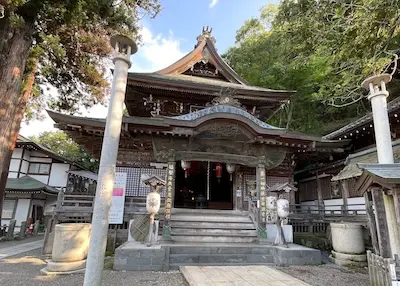
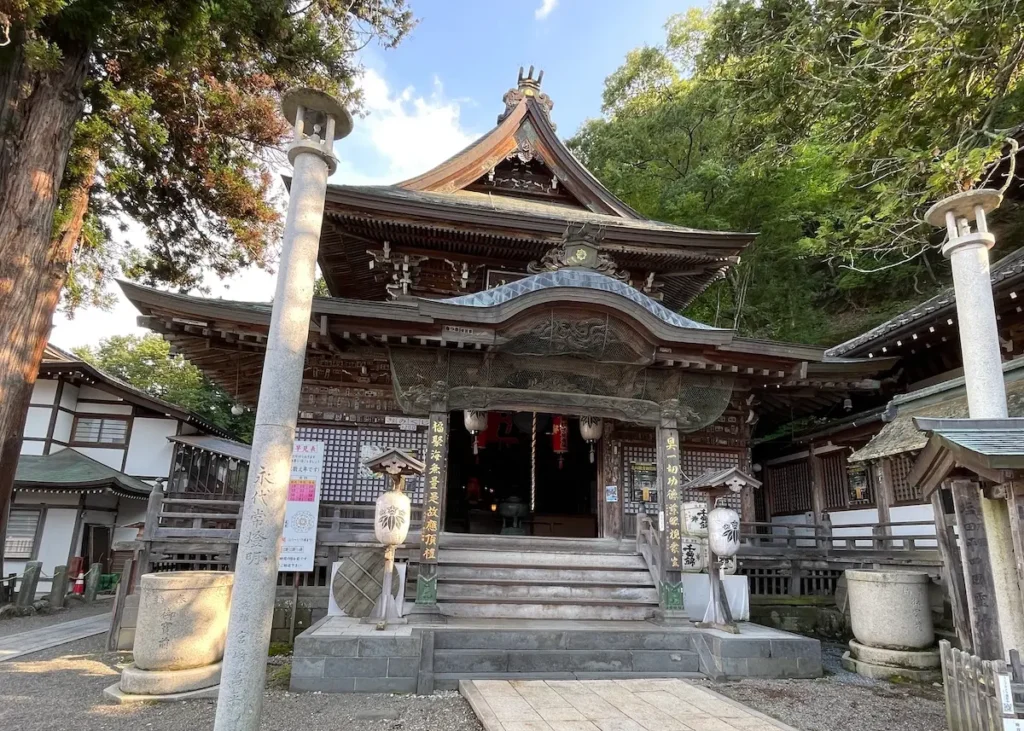
In this article, I will introduce 北向観音 (Kitamuki Kannon) in Bessho Onsen.
This temple has a deep connection with 善光寺 (Zenko-ji).
Knowing this will make your trip to Shinshu much more meaningful.
Praying for Two Worlds: “Genze” and “Raise”
In Japanese, there are two important words: 現世 (Gense) and 来世 (Raise).
- Gense: This is the world we live in right now.
- Raise: This is the next world we visit after death.
Zenko-ji is a place to pray for happiness in the “next life” (Raise).
On the other hand, Kitamuki Kannon is famous for happiness in “this life” (Gense).
Visiting both temples is called 両参り (Ryo-mairi: Double Visit).
If you only visit one, it is called “片参り” (Kata-mairi: Partial Visit).
Traditionally, visiting them as a set is the correct way. Let’s pray for happiness in both the present and the future.
Which Temple Should You Visit First?
Many students wonder which temple to visit first when planning a “Double Visit.”
Actually, there are no strict religious rules.
However, in a cultural context, it is common to go from Kitamuki Kannon (Present) to Zenko-ji (Future).
This is based on the idea of organizing your “current self” before praying for “future happiness.”
Note: For details on how to pray at Zenko-ji and the “Key to Paradise,”
please check this article:Zenko-ji Temple Nagano: Guide to the “Key to Paradise”
1,200 Years of History and the Secret of “North-Facing”
Kitamuki Kannon has a very long history.
It was built over 1,200 years ago during the Heian period.
A famous priest named 慈覚大師 (Jikaku Daishi) established this site.
One day, he received a mysterious message from 観音 (Kannon).
The message said, “Please place me facing north.”
Following that teaching, this temple faces north.
Most Japanese temples usually face south.
Therefore, a north-facing temple is very rare.
In fact, Zenko-ji Temple in Nagano City is located to the north.
Kitamuki Kannon and Zenko-ji face each other directly.
This symbolizes a strong promise to protect both your present and future.
Why Does It Face “North” Instead of “South”?
In traditional Japanese architecture, “South-facing” (南向き: Minami-muki) is considered best.
This is because south-facing (北向き: Kita-muki)buildings get the most sunlight.
Therefore, almost all temples face south.
However, Kitamuki Kannon faces “North” (Kita-muki), just as its name suggests.
This was a specific intention of Jikaku Daishi.
Zenko-ji in the north houses 阿弥陀如来 (Amida Nyorai: Protector of the Next Life).
Kitamuki Kannon in the south houses 千手観音 (Senju Kannon: Protector of This Life).
These two deities are placed to face each other.
Because of this, two Buddhas take care of both your “present” and “future.”
This special bond is the biggest charm of Kitamuki Kannon.
Useful Expression for Directions: “~ muki”
Let’s learn a useful Japanese expression for directions.
By adding “〜向き (~ muki)” to a direction, you can explain which way a building faces.
- 北向き (Kita-muki): North-facing
- 南向き (Minami-muki): South-facing
For example, you can say, “My room is south-facing” (Watashi no heya wa minami-muki desu).
The name “Kitamuki Kannon” also follows this rule.
The Power of Nature: The “Meoto Sugi” (Husband and Wife Cedar)
Inside the temple grounds, two large cedar trees stand side by side.
These are called 夫婦杉 (Meoto Sugi).
The sight of these two giant trees leaning toward each other is very powerful.
Japanese people feel the power of 縁結び (En-musubi: matchmaking or forming connections) in such nature.
Let’s remember the word 夫婦 (Meoto), which means “husband and wife.”
We also use the word 寄り添う (Yorisou) to describe a couple who are close to each other.
I hope you can pray for a wonderful connection with someone special here.
Casual Hot Spring Culture: “Ashiyu” (Foot Bath)
After your visit, let’s walk around the streets of 別所温泉 (Bessho Onsen).
I especially recommend the 足湯 (Ashiyu).
To enter a Japanese 温泉 (Onsen), you usually need to take off all your clothes.
However, in an Ashiyu, you only soak your feet.
Therefore, anyone can enjoy it casually while wearing clothes.
It is a great way to heal your tired feet from traveling.
Onomatopoeia for Relaxation
When you soak in a foot bath, your body gradually warms up.
Here are some useful Japanese onomatopoeia for those moments:
- ぽかぽか (Poka-poka): Feeling warm and cozy from the inside.
- ほっこり (Hokkori): Feeling relaxed and warm in both heart and body.
Try saying, “My body felt poka-poka after the foot bath.”
Japanese people will understand your relaxed feeling perfectly!
Conclusion
Pray for “present” happiness at Kitamuki Kannon and “future” happiness at Zenko-ji.
Finally, heal your body in the hot springs.
This is a Japanese cultural experience that values the balance of heart and body.
Learning the language also means learning the thoughts behind it.
By experiencing “Ryo-mairi,” your understanding of Japanese language and culture will deepen.
Discover more about Japanese culture in the Japan & Culture category.
Related Posts
 Goshuin: Understanding Japan’s Temple and Shrine Seals
 Did Natsume Sōseki Love Seals?
長野の善光寺を参拝して、満足していませんか?
実は、それだけでは願いが半分しか叶わないかもしれません。
今回は、善光寺と深い絆で結ばれた、別所温泉の「北向観音(きたむきかんのん)」をご紹介します。
ここを知ると、あなたの信州旅行がより深いものになります。
「現世」と「来世」:二つの世界を願う
日本語には「現世(げんぜ)」と「来世(らいせ)」という言葉があります。
- 現世: 私たちが今生きている、この世界のことです。
- 来世: 死んだ後に訪れる、次の世界のことです。
実は、善光寺は「来世」の幸せを願う場所です。
一方で、この北向観音は「現世」の幸せを願う場所として知られています。
そのため、この二つのお寺を両方お参りすることを「両詣り(りょうまいり)」と言います。
どちらか一方だけでは「片参り」と呼ばれ、昔からセットで訪れるのが正しい作法とされてきました。
ぜひ、今と未来、両方の幸せを願いましょう。
どちらから参拝すべきか?
「両参り」を計画する際、どちらのお寺から先に行くべきか迷う学習者が多いです。
実は、宗教的な厳格な決まり(ルール)はありません。
しかし、文化的な文脈では「北向観音(現世)」から「善光寺(来世)」へ向かう流れが一般的です。
これは、まず「今の自分」を整えてから、「未来の幸せ」を願うという考え方に基づいています。
* 善光寺の詳しい参拝方法や「極楽の鍵」については、こちらの記事をご覧ください。
Zenko-ji Temple Nagano: Guide to the “Key to Paradise”
1200年以上の歴史と「北向き」の秘密
北向観音の歴史はとても古いです。今から1200年以上前、平安時代に建てられました。
慈覚大師(じかくだいし)という有名な僧侶が、この場所を作りました。
ある時、彼は観音様からメッセージを受け取りました。
「私を北向きに置いてください」という不思議な内容でした。
その教え通り、このお寺は「北」を向いています。
日本のお寺は、普通は南を向いています。ですから、北向きのお寺は非常に珍しいです。
実は、北の方向には長野市の善光寺があります。
北向観音と善光寺は、向かい合って建っています。
これは、「今と未来、どちらの幸せも守る」という強い約束を意味しています。
なぜ「南」ではなく「北」を向いているのか?
日本の伝統的な建築(お寺や家)では、太陽の光が入る「南向き」が最も良いとされています。
そのため、ほとんどの寺院は南を向いて建てられています。
しかし、北向観音はその名の通り「北」を向いています。
これには、建立した慈覚大師(じかくだいし)の深い意図がありました。
北には善光寺の阿弥陀如来(来世の守護)があります。
そして南にある北向観音の千手観音(現世の守護)と、「向かい合う」ように配置されています。
これは、二つの仏様が手を取り合っているような状態を意味しています。
これによって、参拝者は「今」と「未来」のどちらも、仏様に見守ってもらうことができるのです。
この特別な絆(きずな)が、北向観音の最大の魅力です。
方角を表す便利な表現「〜向き」
ここで役立つ言葉を紹介します。方角に「〜向き」をつけると、向きを説明できます。
- 北向き(きたむき)
- 南向き(みなみむき)
例えば、「私の部屋は南向きです」のように使います。
自然の力:寄り添って立つ「夫婦杉」
お寺の境内には、大きな杉の木が二本並んで立っています。
これは「夫婦杉(めおとすぎ)」と呼ばれています。
二つの大きな木が寄り添っている姿は、とても力強いです。
日本人はこのような自然の中に「縁結び(えんむすび)」の力を感じます。
ここで「夫婦(ふうふ)」という言葉を覚えましょう。
また、仲が良いことを「寄り添う」と表現することもあります。
あなたも大切な人との素敵な縁を願ってみてくださいね。
気軽に楽しむ温泉文化:「足湯(あしゆ)」
参拝の後は、別所温泉の街を歩いてみましょう。特におすすめなのが「足湯」です。
日本の温泉に入るには、服を脱ぐ必要があります。
しかし、足湯は足だけを温泉に浸けます。そのため、服を着たまま誰でも気軽に楽しめます。
足だけでも、旅の疲れをしっかり取ることができますよ。
リラックスを伝えるオノマトペ
足湯に浸かると、体がじんわり温まってきます。
そんな時に使える便利な言葉(オノマトペ)を紹介します。
- ぽかぽか: 体が内側から温かくて、気持ちがいい様子です。
- ほっこり: 心も体もリラックスして、温かい気持ちになる様子です。
「足湯に入って、体がぽかぽかしました」と言ってみましょう。
あなたのリラックスした気持ちが、日本人にうまく伝わります。
まとめ
北向観音で「今」の幸せを願い、善光寺で「未来」の幸せを願います。
そして、最後は温泉で体を癒やしましょう。
これは、心と体のバランスを大切にする日本らしい文化体験です。
言葉を学ぶことは、その背景にある日本人の考え方を知ることでもあります。
「両詣り」を体験することで、あなたの日本語と日本文化への理解はより深まるでしょう。
日本文化についてもっと知りたい方は、Japan & Culture カテゴリをご覧ください。