

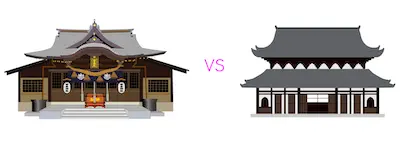
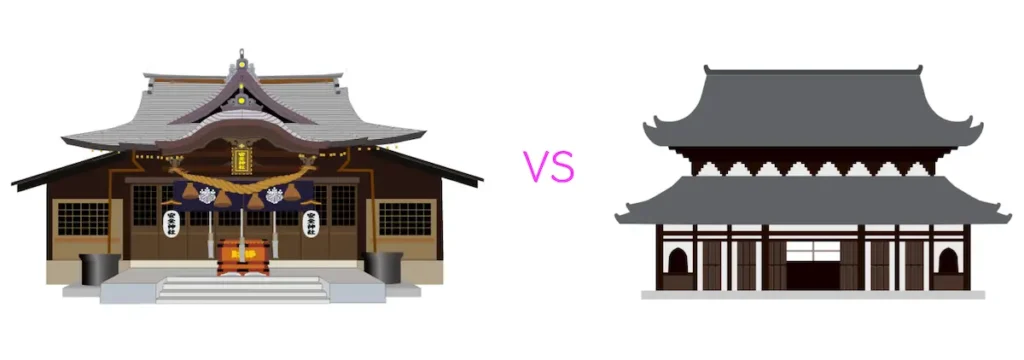
What’s the Difference Between Shinto Shrines and Temples?
Do you know the difference between shrines and temples?
Many Japanese people visit both shrines and temples.
So, what exactly is the difference?
This article will introduce the features of shrines and temples.
I will also explain Japan’s unique culture of blending Shinto and Buddhism.
Differences in Appearance
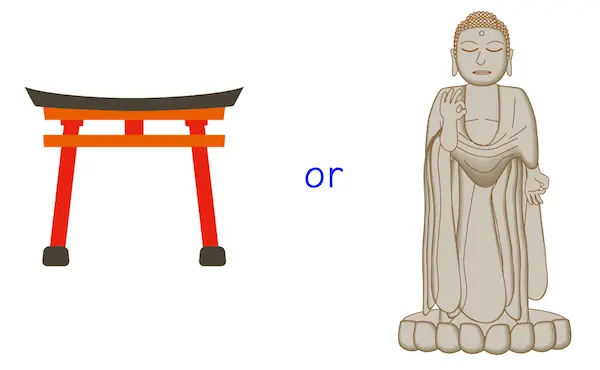
- 神社 (Jinja, Shinto Shrine)
A 鳥居 (Torii, Torii gate) stands at the entrance.
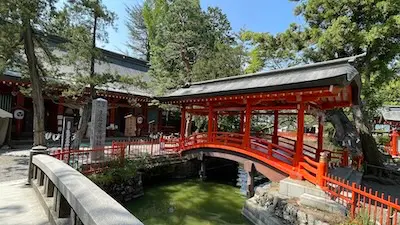
Shrines honor Shinto gods. People hold ceremonies here.
Events respect nature, seasons, and ancestors. - お寺 (Otera, Buddhist Temples)
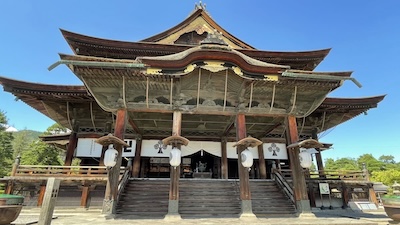
仏像 (Butsuzo, Buddha statues) rest inside the buildings.
Monks train and lead memorial services.
Bells, main halls, and gardens are common features.
Differences Between Shinto and Buddhism
- 神道 (Shinto, Shintoism)
Shinto is Japan’s native religion.
People respect mountains, rivers, and trees.
Ancestral gods receive high honor.
Daily gratitude to the gods is a core cultural practice. - 仏教 (Bukkyo, Buddhism)
Buddhism came from India.
Reaching enlightenment is the main goal.
Followers study the Buddha’s teachings.
Understanding the afterlife and human suffering is also vital.
Shinto-Buddhism Fusion and Japanese Religious Views
Let’s look at the history of Japanese religious views.
Shinbutsu-shūgō (Fusion of Shinto and Buddhism)
In Japan, Shinto and Buddhism influenced each other over a long history.
A unique culture called 神仏習合 (Shinbutsu-shugo) was born.
Shinbutsu-shugo means the fusion of native Shinto and imported Buddhism.
People began to worship both religions together.
Government officials rejected this idea during one historical period.
However, most Japanese people feel close to both religions today.
Visiting both Jinja and Otera remains a deeply rooted custom.
Polytheistic Mindset
Japanese people hold a 多神教 (Tashinko, polytheistic) view.
Followers rarely choose just one religion.
Praying to multiple gods and Buddhas feels completely natural.
Such openness allowed Shinto and Buddhism to coexist.
A beautifully blended culture emerged from this acceptance.
Daily Awareness and Tradition
Most Japanese people are not strictly religious.
For instance, locals enjoy shrine festivals and celebrate Christmas.
Funerals usually take place at Buddhist temples.
Still, I feel many people strongly value Japanese culture and traditions.
Understanding “Shrine” and “Temple” Through Kanji
Let’s focus on the kanji used in their names.
- 神社 (Jinja, Shinto Shrine)
「神」 means god. It is also read as kami.
「社」 (yashiro) means a place to worship gods. - お寺 (Otera, Buddhist Temple)
「寺」 (tera) means a place to worship the Buddha.
It also means protecting his teachings.
「寺」 (ji) is the common reading in temple names.- Example: 金閣寺 (Kinkaku-ji), 法隆寺 (Horyu-ji).
- Exception: 清水寺 (Kiyomizu-dera).
Conclusion
- 神社 (Jinja, Shinto Shrines)
A 鳥居 (Torii, Torii gate) marks the entrance.
Shrines house Shinto gods.
Ceremonies honor nature, seasons, and ancestors. - お寺 (Otera, Buddhist Temples)
仏像 (Butsuzo, Buddha statues) sit inside the buildings.
Monks train and hold memorial services.
Bells, main halls, and gardens are common. - 神仏習合 (Shinbutsu-shugo, Fusion of Shinto and Buddhism)
Shinto and Buddhism influenced each other deeply.
Both religions created the unique culture of shinbutsu-shugo.
Many Japanese people still respect both today. - Experiencing Japanese Culture
These historical sites offer a wonderful experience.
You can feel Japanese traditions directly.
One way to tell shrines and temples apart is by their gates.
[Torii vs. Kabuki-mon: Similar but Different]
Discover the different roles and features of torii and kabuki-mon gates.
Discover more about Japanese culture in the Japan & Culture category.
Related Posts
神社とお寺は何が違う?
神社とお寺の違いを知っていますか。
日本人の多くは神社にもお寺にもお参りします。
では、この二つは何が違うのでしょうか。
この記事では、神社とお寺の特徴を紹介します。
また、日本独自の「神仏習合」の文化についても解説します。
外観から見る違い
- 神社
入り口に鳥居があります。
これは神道の神さまをまつる場所です。
自然や季節の行事、先祖を大切にする儀式が行われます。 - お寺
建物の中に仏像があります。
仏教の僧侶や仏さまを中心に、修行や法要が行われます。
お寺には鐘や本堂、庭園などがあることも多いです。
神道と仏教の違い
- 神道
日本固有の宗教です。
山や川、木などの自然や祖先の神さまを敬います。
日常生活の中で神さまに感謝する文化があります。 - 仏教
インドから伝わった宗教です。
仏さまの教えに従い、悟りを目指すことが目的です。
死後の世界や人生の苦しみの理解も重要視されます。
神仏融合と日本人の宗教観
日本の宗教観の歴史を見ていきましょう。
神仏習合の文化
日本では、神道と仏教が長い歴史の中で影響しあい、神仏習合という文化が生まれました。
神仏習合とは、日本古来の神道と外来の仏教が融合した現象です。
これらが混ざり合って信仰されるようになりました。
この考え方は歴史的に公式には否定された時期もあります。
しかし、現在でも多くの日本人は神道と仏教の両方に親しんでいます。
お寺と神社の両方に足を運ぶ習慣が根づいています。
多神教的な考え方
日本人は多神教的な考え方を持っています。
一つの宗教だけを深く信じるのではありません。
複数の神や仏に手を合わせることが自然なこととされています。
だからこそ、神道と仏教が共存できました。
そして、融合した文化が生まれました。
日常の宗教と文化への意識
多くの日本人は宗教にそれほど熱心ではありません。
たとえば、神社へお祭りに行き、クリスマスを祝います。
さらに、お葬式はお寺で行うのが一般的です。
しかし、日本文化や伝統を大切にする気持ちは強く持っている人が多いと感じます。
漢字で知る「神社」と「お寺」
ここでは、名前に使われている漢字に注目してみましょう。
- 神社(じんじゃ)
「神」は「かみ」とも読みます。
「社(やしろ)」は、神さまをまつる建物や場所という意味です。 - お寺(おてら)
「寺(てら)」:仏さまをまつり、教えを守る場所という意味です。
「寺(じ)」:お寺の名前の際、「じ」と読むことが多いです。
例:金閣寺(きんかくじ)、法隆寺(ほうりゅうじ)
例外:清水寺(きよみずでら)
まとめ:神社とお寺の違い
- 神社
神社には鳥居があり、神道の神さまをまつります。
自然や季節の行事、先祖を大切にする儀式も行われます。 - お寺
お寺の建物の中には仏像があります。
僧侶が修行や法要を行います。
また、多くのお寺には鐘や本堂、庭園などもあります。 - 神仏習合
歴史の中で神道と仏教は影響しあいました。
その結果、神仏習合の文化が生まれました。
現在でも多くの日本人は神社とお寺の両方に足を運びます。 - 日本文化の体験
神社やお寺を訪れることは素晴らしい体験です。
日本の伝統や文化を感じることができます。
神社とお寺を見分けるポイントの一つが門です。
[Torii vs. Kabuki-mon: Similar but Different]
鳥居と冠木門の特徴や違いを見てみましょう。
日本文化についてもっと知りたい方は、Japan & Culture カテゴリをご覧ください。