

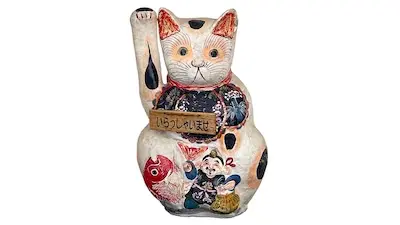
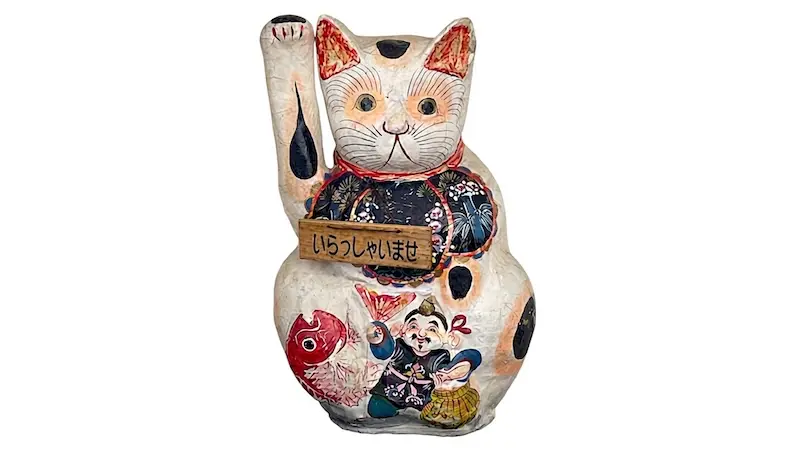
Have you ever seen a cat figurine in front of a store?
This figurine is called a “招き猫 (Maneki Neko, Lucky Cat)”.
In Japan, it is famous for bringing good luck and great connections.
Why is it shaped like a cat?
The answer is deeply tied to Japanese lifestyle and beliefs.
This article explains the true Maneki Neko meaning and its history.
I will also explore its connection to the silk farming industry and its roots.
The Origins of the Maneki Neko in the Edo Period
The Maneki Neko gained popularity during the Edo period.
Commerce flourished in Edo during this time.
This led to the creation of many new lucky charms.
Amidst this trend, the Maneki Neko became a staple in Japanese culture.
A Famous Legend of the Maneki Neko
There are several legends about the origins of the Maneki Neko.
Here is one of the most famous stories from Gotokuji Temple in Tokyo.
One day, a cat at the temple beckoned to a samurai standing at the gate.
The samurai entered the temple, and a heavy thunderstorm began immediately.
Thanks to the cat, the samurai escaped the rain safely.
He was so grateful that he donated a large amount of money to the temple.
This is said to be the origin of the belief that “a beckoning cat brings good luck.”
From Legend to a Symbol of Prosperity
Stories about the legend became a popular topic among merchants in Edo.
They placed great value on luck and good omens back then.
Merchants wanted to attract more customers to their shops.
Inspired by the tale, they started placing cat figurines at their storefronts.
That is how the Maneki Neko became a symbol of business prosperity.
What Wishes Are Held in the Hands of the Maneki Neko?
The pose of the Maneki Neko carries the meaning of inviting people.
A cat that beckons people is known as “人を招く猫 (Maneki Neko, inviting cat).”
For this reason, it is called “招き猫 (Maneki Neko, lucky cat).”
Holding the paw forward is a common Japanese signal for “come here.”
In Japan, people beckon others by waving their fingers toward themselves.
Westerners may sometimes mistake this gesture for “go away.”
Some international versions therefore have the paw reversed.
Wishes Associated with the Raised Paw
Different paws of the Maneki Neko carry different meanings.
- Left paw raised
It beckons people and customers.
This style is often seen in restaurants. - Right paw raised
It invites financial luck and good fortune.
This version is frequently chosen for homes. - Both paws raised
This posture comes from the belief that it brings even more good luck.
Minor differences in these meanings can exist depending on the region or era.
However, the underlying desire to “invite good things” remains the same.
Differences in Maneki Neko Colors
Recently, people can find Maneki Neko in various colors.
Each color carries a different wish.
Individuals can choose a color that matches their personal goals.
White and Calico Cats
The most common style is the white Maneki Neko.
It carries a wish for “open luck.”
This makes it the recommended choice for improving overall fortune.
Additionally, the calico design is very popular.
People believe the calico cat has an especially strong power to attract luck.
Black and Red Cats
A black Maneki Neko carries a wish for “warding off evil.”
This style is displayed when people want to drive away bad energy.
Red cats carry a wish for “warding off illness.”
Since ancient times, red has been considered a color that prevents sickness.
People have long believed in its protective power.
Therefore, this style is often chosen to wish for a family’s health.
Gold and Yellow Cats
Gold or yellow Maneki Neko carry a wish for “financial luck.”
This color is very popular among merchants who want to invite prosperity.
Placing this cat in the western direction is said to bring even better results.
Modern Colored Cats
Modern colors like pink and blue have also increased in popularity recently.
Pink is said to invite “romantic luck.”
Blue carries wishes for “academic success” or “traffic safety.”
Many such colors are available to match modern wishes today.
Maneki Neko as a Guardian
The Maneki Neko does more than invite customers and wealth.
It also carries the meaning of guarding what is precious.
Cats have long been familiar animals in Japan.
They were especially known for catching mice.
Mice used to eat important grains, causing serious damage.
Therefore, cats were seen as guardians of homes and property.
Eventually, this protective meaning was applied to cat figurines.
People began to accept the Maneki Neko as a symbol of protection.
The Maneki Neko and the Silk Industry
The Japanese silk industry grew significantly from the Meiji to the early Showa period.
Many silk mills were built across the country.
Silk was then exported in large quantities overseas.
For silk companies, cocoons were a vital resource.
However, mice caused serious damage by eating these precious cocoons.
A loss of cocoons meant a major financial blow to these businesses.
Cats were highly valued as “guardian deities” for catching mice.
They also became symbols of “business prosperity” to ensure success.
Many factories and cocoon warehouses placed the Maneki Neko inside.
It was there to watch over them.
Washi Maneki Neko on the Beams
At that time, Maneki Neko were not ceramic but made of Washi.
Being hollow and light, they were placed high on the beams.
These cats watched over the entire warehouse from above.
They supported the business’s success.
Originally, they were lucky charms for the silk industry.
However, the silk industry eventually declined.
After that, they became known as general symbols of “business prosperity.”
The Wish for Silkworms to “Okiru” (Wake Up/Rise)
The choice of Washi Hariko had a special meaning.
Silkworms “molt” to grow, which is called “起きる (Okiru)” in Japanese.
Maneki Neko also bounce back up when tipped over.
Such figures share the meaning of “起きる (Okiru).”
These two meanings of “Okiru” were combined.
Harvesting many cocoons led to big profits.
Because of this, Maneki Neko were cherished as the best lucky charms.
Conclusion
The Maneki Neko has symbolized “business prosperity” since the Edo period.
Furthermore, this figure served as a guardian for Japan’s silk industry.
Though its appearance has evolved, the spirit remains unchanged.
These cats still capture our timeless desire to “invite happiness.”
Look for one at a shop. Please remember its long history.
Please check out another Japanese lucky charm, the “Daruma.”
[What Is a Daruma Doll? Meaning, History, and Traditions]
Discover more about Japanese culture in the Japan & Culture category.
Related Posts
 Torii vs. Kabuki-mon: Similar but Different
店先で、猫の置物を見かけたことはありますか。
この猫の置物は、「招き猫」と呼ばれています。
日本では、幸運や人との縁を招くものとして知られています。
なぜ猫の形なのか。
そこには、日本の暮らしや考え方が関係しています。
この記事では、招き猫の意味や歴史をご紹介します。
あわせて、養蚕との関係や昔の姿についても見ていきます。
江戸時代の商業とともに定着
招き猫が広まったのは江戸時代です。
当時の江戸では商業が発展し、様々な縁起物が生まれました。
その流行の中で、招き猫も人々の間に定着していきました。
招き猫の始まりとされる伝説
招き猫の始まりには、いくつか伝説があります。
ここでは、有名なものを一つ紹介します。
東京の豪徳寺(ごうとくじ)に伝わる伝説です。
ある日、お寺の猫が門前で武士を手招きしました。
武士がお寺に入ると、すぐに激しい雷雨になりました。
猫のおかげで難を逃れた武士は、お寺に多くのお金を寄付しました。
この話から、「手招きする猫は幸運を呼ぶ」という説が生まれたとされています。
伝説から「商売繁盛」のシンボルへ
この噂は、江戸の商人たちの間で大きな話題になります。
当時の商人たちは、運やゲン担ぎをとても大切にしていました。
彼らは「自分の店にも客を招いてほしい」と願いました。
そこで、伝説にあやかって店先に猫の置物を飾り始めます。
これがきっかけとなり、招き猫は商売繁盛のシンボルになりました。
招き猫の手にはどんな願いがこめられている?
招き猫のポーズには、人を招くという意味が込められています。
人を招く猫ということで、「招き猫」です。
手のひらを前に向けているのは、日本では「おいで」の合図です。
日本では、指を自分の方に折り曲げて人を招きます。
西洋文化では「あっちへ行け」と誤解されることもあります。
そのため、海外向けの中には、手の向きが逆になっているものもあります。
挙げている手で変わる願い
招き猫の手には、それぞれ意味があります。
- 左手を挙げている招き猫
人や客を招きます。
飲食店などでよく見かける形です。 - 右手を挙げている招き猫
金運や幸運を招きます。
家庭用に選ばれることもあります。 - 両手を挙げている招き猫
より多くの福を招くという考えからです。
細かい意味は地域や時代で異なります。
しかし、「良いものを招きたい」という願いは同じです。
招き猫の色の違い
最近は、いろいろな色の招き猫を見かけます。
実は、色によって込められた願いが違います。
自分の願いに合わせて、色を選ぶことができます。
白や三毛猫
一番よく見かけるのは、白い招き猫です。
これには「開運」の願いが込められています。
全体的な運を上げたいときに、おすすめの色です。
また、三毛猫のデザインもとても人気があります。
三毛猫は、幸運を呼ぶ力が特に強いと信じられています。
黒や赤の招き猫
黒い招き猫は、「魔除け(まよけ)」の願いがあります。
悪い運気を追い払いたいときに、飾られます。
赤い招き猫は、「病除け(やまいよけ)」の願いがあります。
昔から、赤色は病気を防ぐ色だと考えられてきました。
家族の健康を願うときに、選ばれることが多いです。
金色や黄色の招き猫
金色や黄色の招き猫は、「金運」の願いがあります。
お金を招きたい商売人にとって、とても人気があります。
西の方角に置くと、さらに良いと言われています。
モダンな色の招き猫
最近では、ピンクや青などの色も増えています。
ピンクは「恋愛運」を招くと言われています。
青は「学業成就」や「交通安全」の願いが込められています。
このように、現代の願いに合わせた色もたくさんあります。
大切なものを守る招き猫
招き猫は、客やお金を招くだけではありません。
大切なものを守るという意味も持っています。
昔から、猫は人の身近な動物でした。
特にネズミを捕る存在として知られています。
ネズミは大切な穀物を食べ、被害は深刻でした。
そのため、猫は家や財産を守る存在でした。
やがて、猫の置物にも守りの意味が重なります。
招き猫は、守りの象徴としても受け入れられました。
招き猫と絹産業
明治から昭和初期にかけて、日本の絹産業は大きく発展しました。
各地に製糸工場が建てられました。
そして、シルクは海外へたくさん輸出されました。
シルクを営む会社にとって、原料の繭はとても大切なものです。
しかし、この大切な繭をネズミが食べてしまう被害が問題でした。
繭が減ることは、会社の経営を揺るがす大損害になります。
そのため、ネズミを退治する猫は「守り神」として重視されました。
同時に、ビジネスを成功させる「商売繁盛」の縁起物にもなりました。
こうして、多くの工場や巨大な繭倉庫に招き猫が置かれました。
梁の上から見守る和紙の招き猫
当時の招き猫は陶器ではなく、和紙で作られていました。
中は空洞で軽いため、高い梁(はり)の上に置かれました。
招き猫は、高い場所から倉庫全体を見守っていました。
会社の繁盛を支えていたのです。
招き猫は、もともと養蚕やシルク産業の縁起物でした。
しかし、やがてシルク産業は衰退していきます。
その後は、「商売繁盛」の縁起物として知られるようになりました。
蚕が「起きる」という願い
和紙の張り子が選ばれた背景には、言葉の響きがあります。
蚕が脱皮して成長することを「起きる」と言います。
一方、張り子の招き猫は倒れてもすぐに起き上がります。
この2つの「起きる」が重ねられました。
多くの繭が取れるということは、会社の大きな利益につながりました。
そのため、招き猫は、最高の縁起物として大切にされました。
まとめ
招き猫は、江戸時代から「商売繁盛」の縁起物として親しまれてきました。
かつては日本の絹産業を支える、大切な守り神でもありました。
時代とともに姿は変わりましたが、人々の願いは今も変わりません。
招き猫には、今も昔も「幸せを招きたい」という気持ちが込められています。
店先で見かけたら、ぜひその長い歴史を思い出してみてください。
日本のもう一つの縁起物「だるま」の記事もご覧ください。
[What Is a Daruma Doll? Meaning, History, and Traditions]
日本文化についてもっと知りたい方は、Japan & Culture カテゴリをご覧ください。