

What Is “大掃除 (Osouji)”?
Osouji (大掃除, Big Cleaning) is a Japanese year-end tradition in December.
People clean every corner of their homes at the end of the year.
This is preparation to welcome the New Year with a fresh feeling.
People clean places they usually put off.
Osouji marks a milestone for the year.
Osouji is an important time to welcome Toshigami-sama (年神様, New Year Deity).
This deity is the god of the New Year
Cleaning the home helps calm the mind.
Then, you can reset your feelings.
Also, cleaning together as a family creates a warm, year-end atmosphere.
The History and Timing of Osouji
Osouji has a long history and a special origin.
The Origin of Susuharai
The origin of Osouji is a ritual called “すす払い” (Susuharai, Soot Sweeping).
This was done to remove soot and dust from homes and shrines.
In ancient times, it was held in the Imperial Court.
Later, it spread to towns during the Edo period.
It became an important year-end event.
At Zenkoji Temple in Nagano, Susuharai is held every December 29.
It is well known as a traditional year-end event.
December 13 is the Official Day for Susuharai
In the past, December 13 was the official day for Susuharai.
This day marked the start of New Year preparations.
Therefore, it was necessary to purify the home first.
Some shrines still hold Susuharai on this day.
However, most households have simplified this custom.
Modern Osouji is a Flexible Style
Today, the schedule for Osouji varies by household.
Some people start cleaning little by little in early December.
On the other hand, some families start all at once after Christmas.
Also, some do everything at the very end of the year.
Modern Osouji is a very flexible event.
You can do it at any time in December.
The important thing is to do it without stress by following your own lifestyle.
Cleaning Areas and Tools
When you actually start Osouji, where should you begin?
Common Cleaning Areas
During Osouji, people focus on hard-to-reach places.
- 玄関 (Genkan, Entrance)
Wipe off dust from the door and shoe boxes. - 窓・網戸 (Mado/Amido, Windows & Screens)
Wipe them down with a damp cloth to remove dirt. - キッチン (Kitchin, Kitchen)
Remove grease and oil stains from places like the exhaust fan. - 浴室・トイレ (Yokushitsu/Toire, Bathroom & Toilet)
Remove water stains and mold to keep them clean. - 家具の裏・高い場所 (Behind Furniture & High Places)
Remove the dust that has gathered there.
Cleaning these areas makes the whole house feel refreshed.
Traditional Cleaning Tools in Japan
Japan has traditional tools often used for Osouji.
They are simple, easy to use, and reflect Japanese lifestyle culture.
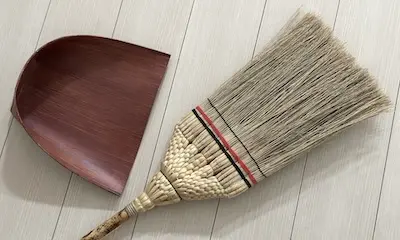
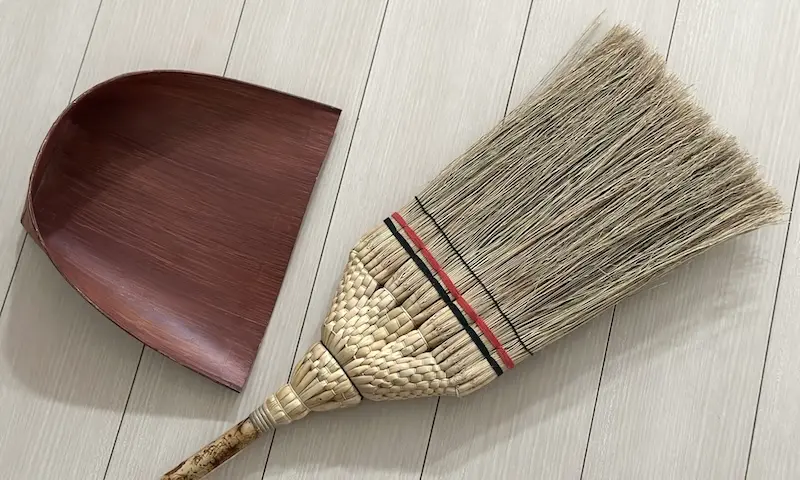
- ほうき (Houki, Broom)
It is used for tatami rooms and entrances.
You can clean quietly. - ちりとり (Chiritori, Dustpan)
This tool collects dust and trash gathered by a broom. - ぞうきん (Zoukin, Cleaning Cloth)
This is a wet cloth.
It is used for floors, shelves, and windows.
Many families reuse old towels to make them. - たわし (Tawashi, Scrub Brush)
This is a brush made of strong fibers. - はたき (Hataki, Duster)
It is convenient for dusting high places like shelves.
You can remove dust with a light swipe.
These tools are simple but very useful.
Therefore, you can feel Japanese culture close to you.
Osouji as Japanese Culture
In Japan, keeping your home clean has a special meaning.
Preparation to Welcome the New Year
In Japan, there is a belief in welcoming a deity called Toshigami-sama ( New Year Deity).
This deity is the god of the New Year.
Therefore, people have a custom of purifying the home at the end of the year.
This is an important preparation to welcome the New Year.
Cleaning the home helps calm the mind.
Then, you can welcome the New Year with a refreshed feeling.
A Time to Reflect on the Year
While doing Osouji, we naturally remember the events of the past year.
As we clean, old memories come back.
The time spent organizing things is also valuable.
Many people look back and think, “A lot happened this year.”
Cleaning together as a family creates a special time.
You can enjoy a warm, year-end atmosphere.
Osouji Viewed from Abroad
In America, people have Spring Cleaning in the spring.
This is a big cleaning during the spring season.
However, Japanese Osouji takes place at the end of the year.
It is a special event to welcome the New Year.
Therefore, it attracts attention from abroad.
Osouji is famous as a symbol of “Japanese New Year culture“.
It is a great chance to experience the Japanese year-end atmosphere.
Even for foreigners, Osouji is a very easy theme to understand.
Conclusion
Osouji is an important tradition that symbolizes the Japanese year-end.
It is not just about cleaning the house.
It also leads to mental preparation for welcoming the New Year.
For more on traditional year-end customs, see the link below.
[The Winter Solstice in Japan (冬至) – Year-End Traditions]
Discover more about Japanese culture in the Japan & Culture category.
Related Posts
大掃除とは?
大掃除は、日本で12月に行われる年末の習慣です。
1年の終わりに、家のすみずみまできれいにします。
新しい年を気持ちよく迎える準備をします。
ふだんの掃除では後回しにしがちな場所も、この時期にしっかり整えます。
大掃除には、新しい年の神様である「年神様」を迎える意味があります。
これは、大切な「一年の区切り」です。
家を整えることで心も落ち着きます。
そして、気持ちをリセットできます。
また、家族で協力して行うことで、年末らしい温かい雰囲気を感じられます。
大掃除の歴史と時期
大掃除には、長い歴史と特別な由来があります。
すす払いの起源
大掃除の始まりは「すす払い」と呼ばれる行事です。
これは、家や神社にたまったすすやほこりを落とすために行われました。
古くは宮中で行われていた行事です。
それが江戸時代には町中に広がり、年末の大切な行事となりました。
長野の善光寺で毎年12月29日にすす払いが行われます。
伝統的な年末行事としてよく知られています。
12月13日は正式な「すす払いの日」
昔は、12月13日が正式なすす払いの日でした。
この日は、お正月の準備を始める日とされていました。
そのため、まずは家を清めることが必要だったのです。
神社では今もこの日にすす払いを行うところがあります。
しかし、一般家庭ではこの習慣は簡略化されています。
現代の大掃除は柔軟なスタイル
現代では、大掃除を行う日程は家庭によってさまざまです。
12月の初めから少しずつ進める人がいます。
一方で、クリスマス後に一気に取りかかる家庭もあります。
また、年末ぎりぎりにまとめて行う家庭もあります。
このように現代の大掃除はとても柔軟な行事です。
12月のどの時期に行っても問題ありません。
大切なのは、ライフスタイルに合わせて無理なく進めることです。
大掃除の内容と日本の掃除道具
実際に大掃除を始めるとき、どこから手をければよいでしょうか。
よく掃除する場所
大掃除では、普段の掃除で手が届きにくい場所を中心にきれいにします。
- 玄関
扉や靴箱のほこりを落とします。 - 窓・網戸
水拭きをし汚れを落とします。 - キッチン
換気扇など、油汚れを落とします。 - 浴室・トイレ
水あかやカビを落とし、清潔に整えます。 - 家具の裏・高い場所
たまったほこりを除去します。
こうした場所を整えることで家全体がすっきりします。
日本ならではの掃除道具
日本には、大掃除でよく使われる伝統的な掃除道具があります。
どれもシンプルで扱いやすく、日本の生活文化をよく表しています。
- ほうき
畳の部屋や玄関に使われます。
静かに掃除ができます。 - ちりとり
ほうきとで集めて捨てたごみやほこりを捨てる道具です。 - ぞうきん
水でしぼって使う掃除布です。
床や棚、窓など幅広い場所に使えます。
古いタオルを再利用して作る家庭も多いです。 - たわし
丈夫な繊維で作られたブラシのような道具です。 - はたき
棚の上や高い場所のほこりを落とすのに便利です。
軽く払うだけでほこりが落ちます。
これらの道具は素朴ですが、とても使い勝手がよいです。
そのため、日本らしさを身近に感じられます。
日本文化としての大掃除
日本では、家をきれいにすることが特別な意味を持っています。
新しい年を迎える準備
日本では、「年神様」という神様を迎える考え方があります。
この年神様は、新しい年の神様です。
そのため、年末に家を清める習慣があります。
これは新年を迎える大切な準備です。
家をきれいにすると、心も整います。
そして、清々しい気持ちで新しい年を迎えることができます。
一年を振り返る時間
大掃除をしていると、一年の出来事を自然と思い出すことがあります。
掃除をしながら、昔の思い出がよみがえります。
物を整理する時間も大切です。
「今年もいろいろあったな」と振り返る人が多いです。
家族で協力して掃除をすると、特別な時間が生まれます。
年末らしい温かい雰囲気を楽しめます。
海外から見た“大掃除”
アメリカには、春に行う「スプリング・クリーニング」があります。
これは春の時期の大きなお掃除です。
しかし、日本の大掃除は年末に行われます。そ
れは新年を迎えるための特別な行事です。
そのため、海外からも注目されています。
日本の大掃除は「新年文化を象徴する行事」として有名です。
日本の年末の雰囲気を知るチャンスです。
外国人にとっても、大掃除はとてもわかりやすいテーマになります。
まとめ
大掃除は、日本の年末を象徴する大切な習慣です。
家をきれいにするだけでありません。
新しい年を迎える心の準備にもつながります。
年末の伝統行事について、こちらもぜひご覧ください。
[The Winter Solstice in Japan (冬至) – Year-End Traditions]
日本文化についてもっと知りたい方は、Japan & Culture カテゴリをご覧ください。