

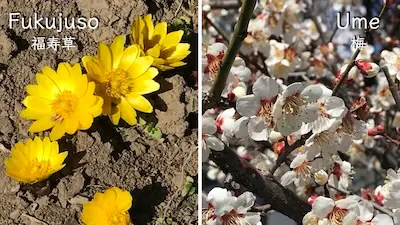
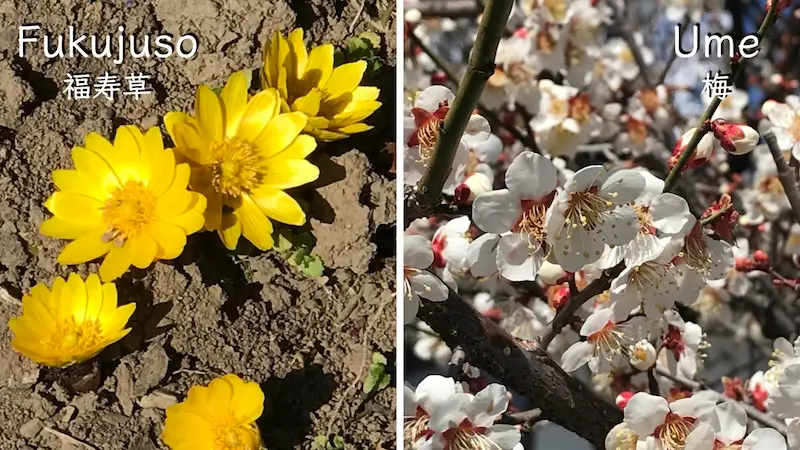
Recently, the days in Japan have been getting a little longer.
In the air, I often feel small moments.
They make me think, “Ah, spring is coming.”
When people think of spring in Japan, they usually imagine cherry blossoms.
However, spring actually begins long before the sakura bloom.
If you look closely, small signs of life are already starting at your feet.
They are also appearing on the tips of branches.
Today, I want to introduce a small “beginning of spring” that I recently discovered.
Fukujuso: A Small Yellow Light in the Snow
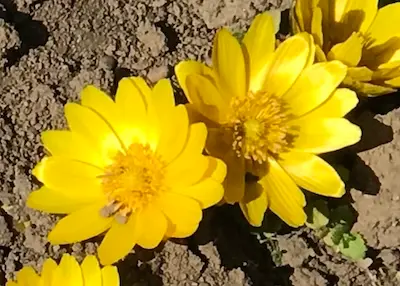
There is a flower that quietly shows signs of spring under the snow.
First Sign of Spring
This happens during the harsh cold of February.
The Fukujuso begins to bloom.
It breaks through the frozen ground and lingering snow.
In Japan, it has long been loved as one of the “Spring Ephemerals.”
These are flowers that announce the arrival of spring.
A Name for Luck and Longevity
Actually, the name of this flower has a wonderful meaning.
In Kanji, it is written as Fuku (福) and Ju (寿).
Fuku (福) means “happiness” or “good fortune.”
Ju (寿) means “longevity” or “long life.”
As you can tell from these characters, it is a very lucky flower in Japan.
Additionally, it has been called Ganjitsu-so (元日草).
This name has been used since the the Edo period (1603–1867).
This name literally means “New Year’s Day plant.”
It usually blooms around the time of the lunar New Year.
Therefore, people have long cherished it as a special flower.
It is used to celebrate the New Year.
Why Fukujuso Is Yellow
There is an interesting secret hidden in the color of the Fukujuso.
These vibrant yellow petals work to collect sunlight efficiently.
By gathering light, the flower raises the temperature inside its petals.
It is said to be nature’s wisdom for attracting insects in the cold.
Also, this flower is very sensitive to sunlight.
It opens in the morning on sunny days and closes when the sun goes down.
This is one of its unique characteristics.
Finding these small, golden flowers instantly brightens my heart.
It makes me feel warm and think, “Spring has safely arrived again this year.”
Enjoying Ume: Spring in the Scent
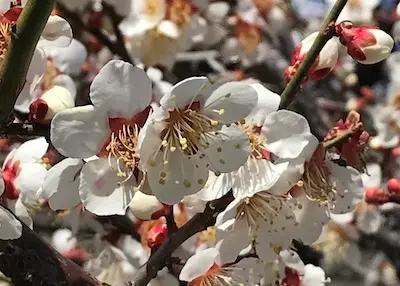
Ume (plum blossoms) have long been loved as spring flowers.
Flower Viewing Once meant Ume
Today, people think of Sakura when they hear “flower viewing” (Ohanami).
This is the most common choice in Japan now.
However, it was different until the Nara period (710–794).
Back then, people were actually referring to Ume (Plum Blossoms).
During that time, aristocrats planted Ume trees in their gardens.
These trees had just been introduced from China.
People loved their noble appearance.
They also enjoyed their elegant fragrance.
In fact, they wrote many poems about these beautiful blossoms.
Enjoying Fragrance, Not Just Sight
There is a big difference between Ume and Sakura.
The main difference is “how to enjoy” them.
Usually, people enjoy Sakura in full bloom.
They often gather in lively crowds.
On the other hand, the Japanese style for Ume is different.
People quietly appreciate its fragrance.
In Japan, this style is called Kanbai (観梅, Plum Viewing).
Many people look forward to cherry blossoms in spring.
[Why Are Cherry Blossoms So Special in Japan?]
Ume vs. Sakura: How to Tell Them Apart
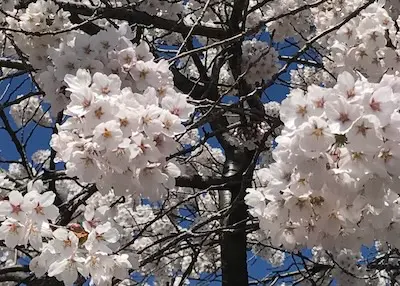
There are a few differences between ume and cherry blossoms.
Petal Shape
Do you ever wonder, “Is this Ume? Or is it Sakura?”
When that happens, first look at the tips of the petals.
The petals of Ume have “round” tips.
In contrast, the petals of Sakura are “split” at the tips.
If you look closely, they look like cute little hearts.
Growth and Bark Differences
Another point is how the flowers grow on the branch.
Ume blossoms grow directly on the branch.
They look like they are stuck tightly to it.
However, Sakura flowers hang from long stems.
Also, please pay attention to the “trunk” of the tree.
Sakura bark has horizontal lines on it.
Ume bark is different.
It is very rugged and has cracks that look like a turtle’s shell.
Conclusion
Spring in Japan begins before cherry blossoms bloom.
Fukujuso appears from under the snow.
It signals the arrival of spring.
Ume has long been loved as a spring flower.
Even before cherry blossoms, there are many small signs of spring.
Learning these expressions can deepen your understanding of Japanese.
Discover more about Japanese culture in the Japan & Culture category.
Related Posts


最近、日本では少しずつ日が長くなってきました。
空気の中にも「あ、春が近いな」と感じる瞬間が増えています。
「日本の春といえば桜」というイメージが強いですよね。
しかし、実は桜が咲くずっと前から、春は始まっています。
足元や枝先では、小さな命が動き出しているのです。
今日は、私が最近見つけた小さな「春の始まり」をご紹介します。
雪の中の黄金の輝き「福寿草
雪の下で、静かに春の気配を見せる花があります。
春を告げる花
2月のまだ寒さが厳しい時期のことです。
それは、凍った地面や残雪を割るようにして、この花は咲き始めます。
日本では「春を告げる一番の花」の一つとして愛されてきました。
「福」と「寿」を名前
実は、この花の名前には素敵な意味があります。
漢字で書くと「福(ふく=しあわせ)」と「寿(じゅ=ながいき)」です。
漢字からもわかるように、とても縁起の良い花とされています。
また、江戸時代(1603–1867年)からは「元日草」とも呼ばれていました。
昔から、旧暦の新年の頃に咲く花として大切に飾られてきたのです。
黄色に込められた秘密
面白いのは、福寿草の「色」に隠された秘密です。
この鮮やかな黄色には、太陽の光を効率よく集める役割があります。
光を集めて花の中の温度を上げているのです。
これは、寒い中で虫を誘うための自然の知恵だと言われています。
また、太陽光に敏感で、晴れた日の午前中に花が開き、日が陰ると閉じるのが特徴です。
この小さな黄金の花を見つけると、心がパッと明るくなります。
「今年も無事に春が来たな」と、温かい気持ちにさせてくれます。
香りで春を先取りする「梅」
梅は春の訪れを告げる花として、古くから親しまれてきました。
万葉集と梅のお花見
日本のお花見といえば、今は「桜」が一般的です。
しかし、奈良時代(710〜794年)ごろまでは「梅」のことでした。
当時の貴族たちは、中国から伝わったばかりの梅を庭に植えました。
そして、その高貴な姿や香りを歌に詠んで楽しんでいたのです。
視覚だけでなく「香」を愛でる文化
梅と桜には、大きな違いがあります。 それは「楽しみ方」です。
桜は満開の美しさを、みんなで賑やかに楽しみます。
一方で、梅は静かにその香りを愛でるのが日本流です。
この楽しみ方を、日本では「観梅(かんばい)」と呼びます。
桜は日本で特別な存在です。
[Why Are Cherry Blossoms So Special in Japan?]
「梅」と「桜」の見分け方
梅と桜は、見分け方にもいくつかの違いがあります。
花びらの形を見る
「これって梅?それとも桜?」と迷うことはありませんか?
そんな時は、まず花びらの先を見てください。
梅の花びらは、先が「丸い」形をしています。
それに対して、桜の花びらは先が「割れて」います。
よく見ると、可愛いハート型のような形をしています。
育ち方と樹皮の違い
もう一つのポイントは、花の付き方です。
梅の花は、枝にピタッとくっついて咲きます。
しかし、桜は長い茎の先に花がぶら下がっています。
また、木の「幹」にも注目してください。
桜の木には、横向きの線が入っています。
梅の木はゴツゴツしていて、亀の甲羅のような割れ目があるのが特徴です。
まとめ
日本の春は、桜が咲く前から始まっています。
福寿草は、雪の下から春を知らせる花です。
梅の花も、春を告げる花として親しまれてきました。
桜の前にも、小さな春の兆しがあります。
こうした表現を知ることで、日本語の理解も深まっていくでしょう。
日本文化についてもっと知りたい方は、Japan & Culture カテゴリをご覧ください。