

Why Is Soseki Still Beloved?
Hearing the word “literary giant” might make him feel distant.
However, Natsume Soseki (夏目漱石) is special.
He is a legendary figure who left his mark on Japanese literature.
He remains one of the most beloved and accessible intellectuals in Japan.
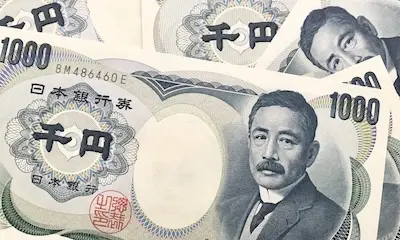
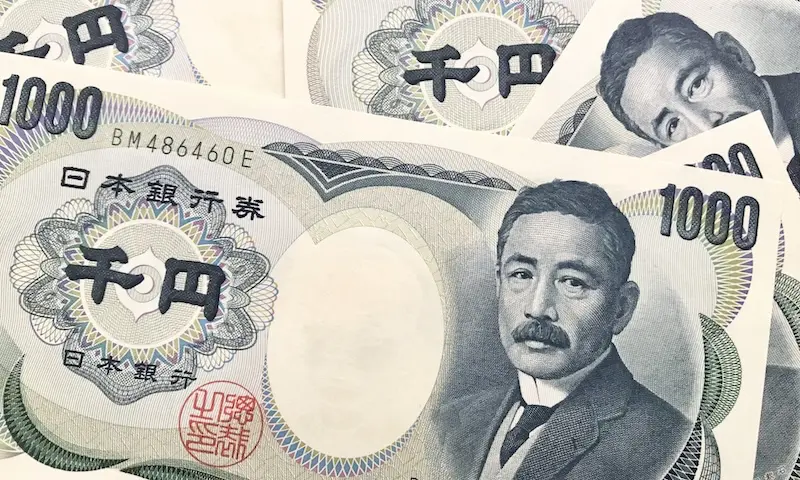
His works and his iconic face on the 1,000-yen bill live on in our daily lives.
In this article, I will share the story of this national icon.
You will see the unexpected connection to his “personal seals.”
Natsume Soseki: A National Icon
Everyone in Japan knows Natsume Soseki’s face.
For years, it was featured on the 1,000-yen bill.
From 1984 to 2007, he was a part of our daily lives.
Every time we opened our wallets, we saw his portrait.
There is a reason he became more than just a novelist.
He became a national intellectual.
His face was on our currency for over two decades.
As a result, he became a “familiar symbol of wisdom” to us all.
Soseki’s Timeless Works
Natsume Soseki’s works are essential to Japanese education.
They are featured in many textbooks and read by generations.
Kokoro: A Tale of Solitude
Kokoro (こころ, Heart) is a masterpiece often taught in Japanese high schools.
It is no longer required reading.
However, it remains widely read across generations.
The story focuses on the bond between the “Master” and “I.”
Deep human solitude lies at the heart of their connection.
It also vividly captures the shifting values of the Meiji era.
Rereading this book as an adult reveals new depths that resonate even more.
For me, it is a precious book that I revisit time and again.
Botchan: A Refreshing Classic
Botchan (坊ちゃん, a young master) is a familiar classic.
It is often featured in junior high school textbooks.
The work is known for its bright and lively narrative style.
This is part of its great charm.
The story is driven by the protagonist’s straightforward sense of justice.
He is clumsy but sticks to his beliefs.
This shows deep humanity.
It is a story with a unique charm.
It combines readability with a strong core.
Soseki’s works have been read in schools for a long time.
People’s struggles and questions about society are timeless.
They remain relevant even today.
Because of this, many readers continue to pick up his books.
The Mystery of Soseki’s Seals
Soseki had a deep connection with hanko (ハンコ, Japanese seals).
His life as an author was at the heart of this relationship.
He was also drawn into the world of seals.
This was due to his passion for art.
Hanko: Seals of Authenticity
During the Meiji and Taisho eras, Japanese seals were essential for authors.
- Proof of Royalties.
At that time, a Japanese seal was stamped on the copyright page of a book.
This was done to prove the royalties.
It is said that Soseki himself introduced this system. - Art and Hobbies.
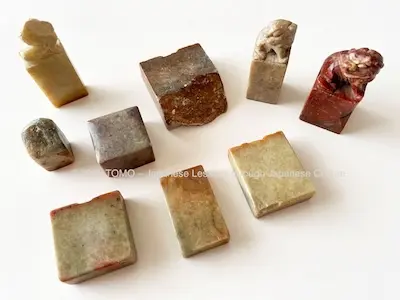
Soseki loved Tenkoku(篆刻).
This is the refined art of engraving Japanese seals.
He also enjoyed collecting them.
He was very particular about his Japanese seals.
He would not compromise on the ones used for his books.
Each small impression reflects Soseki’s aesthetic sense.
It also shows his deep sense of responsibility.
A Personal Seal of History
Soseki loved Japanese seals.
He valued them both as a proof of royalties and as a form of art.
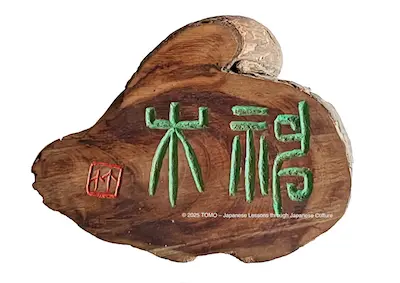
My family has a historical connection to this “personal seal.”
An ancestor of mine was involved in creating them.
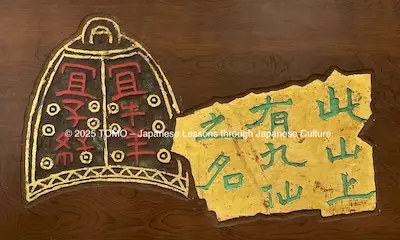
My ancestor carved that seal.
It is still featured on the cover of the Iwanami Bunko edition of Kōjin (行人, The Wayfarer).
The red impression of that seal connects Soseki’s era to our own.
It bridges the gap between his time and the present day.
Why is my ancestor’s seal on the cover of Soseki’s masterpiece?
Kōsho’s Seals for Sōseki: My Ancestor’s Surprising Connection to the Author
Soseki and Japanese Ambiguity
Soseki’s works are filled with subtle “ambiguity.”
They also feature the “negative space” unique to the Japanese language.
In his novel Kokoro,
the “Sensei (a mentor figure)” does not reveal all his true feelings.
There are many moments where he leaves his emotions unspoken.
Readers must interpret these hidden feelings.
They observe his silence and the surrounding atmosphere to understand him.
Perhaps this art of “not saying everything” still resonates today.
It remains a core part of the Japanese language we use.
Conclusion
Soseki’s works and the seals my ancestor left behind share a deep connection.
They both reflect a heartfelt respect for Japanese language and culture.
The charm of human emotions never fades with time.
Language itself remains timeless.
I hope to share this beauty with others as a Japanese teacher.
Explore more about Japanese seal art in the Japanese Seal Art category.
Related Posts
なぜ、漱石は100年経っても「身近」なのか?
「文豪」と聞くと、少し遠い存在に感じるかもしれません。
しかし、夏目漱石は特別です。
日本人にとって彼は、文学の歴史に名を刻む偉大な作家です。
時代を超えて愛され続けるもっとも身近な知識人でもあります。
彼の作品や千円札の「顔」は、今も私たちの生活の中に息づいています。
今回は、そんな国民的「文豪と印章」の意外な縁についてお話しします。
財布の中の漱石:国民の「顔」
日本人の誰もが知る漱石の顔。
かつては千円札の肖像でした。
1984年から2007年までの約23年間。
私たちは財布を開くたび、彼の顔を目にしていました。
漱石が作家の枠を超え、国民的な知識人となったのには理由があります。
長年、生活の中心である紙幣に描かれ続けたからです。
結果として漱石は、私たちにとって「身近な知の象徴」となりました。
教科書の中の漱石:時代を超える作品
漱石の作品は、日本の教育に欠かせない存在です。
多くの教科書に採用され、世代を超えて読み継がれています。
『こころ』:先生と「私」が語る孤独
高校の授業で扱われる名作『こころ』。
現在は必修ではありません。
それでも、今も多くの学校で読み継がれています。
物語は、「先生」と「私」の交流を中心に展開します。
その背景にあるのは、人間が抱える深い孤独です。
明治という時代の価値観の揺らぎも、鮮やかに描き出されています。
大人になってから読み返すと、その深みがより心に響くかもしれません。
私自身、何度も読み返している大切な一冊です。
『坊っちゃん』:痛快な青春物語
中学校の教科書でも馴染み深いのが『坊っちゃん』です。
明るく軽快な語り口が魅力の作品です。
この物語を動かしているのは、主人公のまっすぐな正義感です。
不器用ながらも信念を貫く姿には、深い人間味があります。
読みやすさの中に芯の強さを感じさせる、不思議な引力を持つ物語です。
漱石の作品は、こうして教育の場で長く読み継がれてきました。
人の心の悩みや社会への問いかけは、時代を超えて今も色あせません。
そのため、現在も多くの読者が彼の作品を手に取り続けているのでしょう。
夏目漱石と「印章」の関係
漱石は印章にも深い関わりを持っていました。
その背景には、作家という立場があります。
また、芸術を愛する心も、彼を印章の世界へと惹きつけました。
印章の役割
明治・大正時代、作家にとって印章は非常に重要なものでした。
- 印税の証明
当時は、印税の証明として本の奥付に印が押されました。
この仕組みを導入したのは、漱石だと言われています。 - 趣味と芸術
漱石は「篆刻(てんこく)」という印を彫る芸術を好み、収集もしていました。
印章へのこだわりが強く、奥付に使う印にも妥協しませんでした。
小さな印影の一つひとつに、漱石の美意識と責任が込められています。
先祖郊処が作った「個人の証」
印章を「印税の証明」や芸術としても愛した夏目漱石。
その「個人の証」に、私の先祖が関わるという縁がありました。
先祖が彫ったその印章は、今も岩波文庫の『行人』の表紙にあります。
そこに押された赤い印影は、漱石が生きた時代と現代を繋いでいます。
先祖が彫った印章が、なぜ漱石の作品の表紙に?
Kōsho’s Seals for Sōseki: My Ancestor’s Surprising Connection to the Author
漱石作品に見る、日本語の「曖昧さ」
漱石の作品には、日本語特有の“曖昧さ”や“余白”が感じられます。
たとえば『こころ』では、「先生」が本音をすべて語りません。
気持ちを、はっきり言葉にしない場面も多くあります。
読者は、その沈黙や空気から感情を読み取っていきます。
こうした「言い切らない表現」は、今の日本語にも通じているのかもしれません。
まとめ
漱石の作品や、先祖が残した印章。
そこには、日本の言葉や文化を大切にする心が今も息づいています。
時代が変わっても、人の心や言葉の魅力は変わりません。
ハンコ文化についてもっと知りたい方は、Japanese Seal Art カテゴリをご覧ください。