

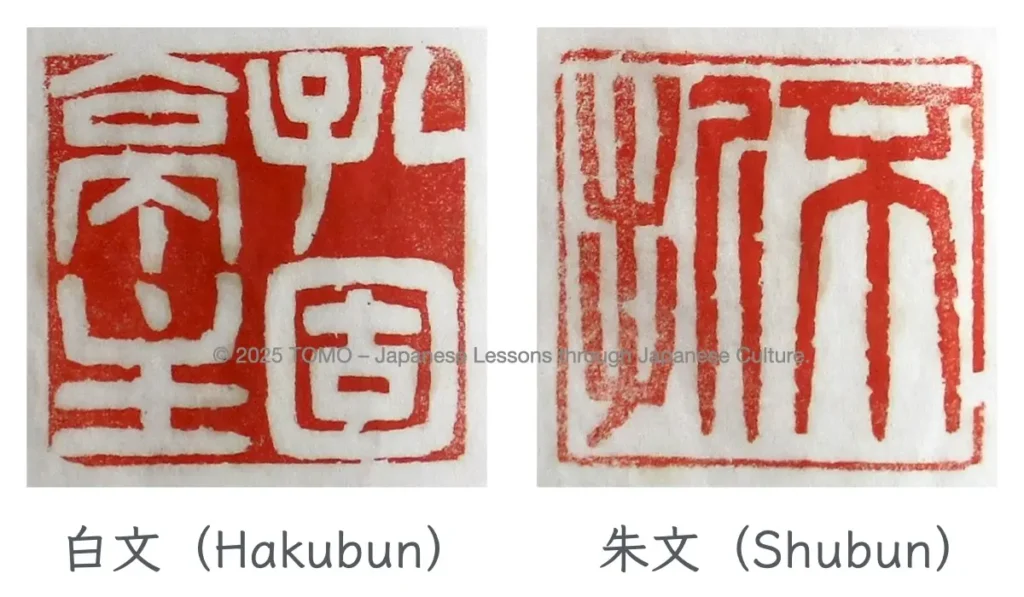
This seal was made by my ancestor, Kōsho, for the calligrapher and illustrator Fusetsu Nakamura.
Fusetsu is known for creating the illustrations for Natsume Sōseki’s novel I Am a Cat.
The 印章 (Insho: Japanese seal) in the main image was handcrafted by my ancestor, 郊処 (Kosho).
He created this piece for the calligrapher 中村不折 (Nakamura Fusetsu).
Fusetsu is famous for illustrating Natsume Soseki’s novel, I Am a Cat.
In my previous post, I introduced the Japanese “Stamp Rally” culture.
This time, I want to focus on the origin of that culture: the 印章 (Insho: Japanese seal).
The Insho is an important tool with a long history in Japan.
Moreover, it remains essential to Japanese daily life today.
What is an Insho?
An 印章 (Insho: Japanese seal) is a “mark” used to identify yourself.
Specifically, it serves as a substitute for a signature.
Actually, the character 印 (In: seal) can also be read as しるし (Shirushi: mark).
Simply put, it is a ハンコ (Hanko: personal stamp).
In Japan, the stamped impression itself serves as vital evidence of your “intent.”
Therefore, an Insho is essential for contracts and official documents.
In this way, Insho have historically played a key role in showing responsibility and agreement.
History of Japanese Seals
Japan’s Insho culture originally arrived from China.
The oldest record is a gold seal granted in 57 AD by the Emperor of the Later Han Dynasty.
This seal is known as the 漢委奴國王 (Kan no wa no na no koku o in: King of Na of Wa gold seal).
Afterward, Insho spread to aristocrats and samurai.
Later, they became common among merchants as well.
During the 明治時代 (Meiji era, 1868–1912), the government formalized the system.
Therefore, seals spread to ordinary households across the nation.
In this way, Insho have been used in politics and business.
Over time, they expanded their role into daily life as well.
What Is 篆書(Tensho)?
An essential element of Insho is 篆書 (Tensho).
This script originated in China about 2,200 years ago.
When 秦の始皇帝 (Qin Shi Huang) unified China, he adopted it as the “official political script.”
The previously mentioned 漢委奴國王印 contains five specific characters.
These characters—漢, 委奴, and 國王—are written in Tensho.
The Unique Beauty and Function of Tensho
Tensho features uniform line thickness.
It also has rounded and symmetrical shapes.
Therefore, it creates beautiful lines in a seal.
This also adds a unique depth to the design.
Additionally, the lines are complex and difficult to read.
This makes them very hard to forge.
For this reason, it is a vital security factor.
In Japan, other scripts appeared during the early 平安 (Heian: Heian era, around the 9th century).
However, Tensho remained the standard for Insho.
Eventually, the act of “carving” characters became highly refined.
As a result, seal-making evolved into the artistic world of Tenkoku.
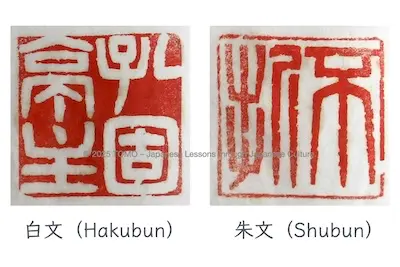
白文(Hakubun) and 朱文(Shubun)
There are two main Insho techniques.
- 白文 (Hakubun: white characters) (陰刻 (Inkoku: intaglio))
This technique involves carving the characters themselves.
When stamped, the text remains white against a red background.
It gives a calm and formal impression. It is often used for official seals. - 朱文 (Shubun: red characters) (陽刻 (Yokoku: relief))
This technique involves carving the area around the characters.
When stamped, the red characters stand out clearly.
This style creates a bold and elegant appearance.
It has a strong presence.
Distinguishing Between Hakubun and Shubun
The distinction between the two is as follows.
- 姓名印 (Seimeiin: name seal) … Hakubun (Inkoku)
- 雅号印 (Gagoin: pseudonym seal) … Shubun (Yokoku)
(雅号 (Gago): This is a pseudonym or art name.
Writers, painters, and calligraphers use it instead of their real names.)
Generally, Hakubun is used for Seimeiin (real names).
Shubun is used for Gagoin (art names).
Summary
Throughout a long history, Insho have been deeply rooted in Japanese life.
Behind this lie the traditions of Tensho and carving techniques.
These elements evolved into the art of Tenkoku.
In the next post, I will explore the history and background of Insho more deeply.
Let’s take another step closer to the charm of Insho.
Explore more about Japanese seal art in the [Japanese Seal Art] category.
Related Posts
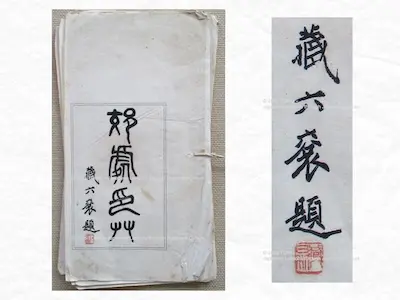
メイン画像の印章は、私の先祖・郊処(こうしょ)が手がけたものです。
これは、書家の中村不折(なかむら ふせつ)のために作られました。
不折は、夏目漱石の小説『吾輩は猫である』の挿絵を描いたことで知られています。
前回は、日本人の「スタンプラリー」をご紹介しました。
今回は、その元となった「印章(いんしょう)」に注目します。
印章は長い歴史を持つ、日本の大切な道具です。そして、現在でも日本人の生活に欠かせません。
印章とは何か
印章とは、自分を示すための「しるし」です。つまり、署名のかわりになるものです。
実は、漢字の「印」には「しるし」という読み方もあります。
いわゆる「ハンコ」です。
日本では、押された印そのものが「本人の意思」を示す重要な証拠になります。
そのため、契約書や公的な書類では印章が欠かせません。
このように、印章は昔から責任や合意を表す役割を担ってきました。
印章の歴史
日本の印章文化は中国から伝わりました。
最も古い記録は、西暦57年に後漢の皇帝から授けられた金印「漢委奴國王(かんのわのくにおう)」です。
その後、印章は貴族や武士へと広まりました。その後、商人たちの間でも定着しました。
明治時代には制度化が進みました。そのため、全国の一般家庭まで普及します。
このように、印章は政治や商売の場で使われてきました。
長い時間をかけて日常生活へも役割を広げたのです。
篆書とは何か
印章に欠かせない要素として「篆書(てんしょ)」があります。
これは、中国で約2200年前に生まれた書体です。
そして秦の始皇帝が中国を統一した際、この書体「政治の正式文字」として採用しました。
先ほどの「漢委奴國王印」の中の「漢」「委奴」「國王」の5文字が篆書です。
篆書は線の太さが均一で、丸みがあり、左右対称なのが特徴です。
そのため印章にすると線が美しく整い、独特の深みが生まれます。
さらに、読みにくく、線が複雑で模倣しにくいということも大切な要素です。
日本では平安時代の初期から他の書体も使われ始めました。
しかし、篆書は印章の基本書体として受け継がれてきました。
そして、文字を「彫る」行為そのものが洗練されていきました。
その結果、印章づくりは「篆刻(てんこく)」という芸術的の世界へも広がりました。
白文(はくぶん)と朱文(しゅぶん)
印章の技法には、大きく分けて2種類あります。
- 白文(陰刻)
文字の部分を彫る技法です。押すと文字が白く残り、背景が赤く見えます。
落ち着いた印象があり、公式の印章によく使われます。 - 朱文(陽刻)
文字のまわりを彫る技法です。押すと赤い文字がくっきり浮かび上がります。
華やかで存在感のある仕上がりになります。
白文と朱文の使い分け
2つの使い分けは、次の通りです。
- 姓名印 … 白文(陰刻)
- 雅号印 … 朱文(陽刻)
(雅号:文筆家、画家、書道家などが本名以外につける、別名のこと)
一般的には、姓名印(本名)には白文、雅号印(別名)には朱文が使われる傾向があります。
まとめ
印章は、自分を示すための大切な文化です。
長い歴史を通じて、日本人の生活に深く根づきました。
その背景には、篆書の伝統や、彫刻の技法があります。
そして、こうした積み重ねが「篆刻」という芸術へ発展しました。
次回は、印章の歴史や背景をさらに深掘りします。そして印章の魅力にもう一歩近づいてみます。
篆刻やハンコについては、[Japanese Seal Art] カテゴリーもご覧ください。