

Suwa City has launched a collaborative stamp rally.
It features the anime The Elusive Samurai (逃げ上手の若君).
This popular series is set in both Suwa and Kamakura.
Participants visit local landmarks.
They collect digital stamps on their smartphones.
Anime-themed stamp rallies are trending across Japan.
These events use location-based technology.
It is similar to the game Pokémon GO (ポケモンGO).
While this is a modern format, it keeps the Japanese culture of collecting alive.
The Muromachi Period: The Beginning of Goshuin
The origin of stamp rallies is the 霊場巡拝 (Reijo Junpai) from the Muromachi period.
Reijo Junpai is a pilgrimage to sacred sites.
At that time, there was a culture of collecting 御朱印 (Goshuin) and 納経印 (Nokyoin).
Pilgrims received a Nokyoin as proof of dedicating a hand-copied sutra.
They also received a Goshuin as proof of their visit.
This culture of collecting eventually led to the modern stamp rally.
The Meiji Period: The Spread of Seal Culture
In the Meiji period, 消印 (Keshiin, postmarks) appeared on railways and mail.
People became absorbed in collecting Keshiin from letters and postcards.
In this way, the Japanese culture of collecting spread widely.
The Showa Period to the Modern Stamp Rally
The Osaka Expo was held in 1970.
At the event, collecting travel stamps at each pavilion became a huge hit.
This triggered the spread of stamp rallies across the country.
The following year, railway companies introduced Station stamps.
It became established as a standard way to enjoy travel.
This practice keeps the Japanese culture of collecting alive.
Types of Stamp Rallies
Stamp rallies are generally divided into two categories.
These are facility-based and special event-based.
Facility-Based Stamps
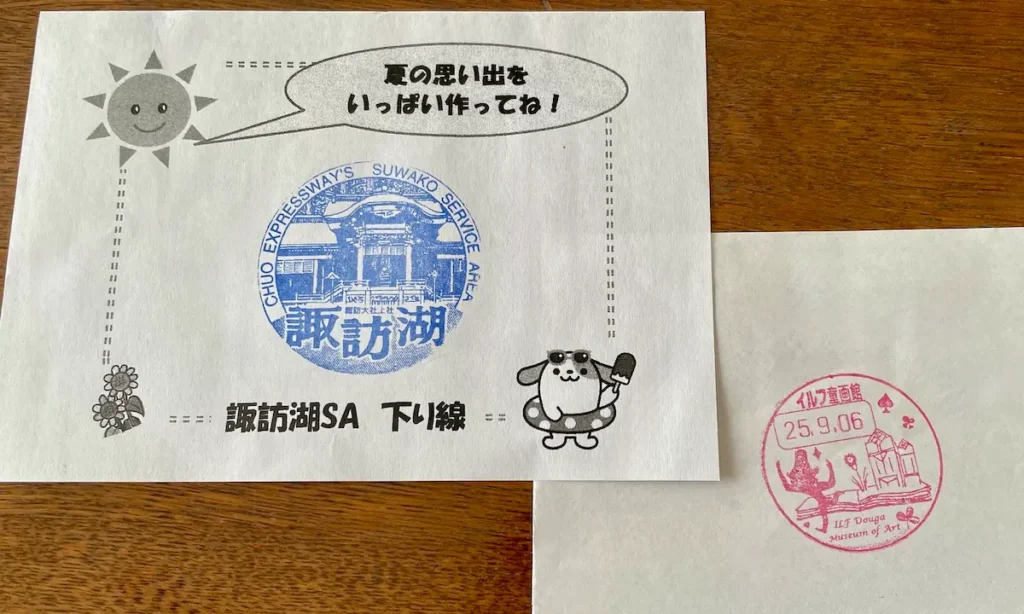
The first type consists of stamps permanently placed at specific facilities.
- Railway stations
- Art museums and general museums
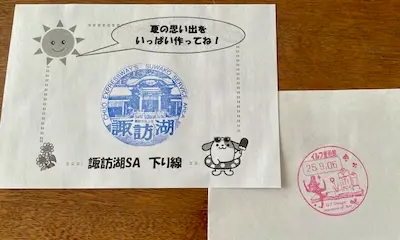
- Highway service areas
Travelers can stop by these locations during their trips to collect stamps.
Anyone can use these stamps easily.
The shape of the ink pads and the stamp designs vary by facility.
This is what makes the culture of collecting them so charming.
Special Event-Based Stamps
The second type features stamps for limited times or events.
Recently, collaborations with anime have also been increasing.
Stamp rallies touring nearby temples and shrines are also popular.
Furthermore, there are seasonal ones.
Autumn is a season with beautiful autumn leaves.
People collect stamps.
They do this while enjoying the autumn leaves and scenery.
Recently, many books collecting “Famous Japanese Castles” have been published.
Descriptions of the castles and stamp rallies are combined together.
The Japanese and “Collection Culture”
Japanese people have long enjoyed “collecting” things.
There are several reasons for this.
Sense of Achievement and Satisfaction
As you collect stamps one by one, you feel the joy of approaching your goal.
The sense of satisfaction when you have collected them all is exceptional.
Inspiration for Travel
Stamp rallies become a purpose for travel.
You can visit places you do not usually go and learn about the charm of that land.
The act of collecting itself turns the trip into a richer experience.
History and Familiarity
This culture also leads to Goshuin and Nokyoin.
Since collecting seals has been familiar since long ago.
Therefore, it naturally took root.
A Culture Everyone Can Enjoy
The rules are simple.
It is attractive because everyone from kids to adults can enjoy it.
Now, it is a culture that connects people.
It connects people across regions and generations.
The Joy That Remains Even in the Digital Age
Despite digital progress, the charm of stamp rallies endures.
New Forms of Stamp Rallies
Recently, collaborations with anime and games have been increasing.
People collect digital stamps on their smartphones.
This is popular among the younger generation.
Stamp rallies overlap with “pilgrimages to sacred sites.”
Fans visit the settings of their favorite works.
It is spreading as a new form of tourism.
The Unchanging Joy of “Stamping”
Even so, paper stamps remain the mainstream in many places today.
You can enjoy the differences in ink colors and how they are pressed.
The experience of collecting them one by one is exceptional.
When you press a stamp, you can keep proof of your visit in your hands.
Next time, I’ll discover “Hanko:seal engraving,” the roots of our stamp culture.
Also, learn more about Goshuin, the origins of stamp culture.
Goshuin: Understanding Japan’s Temple and Shrine Seals.
Explore more about Japanese seal art in the Japanese Seal Art category.
Related Posts
諏訪市は、アニメ『逃げ上手の若君』とコラボスタンプラリーが始まりました。
このアニメは、諏訪と鎌倉を舞台にした人気漫画です。
参加者は、名所を巡り、スマートフォンでスタンプを集めます。
近年、こうしたアニメコラボは全国で急増しています。
かつての「ポケモンGO」と同様、位置情報を活用した仕組みです。
新しい形でありながら、日本人の「集める楽しみ」を受け継ぐ文化です。
日本中に広がるスタンプラリー
なぜ日本では、スタンプを「集める文化」が親しまれているのでしょうか。
その歴史は意外にも古く、室町時代にまで遡ります。
室町時代〜御朱印のはじまり
スタンプラリーの原点は、室町時代に寺社を巡る「霊場巡拝」です。
当時は「御朱印」や「納経印」を集める文化がありました。
巡礼者は、写経を納めた証として「納経印」を受け取りました。
そして参拝の証として「御朱印」を授かりました。
こうした「集める文化」が、後のスタンプラリーにつながっていきます。
明治時代〜印文化の広がり
明治時代には、鉄道や郵便の「消印」が登場します。
当時の人々は、手紙やはがきの消印を集めることに夢中になりました。
こうして、日本の「集める文化」が広く浸透しました。
昭和〜現代のスタンプラリーへ
1970年大阪万博が開催されました。
その際、各パビリオンの「スタンプコレクション」が大人気となりました。
これをきっかけに、スタンプラリーは全国へ広がりました。
翌年には鉄道会社が「駅スタンプ」を導入しました。
それが旅の楽しみの一つとして定着していきました。
スタンプラリーの種類
スタンプラリーには、「施設型」と「特別型」などがあります。
施設型スタンプ
一つ目は、施設に常設されたスタンプです。
- 駅、
- 美術館・博物館
- 高速道路のサービスエリア
旅行の途中で立ち寄ってスタンプを集められます。
誰でも気軽にスタンプを使うことができます。
インクや台の形、スタンプのデザインも施設ごとに異なります。
そのため、集める楽しさも魅力的です。
特別型スタンプ
二つ目は、期間限定やイベントのスタンプです。
最近ではアニメとのコラボも増えています。
そして、近くのお寺や神社を巡るスタンプラリーも人気です。
さらに、季節限定のものもあります。
特に、秋は紅葉がきれいな季節です。
そこで、紅葉や景色を楽しみながらスタンプを集めます。
最近では、「日本の名城」を集めた本が多く出版されています。
お城の説明と、スタンプラリーが一緒になっています。
日本人と「集める文化」
日本人は昔から「集める」ことを楽しんできました。
そこには、いくつかの理由があります。
達成感と満足感
スタンプを一つずつ集めと、目標に近づく喜びを感じます。
すべてそろったときの満足感は、別格です。
旅のきっかけ
スタンプラリーは、旅の目的になります。
普段行かない場所を訪れ、その土地の魅力を知ることができます。
集める行為そのものが、旅をより豊かな体験に変えてくれます。
歴史と親しみ
この文化は、寺社の「御朱印」や「納経印」にも通じます。
昔から印を集めることが身近だったため、自然に定着していきました。
みんなで楽しむ文化
シンプルなルールなので、子どもから大人まで楽しめるのも魅力です。
今では、地域や世代を超えて同じ達成感を共有できる文化です。
デジタルになっても残る楽しみ
デジタル技術が進化しても、スタンプラリーの魅力は変わりません。
新しい形のスタンプラリー
最近は、アニメやゲームとのコラボが増えています。
スマートフォンでスタンプを集める形式は、特に若い世代に人気です。
好きな作品の舞台を巡る「聖地巡礼」とも重なります。
観光の新しい形として広がっています。
変わらない「押す」楽しさ
それでも、今も多くの場所では紙のスタンプが主流です。
インクの色や押し方の違いを楽しみます。
一つずつ集める体験は格別です。
スタンプを押すと、訪れた証が手元に残せます。
次回は、スタンプにつながる「印章(ハンコ)」の世界をご紹介します。
スタンプ文化の原点である御朱印については、こちらもおすすめです。
Goshuin: Understanding Japan’s Temple and Shrine Seals
ハンコ文化についてもっと知りたい方は、Japanese Seal Art カテゴリをご覧ください。