

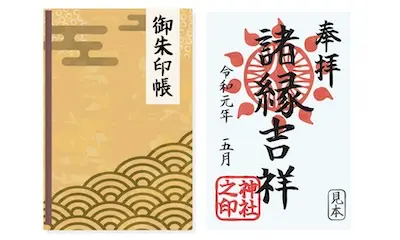
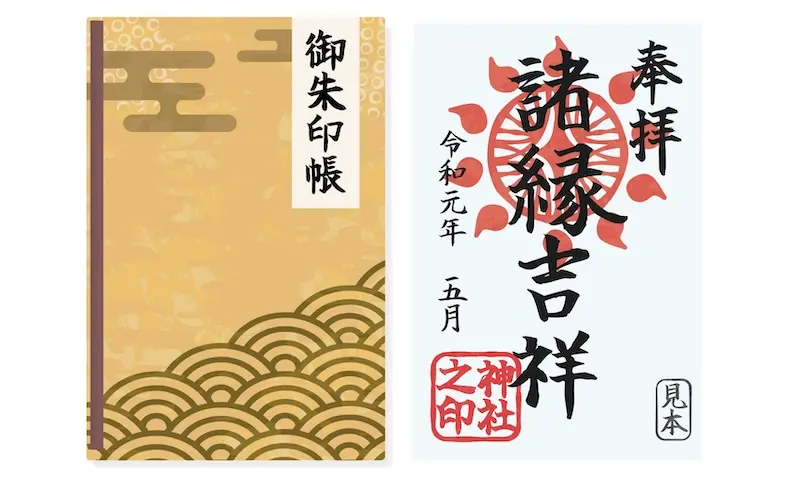
“Goshuin (御朱印)” are available at Shinto shrines and Buddhist temples in Japan.
Do you know the significance of their beautiful calligraphy and seals?
Actually, a Goshuin is a sacred record.
It represents your spiritual connection with the deities.
In this post, I will guide you through the profound world of Goshuin.
The Origins of Goshuin: Proof of Worship
The history of Goshuin began with a practice called “Nokyo (納経).”
Originally, worshippers offered hand-copied sutras to temples.
Goshuin were then issued as physical proof of this offering.
Nowadays, people receive them as a formal record of their visit to a Shinto shrine or Buddhist temple.
Proper Etiquette and the “Hatsuho-ryo” Fee
You should receive your Goshuin after you finish your prayer.
Therefore, please offer a quiet prayer at the main hall first.
The fee you pay as a sign of gratitude is called “Hatsuho-ryo (初穂料).”
This term comes from an ancient Japanese custom.
In the past, people offered the first rice harvest of the year to the deities.
In addition, it is helpful to prepare small change, such as a 500-yen coin.
This makes the process much smoother and more respectful.
Understanding the Kanji Behind “Goshuin”
Breaking down the three characters of “Goshuin (御朱印)” reveals many insights.
You can discover core Japanese values through these kanji.
- “Go (御)”:
This is an honorific prefix. It expresses deep respect for the deity. - “Shu (朱)”:
This refers to a special red color.
Traditionally, people believed it had the power to ward off evil. - “In (印)”:
This means a seal. It serves as authentic proof of your visit.
Knowing these meanings is very helpful.
You can appreciate the true “weight” of every character.
Each stroke is written with great care.
Learn more about “Vermilion” here: [Why Is Vermilion (朱) Important in Japan?]
What is Written on a Goshuin?
A Goshuin mainly includes the following handwritten information.
The artist uses black ink and a brush to write these details.
- Date of visit
This is a record of the year, month, and day you visited. - Name of the shrine or temple
This is the official name of the religious site. - Name of the deity
This refers to the specific god or Buddha enshrined there.
In addition, a vermilion seal called a “Houin (宝印)” is stamped over these characters.
This final step completes the beautiful composition.
Diverse Calligraphy Styles
Calligraphy styles vary depending on the writer and the religious site.
Therefore, you can enjoy many different expressions.
- Kaisho (楷書):
This is a block style. Each stroke is written precisely. It is neat and very easy to read. - Gyosho (行書):
This is a semi-cursive style. The lines are slightly fluid. It has an elegant flow. - Sosho (草書):
This is a full cursive style. The characters are simplified boldly. It has a dynamic energy.
In addition, there are many other historical styles.
For example, you may see Edo-moji (江戸文字) or Hentai-gana (平安仮名).
Seal Styles (Vermilion Seal Designs)
The red seal is called a “Houin.”
It is stamped over the calligraphy.
This seal also uses historical font styles.
- Tensho (篆書):
This is one of the oldest fonts used for seals.
It features complex and curved lines. - Reisho (隷書):
This is a clerical script. It has a horizontal shape.
This style has a unique and solid presence.
Furthermore, there are many other designs.
These include images of deities, animals, family crests, and Bonji (梵字, Sanskrit characters).
wo Styles: A Unique Book and Diverse Designs
There are two main ways to receive a Goshuin.
- Direct Inscription (Handwritten in your Goshuincho)
- Completing your own personal book:
Records of your visits accumulate in a single volume.
Therefore, your memories of worship are collected in one place. - A one-of-a-kind charm:
Brushstrokes and ink shades differ depending on the writer.
As a result, every single piece is a unique original.
- Completing your own personal book:
- Kakiyoki (書き置き): (Received on a separate sheet)
- The texture of Washi (和紙) paper:
Carefully selected Washi paper is often used.
You can enjoy the texture of the paper itself. - Visual beauty and craftsmanship:
Some feature embroidery or paper-cutting.
Limited seasonal designs are also attractive.
- The texture of Washi (和紙) paper:
Conclusion
Goshuin are a historical proof of worship.
They blend beautiful calligraphy and Japanese design.
First, please follow the correct etiquette.
Then, enjoy creating your own unique book.
Pre-written styles on Washi paper are also great.
In Japan, seals and characters hold spiritual power.
My own ancestor practiced the traditional craft of Tenkoku (seal carving).
Discover more about Japanese culture in the Japan & Culture category.
Related Posts

 Shinto Shrines and Buddhist Temples: Key Differences
日本の神社やお寺でいただける「御朱印」。
その美しい文字や印章の意味をご存じですか?
御朱印は、神仏とのご縁を形にした大切な記録です。
今回の記事では、御朱印の奥深い世界をご紹介します。
御朱印の原点:参拝の証
御朱印の歴史は、参拝者が写経したお経を寺社に納める「納経(のうきょう)」から始まりました。
お経を納めた証拠として授けられたものが、御朱印のルーツです。
現代では、神社やお寺を参拝した証としていただきます。
参拝の作法と「初穂料」
御朱印は、お参りを済ませた後にいただきます。
まず本殿や本堂で静かに手を合わせましょう。
その際、感謝のしるしとして納める代金を「初穂料(はつほりょう)」と呼びます。
これは、その年初めて収穫された稲穂を神様に捧げた習慣に由来する言葉です。
500円玉などの小銭を準備しておくと、やり取りが非常にスマートになります。
漢字で読み解く「御・朱・印」の意味
「御朱印」という三文字を分解すると、日本文化が大切にしている考え方が見えてきます。
- 「御(ご)」:対象への深い敬意を表す言葉。
- 「朱(しゅ)」:魔除けの力があると信じられてきた、特別な赤色を指す。
- 「印(いん)」:偽りのない証(あかし)を意味する。
これらを知ることで、一文字ずつ丁寧に書かれる文字の「重み」をより感じることができます。
「朱」について詳しくはこちら: [Why Is Vermilion (朱) Important in Japan?]
御朱印に記されている内容
御朱印には、主に以下の内容が墨書きされています。
- 参拝日:その場所を訪れた年月日の記録。
- 寺社名:神社の名称(社号)や寺院の名称(寺号)。
- ご本尊・祭神名:祀られている神様や仏様の名称。
これらの文字の上に、朱色の「宝印(ほういん)」が重ねて押されることで、一つの構成が完成します。
多様な書体(墨書きの書体)
書き手や寺社によって、多様な書体を楽しむことができます。
- 楷書(かいしょ):一画一画を正確に書く、読みやすく端正な書体。
- 行書(ぎょうしょ):少し崩した、流れのある優雅な書体。
- 草書(そうしょ):大胆に崩した、芸術的で躍動感のある書体。
この他にも、江戸文字や変体仮名など、歴史を感じさせる多様な書体が見られます。
印章の書体(朱印のデザイン)
文字の上に押される朱色の「宝印(ほういん)」にも、歴史的な字体が使われます。
- 篆書(てんしょ):印鑑に使われる最も古い字体の一つ。複雑な曲線が特徴です。
- 隷書(れいしょ):横長の形で、独特の重厚感がある書体です。
文字だけでなく、神仏の姿、動物、家紋、梵字(ぼんじ)など、多種多様なデザインもあります。
二つのスタイル:オリジナルの一冊と多様なデザイン
御朱印の受け取り方には、大きく分けて二つの方法があります。
- 直接記帳(自分の御朱印帳に書いてもらう)
- 自分だけの御朱印帳が完成する:
一冊の帳面に記録が積み重なります。参拝の記憶が集約されます。 - 唯一無二の魅力:
書き手によって筆致や墨の濃淡が異なります。すべてが一点物になります。
- 自分だけの御朱印帳が完成する:
- 書き置き(あらかじめ紙に書かれたもの)
- 和紙の風合い:
こだわりの和紙が使われることが多いです。紙そのものの質感を楽しめます。 - 高い芸術性:
刺繍や切り絵、季節限定のデザインなども魅力です。
- 和紙の風合い:
まとめ
御朱印は歴史ある参拝の証です。
そして、美しい文字やデザインが融合した日本文化です。
まずは正しい作法を大切にしましょう。
その上で、自分だけの一冊を丁寧に育ててみてください。
また、和紙や装飾が豊かな「書き置き」を楽しむのもおすすめです。
日本では、古くから印や文字に特別な力が宿ると考えられてきました。
私の先祖も先祖も篆刻(てんこく)という伝統技術に携わっていました。
日本文化についてもっと知りたい方は、Japan & Culture カテゴリをご覧ください。