

What is Japanese Origami?
From a single piece of paper, a crane, a helmet, or a box is born.
Origami is a traditional Japanese culture with a magical charm.
It is not just a game.
Each piece holds artistic value and a meaning of prayer.
The world-famous 折り鶴 (Orizuru, paper crane) is a great example.
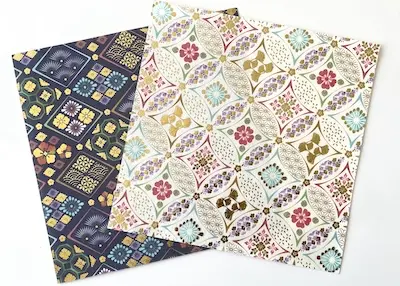
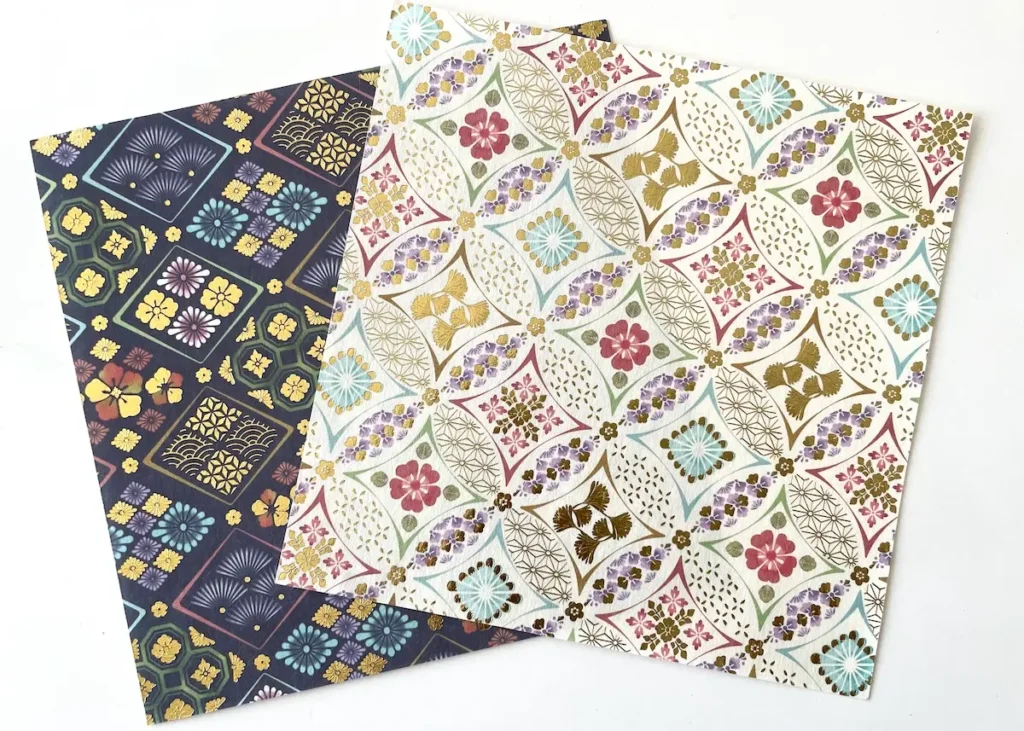
Recently, there is beautiful paper with Japanese patterns and gold leaf styles.
Its appeal as an art form is also expanding.
Every time the paper changes shape, Japanese beauty appears.
The Origin of the Word “Origami”
“折り紙 (Origami)” comes from the verb “折る (Oru)” and the noun “紙 (Kami)”.
“Oru” means to bend or fold something flat.
You carefully fold a single piece of “Kami” (paper).
Because various shapes are made from this, it was called “折り紙 (Origami)“.
The origin of the word simply expresses this culture.
Origami You Can Fold
Origami has been loved in Japan since ancient times.
Many designs represent Japanese events and celebrations.
Classic Origami
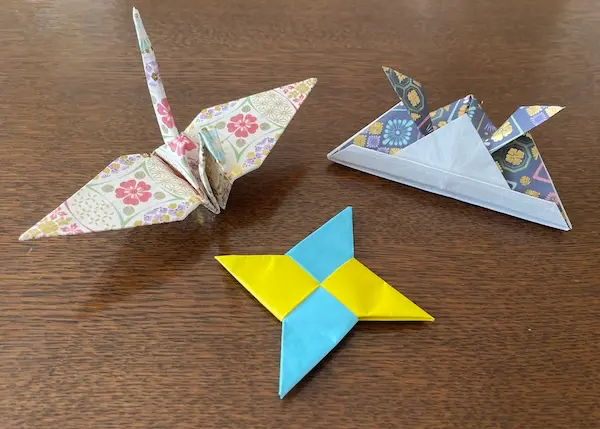
I folded these.
They are a tsuru, kabuto and shuriken.
Classic Origami
- 折り鶴 (Orizuru, paper crane)
This crane symbolizes peace and prayer.
Many people know the famous 千羽鶴 (Senbazuru, one thousand paper cranes). - 兜 (Kabuto, samurai helmet)
This helmet represents 端午の節句 (Tango no Sekku, Children’s Day).
Folding one is a tradition to wish for a child’s growth. - 手裏剣 (Shuriken, ninja star)
This star is a famous ninja weapon.
Today, it is a popular children’s toy.
Playful and Practical Origami
- かえる (Kaeru, frog)
This frog has a jumping mechanism.
Many people love this playful shape. - 紙風船 (Kamifusen, paper balloon)
You blow air into this balloon to inflate it.
This is a fun, traditional game. - 箱 (Hako, box)
This box can hold small items.
It is a very practical origami.
和柄 (Wagara, Japanese patterns) origami can be thick and hard to fold.
But once finished, it is gorgeous and strongly shows a Japanese feel.
Read the following article about Children’s Day traditions and koinobori.
[Children’s Day in Japan: Koinobori and May 5 Traditions]
History of Origami
Origami has changed its role along with Japanese history.
Heian Period and Origata
The origins of origami go back to the Heian Period (平安時代:794–1185).
At that time, it was called 折形 (Origata, formal paper folding).
It was an etiquette for beautifully wrapping gifts.
Rules existed for paper shapes and folding methods.
Folding methods showed manners and social status.
Later, this culture led to modern origami.
Edo Period Origami Culture
In the Edo Period (1603–1868), paper production increased.
Paper became widely available to ordinary people.
Then, origami began to be enjoyed as a play.
Shapes like cranes, boxes, and helmets spread.
It became established as a unique Japanese game enjoyed by children and adults.
Books introducing how to fold also appeared.
The types of origami increased even more.
Meiji Period Education and Origami
During the Meiji Period (1868–1912), Froebel education was introduced from the West.
In this process, origami was included in children’s education.
Moving the fingers helps develop concentration.
It also expands the imagination.
For these reasons, schools and families began using origami.
Its educational value was recognized, not just as a play.
Modern Origami and International Spread
Since the 20th century, origami has spread worldwide.
Especially 千羽鶴 (Senbazuru, thousand-crane) is famous as a symbol of peace.
It is often seen at international events.
Origami structures are also applied in math, architecture, and design.
It is also attracting attention as a scientific research topic.
Furthermore, today, there are works made by cutting with scissors.
These are origami representing Japan’s four seasons, like cherry blossoms and autumn leaves.
Origami continues to expand from “play” to “art” and “science”.
Conclusion
Origami with its long history, is a traditional culture representing Japan.
Now it is loved worldwide as art and science.
Through origami, please feel the 美意識 (Biishiki, aesthetic sense) of Japanese culture.
Discover more about Japanese culture in the Japan & Culture category.
Related Posts
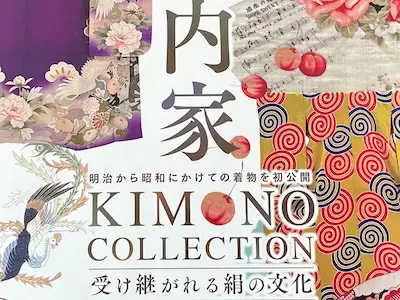 Kimono Collection Japan: Traditional Japanese Culture
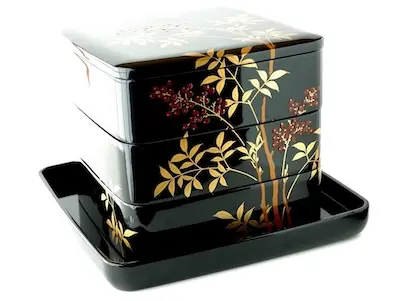 Japanese Urushi: The Art of the Japanese Heart
折り紙とは?
1枚の紙から、鶴や兜、箱が生まれます。
折り紙は、そんな不思議な魅力を持つ日本の伝統文化です。
ただの遊びではありません。
そこには芸術性や、祈りの意味も込められています。
世界中で知られている「折り鶴」が、その代表です。
最近では、和柄や金箔風の美しい折り紙もあります。
作品としての魅力も広がっています。
紙が形を変えるたび、日本らしい美しさが現れます。
「折り紙」という言葉の由来
「折り紙」は、動詞の「折る」と名詞の「紙」から生まれました。
「折る」とは、平らなものを曲げたり重ねたりすることです。
1枚の「紙」を丁寧に「折る」。
そこから様々な形を作るため、「折り紙」と呼ばれました。
言葉の成り立ちが、この伝統文化をシンプルに表しています。
折って作る折り紙
折り紙は、昔から日本で親しまれてきました。
その中には、日本の行事や祝い事を表すものも多くあります。
・折り紙の定番
- 折り鶴
平和や祈りの象徴です。
千羽鶴としても有名です。 - 折り紙の兜
端午の節句(こどもの日)に関係しています。
子どもの成長を願う伝統的な折り紙です。 - 折り紙の手裏剣(忍者の手裏剣)
忍者の道具として知られています。
子どもの遊びとして広まりました。
・遊び・実用の折り紙
- 折り紙のかえる:
ピョンと跳ねる仕掛けがあります。
遊び心があり、広く親しまれています。 - 折り紙の紙風船:
息を吹き込んでふくらませます。
昔ながらの遊びです。 - 折り紙の箱:
小物入れとして使えます。 - とても実用的な折り紙です。
和柄の折り紙は、厚くて折りにくいことがあります。
しかし完成すると華やかで、日本らしさを強く感じられます。
こどもの日の伝統や鯉のぼりについては、次の記事をご覧ください。
[Children’s Day in Japan: Koinobori and May 5 Traditions]
折り紙の歴史
折り紙は、日本の歴史とともにその役割を変えてきました。
平安時代と折形(おりがた)
折り紙の起源は平安時代にさかのぼります。
当時は「折形(おりがた)」と呼ばれていました。
そして、贈り物を美しく包むための礼法でした。
紙の形や折り方には決まりがありました。
折り方で、礼儀や身分を表していました。
この文化が、後の折り紙へとつながっていきます。
江戸時代の折り紙文化
江戸時代になると、紙の生産が増えました。
庶民にも紙が広く普及します。
そして、折り紙は「遊び」として楽しまれるようになりました。
折り鶴や箱、兜などの形が広まります。
子どもから大人まで楽しむ、日本独自の遊びとして定着しました。
また、折り方を紹介する本も登場します。
折り紙の種類はさらに増えていきました。
明治時代の教育と折り紙
明治時代には、西洋からフレーベル教育が導入されました。
その中で折り紙は、子どもの教育に取り入れられました。
手先を使うことで、集中力や想像力が育つと考えられたためです。
そのため、学校や家庭での学習にも、広く使われるようになります。
遊びとしてだけでなく、教育的な価値も認められました。
現代の折り紙と国際的な広がり
20世紀以降、折り紙は世界中に広がりました。
特に千羽鶴は平和の象徴として知られています。
国際的な場でもよく見られます。
また、数学・建築・デザインの分野では、折り紙の構造が応用されています。
科学的な研究対象としても注目されています。
さらに現代では、ハサミで切って作る折り紙作品もあります。
桜や紅葉、雪の結晶など、日本の四季を表現する折り紙です。
折り紙は「遊び」から「芸術」、そして「科学」へと広がり続けています。
まとめ
長い歴史を持つ折り紙は、日本を代表する伝統文化です。
今ではアートや科学として、世界中で愛されています。
折り紙を通して、日本文化の奥行きを感じてみてください。
日本文化についてもっと知りたい方は、Japan & Culture カテゴリをご覧ください。