

Did you know there is something almost like magic?
It makes lunchtime more enjoyable and keeps food fresh for longer.
The secret is 漆 (urushi: Japanese lacquer).
It is a natural material from Japan.
Both beautiful and highly functional, it has been valued for centuries.
This article explores the benefits of urushi and its long history.
What Is Japanese Urushi?
Urushi is a natural lacquer made from the sap of the urushi tree.
In Japan, it has been used for centuries on objects and furniture.
The process of applying urushi is called 漆塗り (urushi-nuri: urushi lacquering).
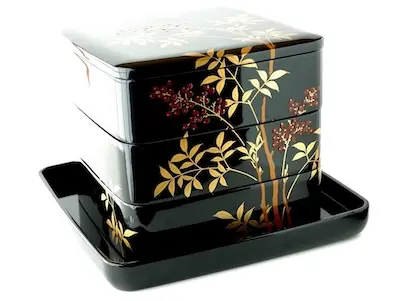
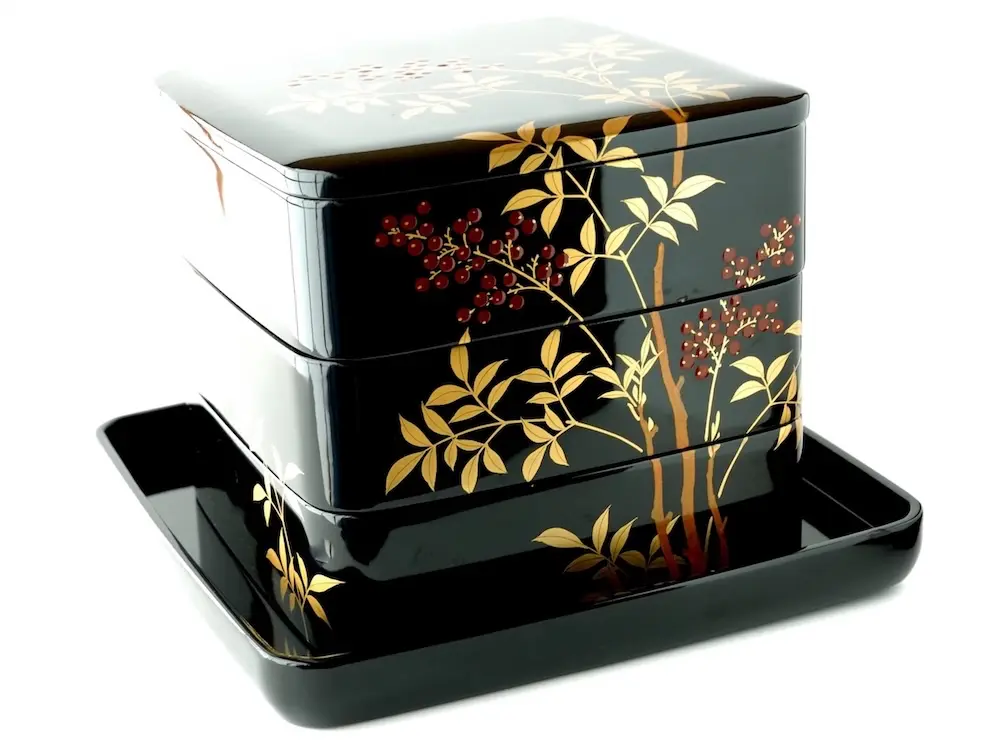
Items made with this technique are known as 漆器 (shikki: lacquerware).
Urushi is applied in many layers, creating a deep shine and strong durability.
It resists moisture and heat and helps prevent bacteria.
So it stays beautiful for a long time.
Shikki is both practical and artistic and is a key traditional craft in Japan.
Japanese Urushi and History
Urushi has developed together with Japanese culture over time.
- 縄文 (Jomon)
Japan had the world’s earliest urushi culture about 9,000 years ago.
It was used for pottery and ornaments. - 奈良・平安時代 (Nara and Heian periods)
Urushi developed with Buddhism and decorative arts.
One example is 螺鈿 (raden: mother-of-pearl inlay).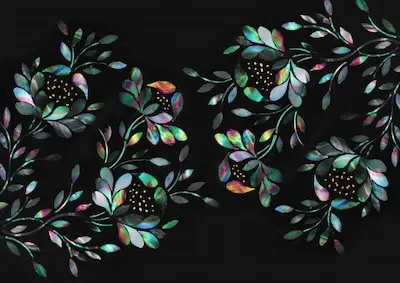
- 安土桃山時代 (Azuchi-Momoyama period)
Luxurious lacquerware was created for the elite.
Exports to other countries also began. - 江戸時代 (Edo period)
Urushi became part of daily life.
Bowls and tiered boxes were became common. - 現代 (Modern times)
Demand decreased due to modern materials.
However, it is being rediscovered in items like bento boxes and accessories.
Famous Types of Japanese Lacquerware
Japan has many regional styles of lacquerware.
Each region uses local materials and techniques.
- 木曽漆器 (Kiso-shikki)
From Nagano, made with Japanese cypress.
It is strong and simple, and used in daily life. - 輪島塗 (Wajima-nuri)
From Ishikawa, made with special clay undercoating.
It is very durable and is an Important Intangible Cultural Property. - 会津塗 (Aizu-nuri)
From Fukushima, known for colorful Aizu-e designs.
It is often used for gifts and celebrations.
These styles are different, but all are handmade wooden crafts by skilled artisans.
Urushi Coating and Shiraki
Wooden tableware can be divided into two main types.
One is 漆塗り (urushi nuri: urushi coating).
Urushi is applied in layers over the wood, making it very durable.
It is resistant to oil stains and is easy to clean.
The other is 白木 (shiraki: unfinished wood).
It uses natural wood without urushi and has a pleasant wood aroma.
The wood helps regulate moisture, so rice stays tasty even when cold.
However, it can absorb oil and stains more easily.
They are chosen based on use and personal preference.
The Natural Power That Protects Taste and Safety
漆弁当箱 (Urushi bento boxes) are lightweight and durable.
Urushi also has natural antibacterial properties, so food stays safe.
They can also be recoated and used for many years.
Regional Names for Bento Boxes
Urushi bento boxes have different names depending on the region.
- 曲げわっぱ (magewappa)
The traditional wood-bending technique.
“Odate magewappa” from Akita is especially famous. - わっぱ (wappa)
A shortened and friendly name for magewappa.
It is used across Japan. - めんぱ (menpa)
A regional name used in places like Nagano and Shizuoka.
It is sometimes written in kanji as 面ッぱ in Kanji.
These names are different, but they all refer to wooden bento boxes.
They are warm, handmade items made by skilled craftsmen.
Japanese Sensibility: “Nurturing” a Vessel
In Japanese, urushiware can be seen as something to “nurture.”
Its color and shine change as it is used.
It is not only used, but also refined over time.
Each piece slowly becomes unique.
This idea is closely connected to もったいない (mottainai) .
Mottainai means using things with care and respect.
Conclusion
漆 (Urushi) is a treasure that has existed since the Jomon period.
It continues to live in our daily life thanks to the efforts of skilled craftsmen.
Using urushi is also a way to feel Japanese craftsmanship in daily life.
Discover more about Japanese culture in the Japan & Culture category.
Related Posts


 Discover Japanese Culture & Words with Origami (おりがみ)
お弁当の時間が楽しみになるだけでなく、食べ物が傷みにくい。
そんな魔法のようなものがあるのをご存知ですか?
その正体は、日本が世界に誇る天然塗料「漆(うるし)」です。
見た目の美しさだけではありません。
驚くほど高い機能性を持つ漆の秘密を紐解いていきましょう。
漆の正体:自然が生んだ天然塗料
漆はウルシの木の樹液から作られる天然塗料です。
日本では古くから、器や家具に使われてきました。
漆を塗ることを「漆塗り」と言います。
その技法で作られた製品は「漆器」と呼ばれます。
漆は何度も塗り重ねて作ります。
これにより、深い光沢と高い耐久性が生まれます。
漆は湿気や熱に強く、抗菌作用もあります。
そのため、長く美しく使い続けることができます。
漆器は実用性と芸術性を備えた、日本を代表する伝統工芸です。
9000年続く、漆と日本人
漆の技術は、長い年月をかけて日本人の感性とともに進化してきました。
- 約9000年前 (縄文): 日本は世界最古の漆文化を持ちます。
土器や装身具に使われていました。 - 奈良・平安時代: 仏教とともに装飾技術が発展しました。
貝を貼る「螺鈿(らでん)」などの美しい技法もこの頃に生まれました。 - 安土桃山時代: 豪華な漆器が作られました。
輸出も始まり、海外でも高く評価されました。 - 江戸時代: お椀や重箱など、漆器が庶民の日常道具として広まりました。
- 現代: 素材の多様化で需要は減りました。
しかし、現在は弁当箱やアクセサリーとして再注目されています。
日本を代表する「三つの漆器」
日本各地には、その土地の風土を活かした漆器があります。
- 木曽漆器 (長野県): 良質なヒノキを使います。
丈夫で、日常使いに適した落ち着いた美しさが特徴です。 - 輪島塗 (石川県): 下地に特別な土を混ぜます。
非常に頑丈な作りで、国の重要無形文化財にもなっています。 - 会津塗 (福島県): 「会津絵」と呼ばれる華やかな模様が特徴です。
お祝いの贈り物に選ばれます。
漆塗りと白木
木製の器には、大きく分けて二つのタイプがあります。
一つは、漆を塗る「漆塗り」です。
木の上に漆を塗り重ねることで、とても丈夫になります。
油汚れに強く、毎日のお手入れも簡単です。
もう一つが、木の素材を生かし、漆を塗らない「白木(しらき)」です。
木の香りがとても良く、ご飯の水分を調節し、冷めても美味しいのが特徴です。
ただし、油汚れが染み込みやすいという繊細な面もあります。
これらは、使うシーンや好みに合わせて選ばれています。
美味しさと安心を守る「天然の力」
漆の弁当箱はとても軽くて丈夫です。
漆には天然の抗菌作用があります。
そのため、食べ物を安全に持ち運べます。
そして、漆を塗り直して使い続けることも可能です。
地域で違う呼び名
漆の弁当箱は、地域によって、面白い呼び名があります。
- 曲げわっぱ: 木を曲げて作る技法の正式な名称です。
秋田県の「大館曲げわっぱ」などが有名です。 - わっぱ: 「曲げわっぱ」を短くした呼び方です。
全国で広く使われる、親しみやすい愛称です。 - めんぱ: 長野県の木曽地方や静岡県などで使われる呼び名です。
漢字では「面ッぱ」と書くこともあります。
呼び方は違っても、どれも職人の手で作られた温かい弁当箱です。
日本語の感性:器を「育てる」
日本語には、漆器のようなものに対して「育てる」という言葉を使うことがあります。
漆器は、使い込むほどに色や艶が変化します。
だんだんと美しくなっていきます。
ただ使うだけでなく、大切に扱って変化を楽しみます。
そうして、世界でただ一つだけのものに育てます。
これは、日本の「もったいない」の精神にも通じる考え方です。
もったいないとは、物の価値を十分に生かし、大切に感謝して使う心を表す言葉です。
まとめ
漆は、縄文時代から続く日本の宝物です。
職人たちの努力によって、今も私たちの暮らしに息づいています。
毎日使うものとして、漆を取り入れてみれてはどうでしょうか。
使うたびに、日本の手仕事の温もりを感じることができます。
日本文化についてもっと知りたい方は、Japan & Culture カテゴリをご覧ください。