

Why Proper Chopstick Use Matters
In Japan, children learn proper Japanese chopstick etiquette from a young age.
Recently, more international visitors are enjoying meals with chopsticks (はし, Hashi).
Using them correctly helps you eat neatly.
It also shows respect for those around you.
How to Hold and Use Chopsticks Correctly
Here are the basics of holding and using chopsticks.
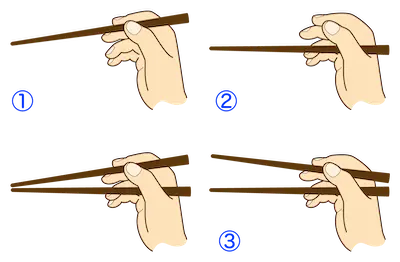
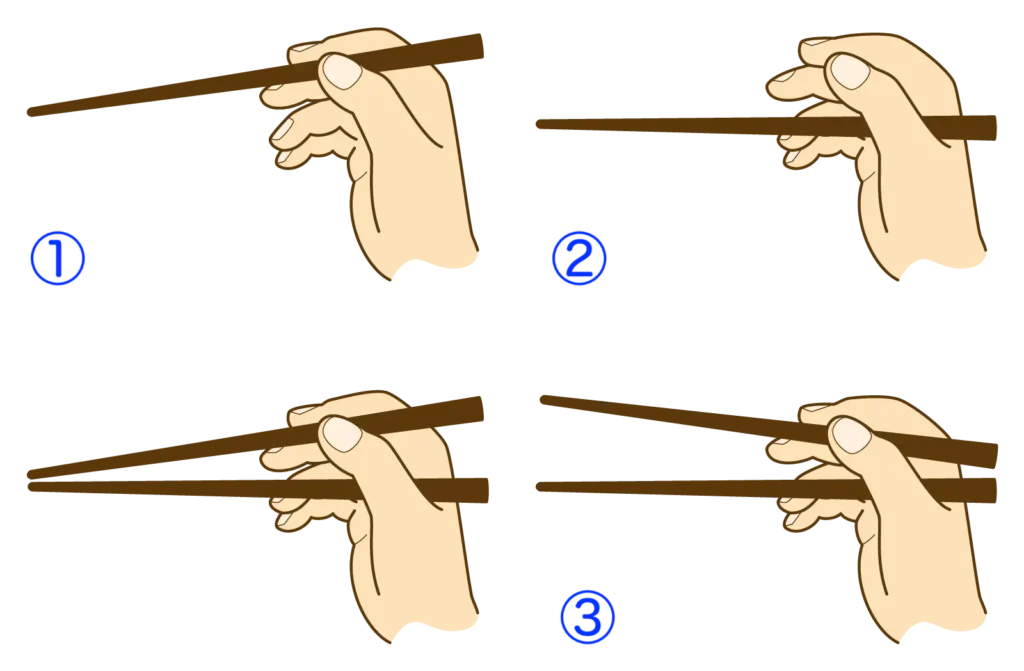
Basic Chopstick Holding
Follow these 3 steps to hold your chopsticks correctly.
- Top chopstick:
Hold it like a pencil.
Support it with your thumb, middle finger, and index finger. - Bottom chopstick:
Fix it between the base of your thumb and the side of your ring finger. - Movement:
Move only the top chopstick.
Keep the bottom one still.
Do not move both chopsticks like scissors. Remember to move only the top one.
Tips and Advice
Here are some tips to make using chopsticks easier.
- Chopstick Size:
Choose a length that fits your hand size. - Practice:
Start with foods that are easy to grip, like rice or simmered dishes. - Position:
Avoid holding the chopsticks too close to the tips or the very top.
It looks more natural to hold them in the middle or slightly above.
Chopstick Taboos to Avoid
In Japan, there are several chopstick taboos to be aware of.
These actions can leave a bad impression during meals.
Some of them also relate to Buddhist funeral rituals, so please be careful.
7 Key Things to Watch Out For
- 指し箸 (Sashibashi): Pointing
Pointing is rude.
Avoid using chopsticks for gestures while talking. - 立て箸 (Tatebashi): Sticking in Rice
Never stick chopsticks upright in rice.
This resembles a funeral ritual. - 渡し箸 (Watashibashi): Resting on a Bowl
Resting chopsticks on a bowl means “I’m finished.”
Always use a Hashioki. - 探り箸 (Saguribashi): Digging
Do not move food around to find your favorite ingredients. - 寄せ箸 (Yosebashi): Pulling Dishes
Do not use chopsticks to drag a plate.
Use your hands instead. - 迷い箸 (Mayoibashi): Hovering
Don’t hover your chopsticks while deciding what to eat. - 直箸 (Jikabashi): Shared Plates
Don’t use your own chopsticks for shared plates.
Use serving chopsticks.
3 Quick Chopstick Tips
- Use a chopstick rest:
Never place your chopsticks directly on the table.
Always use a rest if one is provided. - Don’t rub disposable chopsticks:
Avoid rubbing them together to remove splinters.
This can be seen as rude in Japan. - Follow others:
You don’t need to be perfect.
Just watch those around you and learn as you go.
Proper Way to Hold Your Bowl
In Japan, it is basic etiquette to hold your rice or soup bowl while eating.
- Opposite Hand:
Hold the bowl with the hand opposite your chopsticks. - Avoid Leaving it on the Table:
Eating without lifting the bowl can be seen as poor manners. - Be Polite:
For extra politeness, lift the bowl with both hands first.
Then, switch to one hand to hold it.
Useful Verbs for Using Chopsticks
Learn these common verbs to improve your Japanese skills.
Try saying them in your head while you eat!
- 箸を 持つ (Hashi o motsu): To hold chopsticks
- 箸を 動かす (Hashi o ugokasu): To move chopsticks
- 料理を はさむ (Ryori o hasamu): To pick up food
- 口に 運ぶ (Kuchi ni hakobu): To bring food to your mouth
- 箸を 置く (Hashi o oku): To put down chopsticks
Conclusion
Enjoy Japanese meals with proper etiquette.
Start by focusing on the basic hold and take it one step at a time.
Practice what you learned at your next meal!
Learning greetings is also important. Check out these articles as well.
- “Itadakimasu”: The Meaning and Etiquette Before Meals
- “Gochisosama”: How to Properly Say Thanks After Eating
Discover more about Japanese culture in the Japan & Culture category.
Related Posts
 Discover the Retro Charm of Former Kaichi School in Matsumoto
 Learn 〜は〜です: Basic Japanese Sentences
箸の正しい使い方が大切な理由
日本では、子供の頃から箸の持ち方と使い方を習います。
最近は、箸を使って食事を楽しむ外国人の方も増えてきました。
正しい持ち方を身につけると、きれいに食事ができます。
また、周囲の人にマナーの良さも伝わります。
箸の正しい持ち方・使い方
ここでは、基本的な持ち方を紹介します。
箸の持ち方(基本)
箸の持ち方の基本を、3つのステップで確認しましょう。
① 上の箸を鉛筆を持つように、親指、中指、薬指で支えましょう。
② 下の箸は、親指の付け根と薬指の横で固定します。
③ 上の箸だけを動かします。下の箸は動かさないのがポイントです。
上下の箸を「はさみ」のように動かすのではありません。
上の箸だけを動かしましょう。
コツと注意点
箸をより上手に使うためのヒントをまとめました。
- 手の大きさに合わせて、箸の長さを選びましょう。
- 最初は、ご飯や煮物など、滑りにくいもので練習するのがおすすめです。
- 箸の先や根元を持ちすぎると、不自然に見えるので注意してください。
やってはいけない7つの箸マナー
日本では「箸のタブー」と呼ばれるマナー違反があります。
これらは食事相手に不快な印象を与えてしまいます。
また、仏教の葬儀に関連する行為もあるため、注意が必要です。
特に気をつけてほしい代表的な7つ
- 指し箸(さしばし)
箸で人や物を指すことです。
会話中のジェスチャーでも控えましょう。 - 立て箸(たてばし)
ご飯の上に箸を立てる行為です。
葬儀の作法と同じなので、不吉とされています。 - 渡し箸(わたしばし)
食事の途中で、箸を器の上に置くことです。
「もういらない」という合図に見えます。
箸を休めるときは、器の上ではなく必ず「箸置き」を使いましょう。 - 探り箸(さぐりばし)
料理の中をかきまぜて、好きな具材を探すことです。 - 寄せ箸(よせばし)
箸で器を引き寄せることです。
器は手で持ちましょう。 - 迷い箸(まよいばし)
どの料理を食べるか迷い、箸をあちこち動かすことです。 - 直箸(じかばし)
大皿の料理を自分の箸でそのまま取ることです。
取り箸を使いましょう。
箸マナー3つのヒント
- 箸置きを必ず使う
箸をテーブルに直接置かないようにしましょう。 - 割り箸をこすらない
木くずを取るためにこする行為は、失礼に見えることがあります。 - 周りの人をまねる
完璧を目指さなくても大丈夫です。
周りを見て少しずつ慣れましょう。
器の持ち方
日本では、お茶碗 (ご飯) やお椀 (味噌汁) を手に持つのが基本です。
このときのポイントは以下の通りです:
- 箸を持つ手と反対の手で器を持ちましょう。
- 器を置いたまま食べるのは、行儀が悪いと思われることがあります。
- 両手で持ち上げてから、片手に持ち替えると丁寧です。
箸と一緒に使う動詞
箸のマナーと一緒に、よく使う「動詞」も覚えてみましょう。
食事の時に、心の中でぜひ言ってみてください。
- 箸を持つ(はしをもつ)
- 箸を動かす(はしをうごかす)
- 料理をはさむ(りょうりをはさむ)
- 口に運ぶ(くちにはこぶ)
- 箸を置く(はしをおく):
まとめ
箸のマナーを知ることで、自信を持って日本の食事を楽しむことができます。
まずは正しい持ち方を意識して、少しずつ慣れていきましょう。
この記事で学んだマナーや動詞を、ぜひ実際の食事で使ってみてください。
挨拶も大切です。こちらの記事も参考にしてください。
・「いただきます」の意味とマナー
・「ごちそうさま」の使い方と礼儀
日本文化についてもっと知りたい方は、Japan & Culture カテゴリをご覧ください。