Hatsumode: How Japanese People Welcome the New Year
Hatsumode: A Japanese New Year Tradition
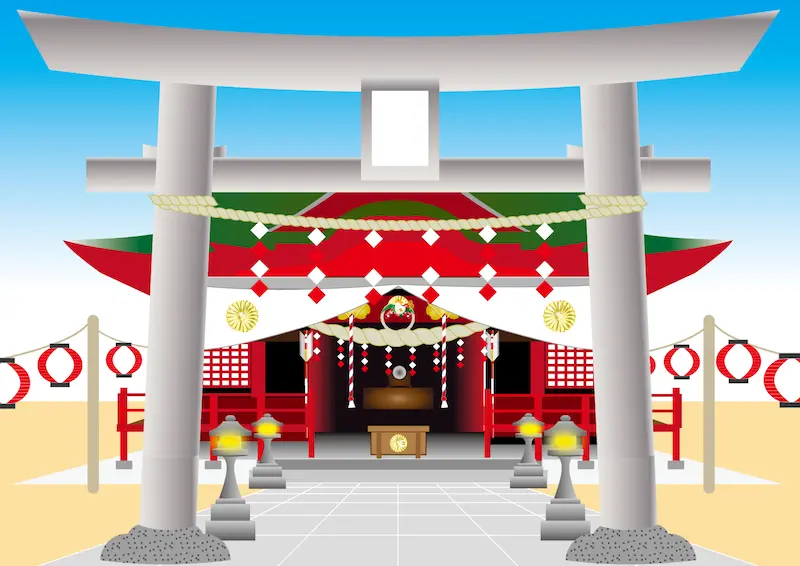
In Japan, many people visit shrines for 初詣(Hatsumode).
This is true even for those who do not usually go to shrines.
What Is Hatsumode?
Hatsumode means “the first visit of the year.”
It refers to the custom of visiting a shrine or a temple for the first time in the new year.
In Japan, Hatsumode is considered an important milestone when welcoming the new year.
It is performed as a greeting at the beginning of the year.
At the same time, it is a moment to reflect on the year ahead.
Toshigami Belief and Hatsumode
Behind Hatsumode lies the belief in 年神信仰(Toshigami belief), the New Year deity.
Toshigami is believed to be a god who visits each household at the beginning of the year.
Toshigami was thought to bring the following blessings.
- Good fortune for the year
- Life
- Prosperity
For this reason, people prepare to welcome the deity for the new year.
First, they clean their homes thoroughly in December.
Next, they display 門松(Kadomatsu) and 鏡餅(Kagamimochi).
Then, as the year turns, they visit shrines to greet the deity and offer their prayers.
Before the New Year, many families do Osoji (大掃除) to prepare their homes.
For more details, see Learn About 大掃除 (Osouji) – Japanese Year-End Cleaning and Culture.
From 年ごもり (Toshigomori) to Hatsumode
From the Nara period to the Heian period, people practiced 年ごもり (Toshigomori).
This was a custom of staying at shrines or temples from New Year’s Eve to New Year’s Day.
People expressed gratitude for the past year.
And they prayed for a good harvest and family safety in the new year.
Over time, this custom changed.
Today, it is divided into 除夜詣 (Joya-mōde) and 初詣 (Hatsumode).
除夜詣 (Joya-mōde) refers to visiting a shrine or temple on New Year’s Eve.
At the same time, people listen to 除夜の鐘 (Joya no Kane).
The Purpose of Hatsumode
Hatsumode has two main purposes.
- To express gratitude for getting through the past year safely
- To pray for a good year ahead
New Year prayers vary from person to person.
They often include health, studies, career success, and love.
For this reason, some people choose shrines carefully.
They visit shrines known for specific blessings that match their wishes.
Hatsumode at Shrines or Temples
Shrines and Japanese Polytheism
Shrines are places of worship in 神道 (Shinto).
Shinto has been practiced in Japan since ancient times.
And it has been closely connected to nature and daily life.
In Shinto, gods are believed to dwell everywhere.
They are found in mountains, rivers, and everyday activities.
This way of thinking is called polytheism.
Because of this, many Japanese people are not strongly tied to a single religion.
As a result, visiting either shrines or temples for Hatsumode feels natural to many people.
Temples and the History of Shinbutsu-shūgō
Temples are places where the teachings of Buddhism are shared.
Buddhism was introduced to Japan from abroad.
Because Japan was already a polytheistic society,
Buddhism was accepted without major resistance.
Over many centuries, 神道 (Shinto) and Buddhism gradually blended.
This fusion is known as 神仏習合 (Shinbutsu-shūgō).
In the Meiji period, the two religions were officially separated by law.
However, people’s attitudes did not change.
As a result, both traditions continue to exist side by side today.
That is why people can visit either shrines or temples for Hatsumode.
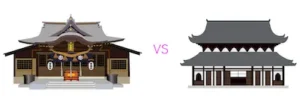
If you would like to learn more about the differences, see
Shinto Shrines and Buddhist Temples: Key Differences and Japanese Cultural Insights.
Omikuji—Guidance for the New Year
During Hatsumode, many people draw おみくじ (omikuji).
Omikuji are fortune slips that show one’s luck for the coming year.
There are different ways to draw omikuji.
Some people draw a numbered stick called a mikuji-bō.
Others pick a fortune directly from a box.
Omikuji Results
The results are divided into levels.
They may vary slightly by shrine or temple.
However, many places use the following categories.
- 大吉 (Daikichi)
- 中吉 (Chūkichi)
- 小吉 (Shōkichi)
- 吉 (Kichi)
- 末吉 (Suekichi)
- 凶 (Kyō)
大吉 (Daikichi) is considered the best result.
What Does 凶 (Kyō) Mean?
凶 (Kyō) is considered the lowest result.
However, some shrines do not include 凶 at all.
It is also said that 凶 appears only in small numbers.
For this reason, some people even see drawing 凶 as a rare kind of luck.
Some people take their omikuji home.
However, many people tie them to tree branches within the shrine grounds.
This custom is linked to the idea of “tying connections.”
It has continued since the Edo period.
A Rare Fortune Slip: 水みくじ(Mizu-mikuji)
A 水みくじ(mizu-mikuji:water fortune) is a unique type of Japanese fortune slip.
When you receive it, the paper is completely white.
However, when you dip it into sacred water at a shrine, words and images slowly appear.
After the paper dries, the text disappears again.
When you place it in water once more, the message reappears.
This mysterious fortune can be found at shrines such as
貴船神社(Kifune Shrine, Kyoto),下鴨神社(Shimogamo Shrine, Kyoto), and 伊奈波神社(Inaba Shrine, Gifu).
Omamori — Protection You Carry with You
お守り(Omamori) are protective charms given at Shinto shrines and Buddhist temples in Japan.
People receive them to pray for safety, good luck, and the fulfillment of wishes.
They are usually carried in a bag or kept close to the body.
There are many types of omamori, each with a different purpose.
Common Types of Omamori
- 健康(Kenkō)
A charm for good health and recovery from illness. - 学業(Gakugyō)
A charm for study, exams, and academic success. - 仕事(Shigoto)
A charm for work, career success, and good professional relationships. - 交通安全(Kōtsū Anzen)
A charm for safety while driving or traveling.
Omamori are usually returned to the shrine or temple after about one year.
People then receive a new one. Having more than one omamori is generally considered acceptable.
When a wish comes true, many people visit the shrine again to say thank you.
Conclusion
初詣(Hatsumode) is a Japanese custom of visiting a shrine or a temple at the beginning of the year.
People express gratitude for the past year. And they pray for a good year ahead.
You can visit either a shrine or a temple.
This is because 神道(Shinto) and Buddhism have long been accepted together in Japan.
During Hatsumode, people also enjoy omikuji and omamori. These are popular New Year traditions.
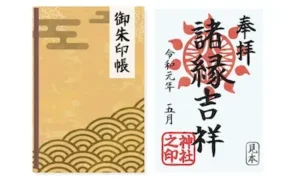
In addition, some people collect 御朱印(Goshuin) as a memory of their visit.
You can learn more about goshuin in this article: Goshuin: Understanding Japan’s Temple and Shrine Seals
Japanese of the Day / 今日の日本語
- Word:おみくじ(Omikuji)– Fortune slip
- Meaning:Omikuji are paper fortunes drawn at shrines or temples. They show luck and guidance for the year.
- Example:初詣でおみくじを引きました。(Hatsumōde de omikuji o hikimashita.)
(I drew an omikuji at my first shrine visit of the year.) - Fun Fact:If the result is bad, many people tie the omikuji at the shrine to leave bad luck behind.
◆ Would you like to talk about Japanese culture? ◆
In the Culture Course, you can learn to speak about Japanese culture with me.
初詣とは―始まりと目的、日本の新年の習慣
日本人は、普段、神社へ行かない人でも、多くの人が神社へ初詣へ行きます。
初詣とは?
初詣とは、「初めての詣(もうで)」です。
新しい年に最初に神社やお寺を訪れることです。
日本では、新年を迎える際の、節目となる行事です。
新年のあいさつとして行われます。
また、一年の始まりを意識する時間でもあります。
年神(としがみ)信仰と初詣の関係
初詣の背景には、年神(としがみ)信仰があります。
年神とは、新しい年に各家庭を訪れると考えられてきた神さまです。
年神は、次のようなものをもたらすと考えられていました。
- 一年の運
- 命
- 豊かさ
そのため、人々は新年に神さまを迎える準備をします。
まず、12月に家を大掃除します。次に、門松や鏡餅を飾ります。
そして、年が明けると、神さまにあいさつをするために、神社を訪れます。
日本の年末に欠かせない「大掃除」の記事は:
Learn About 大掃除 (Osouji) – Japanese Year-End Cleaning and Culture. をご覧ください。
年ごもりから初詣へ
奈良時代から平安時代にかけて、「年ごもり」をしました。
それは、大晦日から元日にかけて、神社やお寺にこもり、祈りを捧げます。
一年の感謝を伝え、新しい年の豊作や家内安全を願います。
そして、現在では、大晦日(12月31日)の「除夜詣」と「初詣」と分かれています。
「除夜詣」とは、大晦日の夜から元旦(1月1日)の早朝にかけて神社やお寺に参拝することです。
初詣の目的
初詣には、大きく分けて2つの目的があります。
- 去年一年を無事に過ごせたことへの感謝を伝える
- 新年が良い年になるようにお願いすること
新年のお願いは、健康や学業、仕事の成功、恋愛成就などさまざまです。
そして、お願いごとに合わせてご利益のある神社へ初詣する人もいます。
初詣は神社?お寺?
神社と日本の多神教
神社は、神道の信仰の場です。神道は、大昔から信仰されてきました。
それは、日本の自然や暮らしと深く結びついてきました。
神道では、山、川などの自然、それから生活全般にも、神さまが宿ると考えます。
このような考え方を、多神教と言います。そのため、日本人の多くは特定の信仰に強く限定されない人が多いです。
お寺と神仏習合の歴史
お寺は、仏教の教えを伝える場所です。仏教は、海外から日本に伝えられました。
もともと多神教の国なので、仏教もすんなりと受け入れられました。
そして、日本では長い年月をかけて、神道と仏教の融合がされました。これを「神仏習合」と呼びます。
明治時代に制度として分けられました。しかし、人々の意識は変わりませんでした。
そのため、現在でも両方あることが当たり前となっています。
そのため、今でも初詣に行くのは、神社とお寺のどちらでも行くことができます。
「神社vsお寺」の記事はこちらです。
おみくじ―新年の指針
初詣では、多くの人がおみくじを引きます。おみくじは、その年の運勢を示すものです。
みくじ棒と呼ばれる棒を引くものと、おみくじを直接引くものがあります。
結果には段階があります。
神社やお寺によって少し内容が違います。多くの神社では次のとおりです。
- 大吉
- 中吉
- 小吉
- 吉
- 末吉
- 凶 など
大吉が一番よく、凶は一番下です。
凶がない神社もあります。凶は数がとても少ないと言われています。そのため、凶を引くのは、ある意味とてもラッキーなのではないか。と考えることもできます。
おみくじは家に持ち帰る人もいます。
多くの人は、境内の木の枝などに「結ぶ」習慣があります。人との「縁を結ぶ」に通じることから、江戸時代から続いています。
珍しいおみくじ「水みくじ」
水みくじとは、受け取った時点では白い紙です。それを神社の御神水や水に浸すと文字や絵柄が浮かび上がります。
紙が乾くと、文字は消えます。そして、水に浸すとまた文字などが浮かび上がります。
貴船神社(京都)、下鴨神社(京都)、伊奈波神社(岐阜)などが有名です。
お守り―いつも守ってくれる
神社やお寺で授与される、厄除け・開運・心願成就などを願う縁起物です。
いつも持ち歩くことでご利益があるとされます。
お守りには種類があります。
- 健康
- 学業
- 仕事
- 交通安全 など
1年ぐらいで授かった寺社へ返納し、新しいものに交換します。
たくさん持っていても問題はないといわれています。また願いが叶ったら感謝を込めてお礼参りするのが良いとされています。
まとめ
初詣は、新年に神社やお寺を参拝する日本の習慣です。それは、一年の感謝を伝え、良い一年を願います。
神社とお寺のどちらに行っても問題ありません。なぜなら、神道と仏教が共に受け入れられてきたためです。
そして、初詣では、おみくじやお守りも楽しまれています。
また、参拝の記念として、御朱印を集める人もいます。
御朱印については、こちらの記事で詳しく紹介しています。Goshuin: Understanding Japan’s Temple and Shrine Seals