

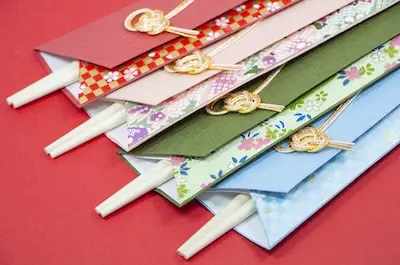
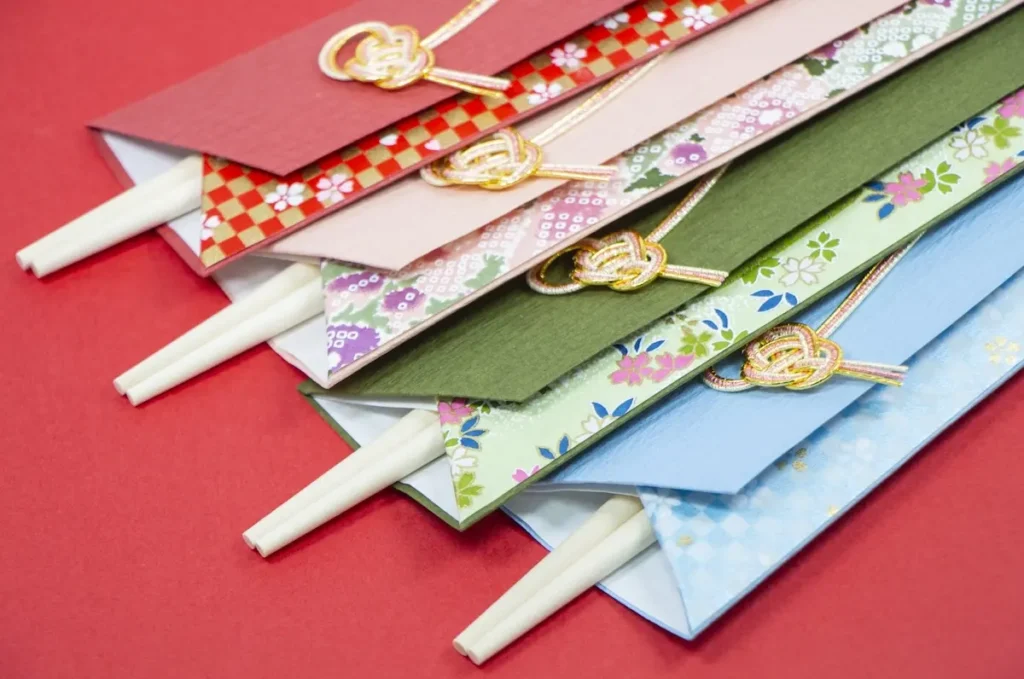
What is this? – これはなんですか? (Kore wa nan desu ka?)
When you’re traveling in Japan, you might see something interesting.
If you don’t know what it is, try asking:
これは なんですか。 (Kore wa nan desu ka?)
(What is this?)
The “か” marks it as a question.
In Japanese, we use “~は~です” to say the name of a thing.
This is a very important expression for beginners.
It is the entrance to Japanese grammar.
- A: “What is this?” = これは なんですか。 (Kore wa nan desu ka?)
B: “This is chopsticks.” = これは はし です。
Sentence Pattern – 「〜は〜です」
これは はし です。(Kore wa hashi desu.)
(This is chopsticks.)
We use this sentence pattern to name objects.
Just like saying “This is a spoon” or “This is a fork.”
Examples:
- これは はし です。(Kore wa hashi desu.)
(This is chopsticks.) - これは スプーン です。(Kore wa supūn desu.)
(This is a spoon.) - これは フォーク です。(Kore wa fōku desu.)
(This is a fork.)
“Kore (これ)” is used to refer to something that is near the speaker.
Deepening Your Understanding of “This is ~”
Let’s look at how “desu” and “wa” are used, and the difference between “wa” and “ga.”
“です (desu)”
“です(desu)” is a polite word that comes at the end of a sentence.
Examples:
- これは はし です。(Kore wa hashi desu.)
(This is chopsticks.)
Without “desu,” the sentence becomes:
- これは はし。(Kore wa hashi.)
(This is chopsticks.) (casual, used with family or friends)
The meaning does not change whether you use “desu” or not.
The Role of “は (wa)” + “This = chopsticks”
We use “は (wa)” to show the topic or theme of a sentence.
It is used to tell what the speaker is referring to.
Examples:
- これは はし です。(Kore wa hashi desu.)
(This is chopsticks.)
Here, “これ(this) = はし (chopsticks).”
“これ (This)” is the topic, and the sentence tells that it is chopsticks.
In English, it is like saying: “As for this …”
The Difference Between “は (wa)” and “が (ga)”
- “は (wa)”: used to show the topic of the sentence
- “が (ga)”: used to emphasize the subject or new information
Examples:
- これは はし です。(Kore wa hashi desu.)
“Chopsticks” is the topic, so “は (wa)” is used.
On the other hand:
- これが はし です。(Kore ga hashi desu.)
Here, “が (ga)” emphasizes “this” as the subject.
Let’s practice more
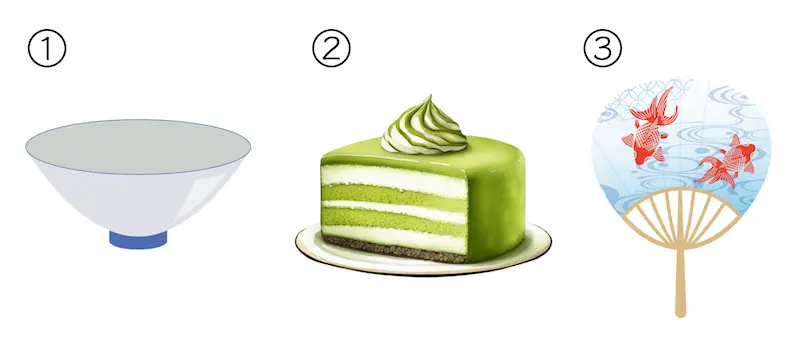
- ① A: これは なんですか。(Kore wa nan desu ka?)
(What is this?)
B: ちゃわん です。 (Chawan desu.)
(It’s a rice bowl.) - ② A: これは なんですか。(Kore wa nan desu ka?)
(What is this?)
B: まっちゃケーキ です。(Matcha kēki desu.)
(It’s a matcha cake.) - ③ A: これは なんですか。(Kore wa nan desu ka?)
(What is this?)
B: うちわ です。(Uchiwa desu.)
(It’s a paper fan.)
Conclusion
This time, we looked at the sentence patterns “これは〜です (This is ~)” and “これは なんですか (What is this?)”
These patterns are usually the first ones you learn in Japanese textbooks.
You can use them in many situations.
For example, shopping in Japan.
Or talking with friends.
Now, try using these patterns yourself!
Would you like to learn about proper chopstick manners?
In Japan, there are rules on how to use chopsticks politely.
I introduce this in another article, so please check it out here.
How to use chopstick
Find more tips and resources in the Learn Japanese category.
Related Posts
これはなんですか?
日本へ旅行中、気になるものを見つけとき、何かわからないときにこう聞いてみましょう。
「これは なんですか。」
日本語では、ものの名前を言うときに「~は~です」を使います。
これは文法の入り口としてとても大切な表現です。
“What is this?” = これは なんですか。(「か」は質問です)
“This is chopsticks.” = これは はし です。
文型のかたち:「~は~です」
「これは はし です」のように、ものの名前を言うときに使います。
例文:
- これは はし です。
- これは スプーン です。
- これは フォーク です。
→ 「これ」は話している人の近くにあるものを指すときに使います。
「これは〜です」理解を深める
では、「です」と「は」の使い方と、「は」と「が」の違いを見てみましょう。
「です」
「です」は文末につける丁寧な言い方です。
例文:
- これは はし です。
「です」をつけないと、
- これは はし。
となります。家族や友達に使うカジュアルな言い方です。
そのため「です」があっても、なくても文の意味は変わりません。
「は」の役割 + これ=はし
文の話題やテーマを示すときに「は」を使います。
指しているもの(これ)が何であるかを伝えるときに使います。
例文:
- これは はし です。
「これ=はし」になります。
「これ」が話のトピックで、ペンであることを伝えています。
英語で言うと “As for this …” のようなイメージです。
「は」と「が」の違い
- 「は」: 話題を示すときに使う
- 「が」: 主語や新しい情報を強調するときに使う
例文:
- これは はし です。
「はし」はトピックなので「は」が使われています。
一方、「これがペンです」では、「が」の前の「これ」を強調しています。
練習してみよう
- ① A:これは なんですか。
B:(これは) ちゃわんです。 - ② A:これは なんですか。
B:(これは) 抹茶ケーキです。 - ③ A:これは なんですか。
B:(これは) うちわです。
まとめ
今回は、「これは〜です」と「これは なんですか」の文型を見ていきました。
この文型は、日本語を学ぶ際、多くのテキストで一番初めに勉強する文型です。
日本で買い物をするとき、友達と話すときなどたくさんの場面で使います。
実際に自分でもこの文型を使ってみましょう!
箸のマナーも見てみませんか?
日本では「はしの使い方」にもマナーがあります。
別の記事で紹介していますので、ぜひこちらもご覧ください。→ はしの使い方
日本語学習のヒントや情報は、Learn Japanese カテゴリをご覧ください。