

What Is Chōjū-giga? (Japan’s Oldest Manga)
Chōjū-giga (鳥獣戯画, ちょうじゅうぎが) is a Japanese picture scroll from the 12th to 13th century.
It is known for its humorous drawings of animals.
This work consists of four scrolls. Each scroll has a different theme.
So, you can see many kinds of animals.
Now, let’s look at the meaning of the name.
“Tori (鳥)” means birds.“Kemono (獣)” refers to beasts or wild animals.
And “giga (戯画)” means playful or humorous pictures.
The artist is not clearly known.
However, it is believed that several monks created it.
Today, it is designated as a National Treasure (国宝: Kokuhō).
Also, it is preserved at Kōzan-ji Temple (高山寺) in Kyoto.
In addition, Chōjū-giga appears in Japanese elementary school textbooks.
So, many people in Japan know this work.
Japan’s Oldest Manga: Chōjū-giga
Chōjū-giga is often called the oldest manga in Japan.
Among its scrolls, Kō no maki (甲巻, こうのまき) is the most famous.
In this scroll, you can see rabbits, frogs, and monkeys.T
hey move like humans and show many kinds of actions.
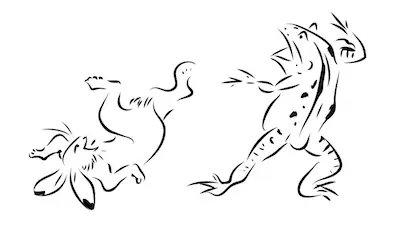
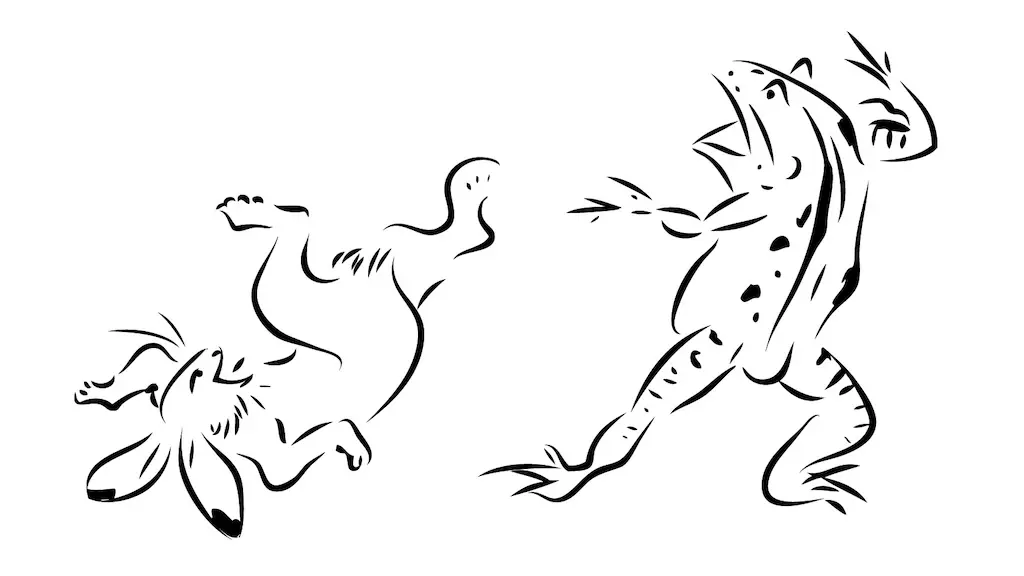
For example, a frog and a rabbit are wrestling in sumō (相撲, すもう).
Also, a monkey is reading a Buddhist text.
Why Is It Called the Oldest Manga?
There are almost no words in the work.
However, the story is easy to understand.
This is because the movements and facial expressions are very clear.
In addition, the flow of the images is important.
The scenes continue from one to the next.
So, it feels similar to modern manga panels.
You can also see gijinka (擬人化, ぎじんか, personification).
This means giving human traits to animals or objects.
Animals act like people throughout the story.
Overall, the work has a light and humorous tone.
Because of these features, it is often compared to modern manga culture.
Chōjū-giga and Modern Manga (マンガ)
Chōjū-giga shows ideas that connect to modern manga.
Reading Style and Flow of Time
First, let’s look at how it is read.
A picture scroll is viewed from right to left.You open it little by little.
Because of this movement, scenes connect naturally.
As a result, the flow of time is shown visually.
This is similar to modern manga.Readers follow panels one by one.
Expression: Movement and Space
Next, let’s look at how it is drawn.
In Chōjū-giga, movement is shown mainly through lines.
Actions such as running, falling, and laughing are expressed simply.
However, they are clear and easy to understand.
This kind of drawing is also used in modern manga.
In addition, the use of space is important.Not everything is fully drawn.
Some areas are left blank on purpose.
Because of this, viewers can imagine more.
This kind of space is also one of the features of manga.
Connection to Japanese Character Culture
The idea of drawing animals like people continues today.
In modern Japan, there are many characters based on animals and living things.
They act like humans and show emotions.
For example, characters in Pokémon (ポケモン) are one example.
Many kinds of creatures are shown with their own unique traits.
Also, simple character designs are widely popular.They use minimal details.
However, they still leave a strong impression.
Because of this, similar expressions can be seen in modern Japanese character culture.
You can see the connection, right?
Learn More About Japanese Culture
Japan has gone through many historical periods, and one of them is the Taishō era.
This period, which serves as the setting for Demon Slayer: Kimetsu no Yaiba,
is introduced in [How Demon Slayer Brings the Taisho Era(大正時代) to Life].
Discover more about Japanese culture in the Japan & Culture category.
Related Posts

鳥獣戯画とは?
「鳥獣戯画(ちょうじゅうぎが)」は、12〜13世紀ごろに制作された日本の絵巻物です。
動物たちをユーモラスに描いた作品として知られています。
この作品は、全4巻から構成されています。
それぞれの巻には異なるテーマがあり、さまざまな動物が登場します。
名称の意味を見ていきましょう。
「鳥」は鳥類、「獣」はケモノを指します。
そして「戯画」は、おもしろく描いた絵という意味です。
作者については明確には分かっていません。
ただし、複数の僧によって描かれたと考えられています。
現在は国宝に指定されています。
また、京都の高山寺に伝わる文化財です。
そして、「鳥獣戯画」は日本の小学校の教科書にも掲載されています。
そのため、多くの人に知られている作品です。
日本でいちばん古いマンガ: 鳥獣戯画
鳥獣戯画は、「日本最古の漫画」ともいわれます。
なかでも有名なのが「甲巻(こうのまき)」です。
この巻には、うさぎやカエル、サルなどが登場します。
そして、動物たちは人間のように動き、さまざまな行動を見せます。
たとえば、カエルとうさぎが相撲を取る場面があります。
また、サルがお経を読んでいる様子も描かれています。
作品には言葉がほとんど使われていません。
それでも、動きや表情によって物語が自然に伝わってきます。
さらに、絵の連なりにも注目です。
場面が連続して展開していく構成は、現代のコマ割りマンガを思わせます。
また、動物を人のように描く「擬人化(ぎじんか)」の表現も見られます。
全体にはユーモアがあり、軽やかな印象を与えます。
これらの特徴が、現代の漫画文化との共通点として指摘されています。
鳥獣戯画と現代のマンガ
鳥獣戯画には、現代の漫画につながる発想が見られます。
読み方と時間の流れ
まず、読み方です。
絵巻物は、右から左へと少しずつ広げながら鑑賞します。
この動きによって、場面が自然に連続していきます。
その結果、時間の流れが視覚的に表現されます。
これは、現代のマンガのコマを順に追う読み方とよく似ています。
表現の特徴(動き・余白)
次に、表現方法です。鳥獣戯画では、線を中心に動きが描かれています。
走る、転ぶ、笑うといった動作が、簡潔に表現されています。
そのため、人物の動きが印象的に伝わります。
このような描き方は、現代のマンガでも重要な要素です。
また、余白の使い方にも特徴があります。
すべてを描き込まず、あえて空間を残しています。
その結果、見る側に解釈の余地が生まれます。
こうした想像の余白も、マンガの魅力の一つといえるでしょう。
日本のキャラクター文化へのつながり
動物を人のように描く発想は、現代にも受け継がれています。
現在の日本では、動物や生き物をもとにしたキャラクターが数多く存在します。
それらは、人のように行動し、感情を持つ存在として描かれています。
たとえば、ポケモンに登場するキャラクターもその一例です。
多様な生き物が、それぞれの個性を持って表現されています。
また、シンプルな造形のキャラクターも広く親しまれています。
装飾を抑えたデザインでありながら、強い印象を残します。
このように見ていくと、鳥獣戯画に見られる表現は、
現代の日本のキャラクター文化へとつながっているのはないでしょうか。
「鳥獣戯画」は、日本の昔の文化を感じられる作品です。
日本にはさまざまな時代がありますが、大正時代もそのひとつです。
『鬼滅の刃』の舞台にもなった大正時代については、
【How Demon Slayer Brings the Taisho Era(大正時代) to Life】で紹介しています。
日本文化についてもっと知りたい方は、Japan & Culture カテゴリをご覧ください。