

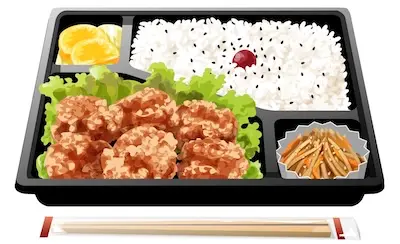
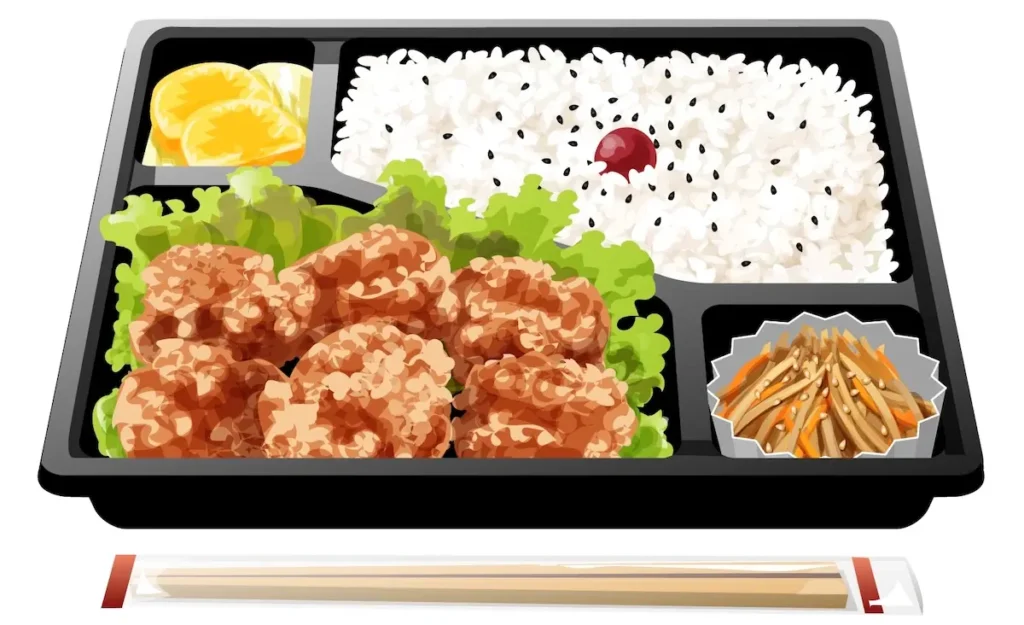
What is Bento? — Japan’s “BENTO” Culture
In Japan, a bento (おべんとう / obento) is more than just a meal.
Specifically, it is a portable art form.
Chefs arrange main and side dishes within a small “box.”
As a result, it condenses Japanese aesthetics into one container.
Japanese speakers often add the polite prefix “o” (お).
This small addition carries deep meaning.
For instance, it expresses gratitude for the food.
Furthermore, it shows respect for the cook and the eater.
Today, “BENTO” is a universal term.
This is because the culture is so unique.
In short, it represents the tradition of “packing the seasons into a box.”
Common Types of Bento in Japan
In modern Japan, people choose different bento based on the occasion.
1. Noriben (のりべん / Affordable Classic)
Noriben (のりべん) features rice topped with bonito flakes, soy sauce, and a full sheet of seaweed (のり / nori).
Usually, it includes fried white fish and chikuwa tempura on top.
The aroma of the seaweed and the crunchy textures pair perfectly with rice.
These are affordable and easy to eat.
Therefore, they are common in convenience stores and supermarkets.
2. Convenience Store Bento (コンビニ弁当 / 24-Hour Convenience)
Convenience store bento (コンビニべんとう / konbini bento) are essential for busy modern lives.
Beyond Noriben, options include fried chicken (からあげ / karaage) and noodles like ramen or udon.
New seasonal items appear frequently.
In fact, these meals reflect current food trends in Japan.
Their biggest appeal is being ready to eat immediately.
3. Ekiben (駅べん / Travel Joy in a Box)
Ekiben (駅べん) are essential for train travel in Japan.
They use local specialties and regional cuisine.
Thus, travelers can enjoy local flavors on the move.
These bento turn travel time into a sightseeing experience.
They are very popular among international tourists as a highlight of long-distance trips.
The Appeal of Makunouchi Bento (幕の内弁当) : The King of Bento
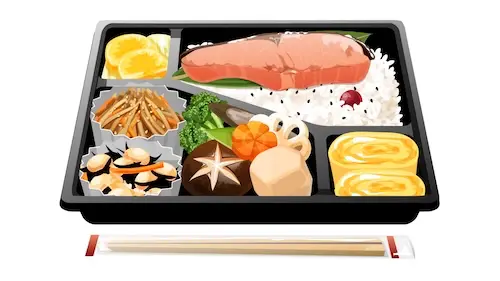
Among many types, the Makunouchi Bento (まくのうちべんとう) is the most prestigious and popular.
But what makes it so special?
Why is it called “Makunouchi”? (Origin and History)
The name comes from Edo-period theater, specifically Kabuki.
The interval between acts is called “Maku-ai” (まくあい). The word “Maku” (まく) means curtain.
This bento began as a quick meal for the audience during these breaks.
In Japanese, many idioms use “Maku” to signify a story’s beginning or end.
Essentially, this meal designed for “intermissions” established the modern bento style.
The “Three Sacred Treasures” of Makunouchi
Standard Makunouchi bento contain three essential items.
These are known as the “Three Sacred Treasures.”
They include grilled fish, fish cake (かまぼこ / kamaboko), and rolled omelet (たまごやき / tamagoyaki).
Additionally, the variety of other side dishes is a huge draw.
These main stars taste great even when cold.
Furthermore, they provide the “golden balance” of a perfect meal.
The Rule of Five Colors (ごしき / Goshiki)
A clear rule exists for the beauty of Makunouchi. It is the concept of “Five Colors.”
- Red (あか)
Salmon or pickled plum (うめぼし / umeboshi).
This color stimulates the appetite. - Yellow (きいろ)
Rolled omelet or chestnuts.
These add brightness to the box. - Green (みどり)
Spinach or green beans.
These offer a fresh and vivid look. - White (しろ)
Rice or fish cake.
These create a sense of cleanliness and “negative space.” - Black (くろ)
Seaweed, sesame seeds, or shiitake mushrooms. T
hese sharpen the overall design.
When these five colors meet, visual beauty and nutritional balance align naturally.
It is truly a masterpiece of Japanese functional beauty.
Why Makunouchi Remains the Most Popular Choice Today
Makunouchi bento are common at business meetings and film sets.
They are also standard for ceremonial occasions.
These meals are appropriate for any formal setting.
Most importantly, everyone enjoys them.
This “absolute sense of security” is the reason for their enduring popularity.
The luxury of tasting many small dishes is a treat.
It provides a moment of “peace of mind” (こころのゆとり / kokoro no yutori) for busy people.
Conclusion
A bento (おべんとう / obento) is a tiny universe.
It is filled with the Japanese spirit of hospitality (おもてなし / omotenashi).
Among them, the Makunouchi bento is a masterpiece.
It combines the history of Edo theater culture with the aesthetics of “Five Colors.”
The next time you open a bento lid, please look for the “Rule of Five Colors.”
Try to find the “Three Sacred Treasures” as well.
This simple discovery will surely enrich your meal.
Your ordinary lunch will feel a little more special.
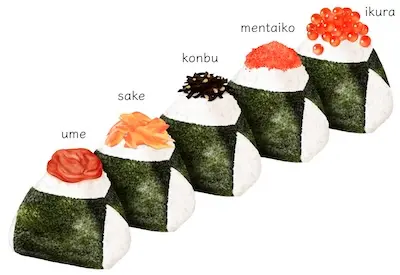
Rice balls often hold a special place in a person’s heart.
Learn why in our featured post.
“The Charm of Onigiri and Japanese Memories”
Discover more about Japanese culture in the Japan & Culture category.
Related Posts
お弁当とは?—日本が世界に誇る「BENTO」文化
日本において、お弁当は単なる持ち運び用の食事ではありません。
「箱」という限られた空間の中に、主食とおかずを美しく配置する。
そこには日本独自の「美意識」が凝縮されています。
日本語の「お弁当」には、丁寧さを表す「お」をつけることがあります。
ここには食べ物への感謝や、作る人・食べる人への敬意が込められています。
今や「BENTO」は世界共通語になりつつあります。
背景には「箱の中に季節を詰める」という日本特有の文化があるのです。
知っておきたい!日本のお弁当の代表的な種類
現代の日本では、シーンに合わせてさまざまなお弁当が選ばれています。
1. のり弁(リーズナブルな定番)
ご飯の上に鰹節と醤油、そして全面を覆う海苔。
そして、その上に白身魚のフライやちくわの天ぷらを乗せるのが一般的です。
海苔の香りとサクサクの食感が、ご飯とよく合います。
手頃な価格で食べやすく、コンビニやスーパー、弁当店でよく見かけます。
2. コンビニ弁当(24時間買える利便性)
忙しい現代の生活では、コンビニ弁当がとても便利です。
のり弁や幕の内のほか、唐揚げ弁当、麺類(ラーメン・うどん)などもあります。
季節ごとの新商品も多く、今の日本の「食のトレンド」を映し出す鏡のような存在です。
買ってすぐ食べられる点が大きな魅力です。
3. 駅弁(旅の楽しみを詰め込んで)
鉄道の旅に欠かせないのが駅弁です。
地域の名産品や郷土料理が使われ、その土地の味が楽しめます。
移動時間を「観光」の一環へと変えてくれる特別な存在です。
長距離の列車旅の楽しみとして、外国人観光客にも好評です。
【徹底解説】お弁当の王道「幕の内弁当」の魅力
数あるお弁当の中でも、最も格式高く人気があるのは「幕の内弁当」です。
なぜこれほどまでに特別な存在なのでしょうか。
なぜ「幕の内」と呼ばれるのか?(語源と歴史)
この名前の由来は、江戸時代の芝居(歌舞伎)にあります。
お芝居の「幕(まく)」と「幕」の間。休憩時間を「幕間(まくあい)」と呼びます。
この時間に観客が手早く食べられるよう作られたのが始まりです。
日本語には「幕を引き受ける」や「幕が上がる」といった、物語の区切りを意味する表現が多くあります。
その「合間」を楽しむための食事が、現代のお弁当スタイルを確立しました。
幕の内弁当の「三種の神器」とは?
幕の内弁当には、定番とされる「三種の神器」があります。
それは「焼き魚・蒲鉾(かまぼこ)・卵焼き」です。
その他のおかずの数が多いのも、幕の内弁当の魅力です。
冷めても美味しく、彩りも良いため、お弁当の黄金バランスを支える主役たちです。
五感で楽しむ「彩り(五色)」のルール
幕の内弁当の美しさには、明確なルールが存在します。それが「五色(ごしき)」の考え方です。
- 赤: 鮭や梅干し。食欲を増進させる役割があります。
- 黄: 卵焼きや栗。全体に華やかさを添えます。
- 緑: ほうれん草やインゲン。安心感と鮮やかさを与えます。
- 白: ご飯やかまぼこ。清潔感と「余白」を生み出します。
- 黒: 海苔や黒胡麻、椎茸。全体をピリッと引き締めます。
この5色が揃うことで、視覚的な美しさと栄養バランスが自然に両立します。
まさに「和の機能美」と言えるでしょう。
現代でも「幕の内」が一番人気な理由
ビジネス会議やロケ弁。あるいは冠婚葬祭。
どんな公の場でも失礼がなく、誰にでも喜ばれる。
この「圧倒的な安心感」こそが、不動の人気を誇る理由です。
多種類のおかずを少しずつ味わう贅沢さは、多忙な現代人にひとときの「心のゆとり」を与えてくれます。
まとめ
お弁当は、日本人の「おもてなし」の心が詰まった小さな宇宙です。
その中でも幕の内弁当は、江戸の芝居文化から生まれた歴史と、五色の彩りという美学が融合した最高傑作です。
次にふたを開けるときは、「五色のルール」や「三種の神器」を探してみてください。
いつもの食事が、少しだけ豊かに感じられるはずです。
おにぎりは、日本人の心の中で特別な場所を占めています。
その理由は、こちらの記事をご覧ください。
“The Charm of Onigiri and Japanese Memories”
日本文化についてもっと知りたい方は、Japan & Culture カテゴリをご覧ください。