

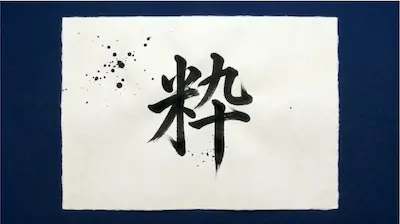
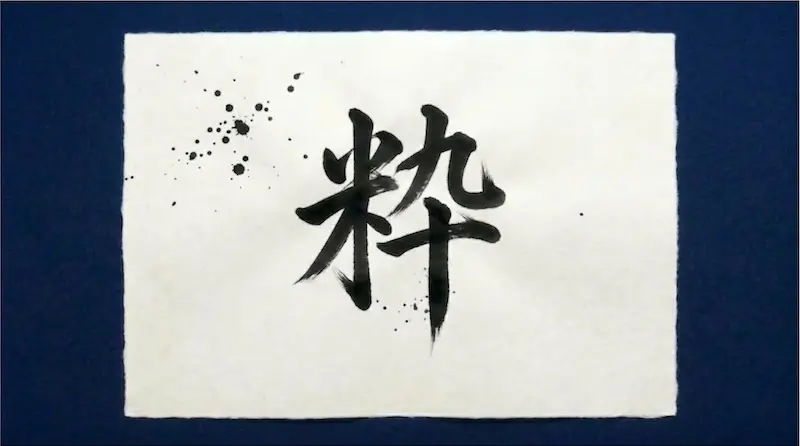
“粋な人 (Iki na hito)” means a refined person.
A stylish kimono can be described as “粋な着物 (iki na kimono).”
A thoughtful response is called “粋な計らい (iki na hakarai).”
The word “粋 (iki)” can be used for both people and things.
Does it mean “fashionable” or “cool”?
In English, it is sometimes translated as cool or stylish.
However, that is not quite enough.
“Iki” has a unique Japanese aesthetic.
What Does “Iki” Mean?
The word “Iki” describes refined appearance and manners.
However, it is not just about looks.
It also includes how you relate to others and your overall behavior.
- Sensing the feelings of others.
- Avoiding unnecessary words.
- Casually helping someone in trouble.
Such behavior is also “Iki.”
Another common expression is “Iki-na hakarai.”
This phrase describes a thoughtful and considerate response.
Because of this, “Iki” is a broader word than “fashionable.”
Proper boundary setting with others is also part of it.
This concept even highlights the beauty of your behavior.
Not Only Edo: “Iki”
When people hear the word “iki,” some may think of the Edo period.
In fact, “iki” is deeply connected to the townspeople culture of Edo (modern-day Tokyo).
However, “iki” is not limited to Edo alone.
The word “粋” has two different readings, “iki” and “sui.”
Actually, “sui” developed first.
Born in Kamigata: “Sui”
“Sui” is a term used within the townspeople culture of 上方 (Kamigata).
Kamigata refers to the region centered around places such as Kyoto and Osaka.
At the time, it also described refined or excellent things.
Knowing human nature and the ways of the world was part of “sui.”
Being well-versed in the entertainment world was also included.
Furthermore, it was linked with glamour and elegance.
The “sui” of Kamigata is a glamorous and refined aesthetic.
Grown in Edo: “Iki”
In Edo, a unique aesthetic emerged, different from Kamigata‘s “sui.”
“Iki” is deeply tied to Edo’s townspeople culture.
It features a clean and crisp refinement.
People preferred an understated style over flashy ornamentation.
This style appears in personal appearance.
It also shows in attitudes and relationships.
Sensing the feelings of others was also important.
“粋 (Sui)” and “粋 (iki)” use the same kanji characters.
However, their expressions varied by region.
Kamigata favored a glamorous “sui.”
In contrast, Edo favored a clean “iki.”
The Aesthetic of Edo Kimono
During the period in Edo, sumptuary laws banned flashy clothing.
As a result, subdued colors like indigo and gray were primarily used.
Understated patterns were also chosen.
Townspeople at the time lived within set restrictions.
Within that, they put thought into color combinations and styling.
Through this, they enjoyed subtle fashion.
Modest at first glance, but stylish upon closer inspection.
Expressing individuality even within restricted rules.
This, too, reflects the aesthetic of “iki“.
Explore how Edo period ukiyo-e introduced Japanese aesthetics to Europe.
[What Is Japonism?: How Ukiyo-e Captivated Europ]
The Opposite of “Iki”: “Yabo”
“野暮 (Yabo)” is a word with the opposite meaning of “粋 (iki).”
It means “unsophisticated” or “uncouth.”
However, it does not refer only to clothing.
It is also used for how people relate to others.
Failing to consider the feelings of others was also regarded as “yabo.”
Both “iki” and “yabo” relate not only to appearance but also to behavior.
Why Don’t People Use the Word “Iki” Anymore?
Even today, “iki” is a word known by many Japanese people.
“Iki-na hakarai“ refers to a thoughtful and considerate response.
It takes others’ feelings into account.
Expressions like “iki na hito“ or “iki na design“ also exist.
However, opportunities to use it in daily conversation are infrequent.
There are still times when people feel, “That is so iki.”
So, why has the opportunity to use it as a word decreased?
Replaced by “Stylish” or “Good Taste”
Today, people often use different words depending on the situation.
- For clothing: “stylish” or “good taste”
- For behavior: “cool”
- For actions: “thoughtful”
The meanings once held by “iki” are now expressed using separate words.
Because of this, opportunities to use the word “iki” have decreased.
Conclusion
Today, people often express these ideas as “thoughtful” or “good taste.”
Because of this, they may have stopped using the word “iki.”
However, “iki” still remains alive within everyday Japanese life.
Subtlety over flashiness.
Not only appearance, but also how people relate to others.
The charm of “iki” can be found in places like these.
Explore more Japanese expressions in the Japanese Words category.
Related Posts
 What Is Taisho Roman? Discover Japan’s Most Elegant Era
 What Does “Bimyo” Really Mean?
「粋な人」「粋な着物」「粋な計らい」。
人にも物にも使えるのが、「粋」という言葉です。
「おしゃれ」や「かっこいい」という意味でしょうか。
英語なら cool や stylish と訳されることもあります。
ただ、それだけでは少し足りません。
「粋」には、日本独特の美意識があります。
「粋な」とは?
「粋(いき)」は、洗練された身なりや態度を表す言葉です。
ただし、見た目だけではありません。
人との付き合い方や、振る舞いも含まれます。
相手の気持ちを察する。
余計なことを言わない。
困っている人に、さりげなく手を貸す。
そんな振る舞いも「粋」です。
「粋な計らい」という表現もあります。
相手を思いやった、気の利いた対応です。
そのため、「粋」は「おしゃれ」よりも広い言葉です。
人との距離の取り方も含まれます。
振る舞いの美しさも表します。
江戸だけではなかった「粋」
「粋」と聞くと、江戸時代を思い浮かべる人もいると思います。
実際、「粋(いき)」は、江戸(今の東京)の町人文化と深く結びついています。
しかし、「粋」とは江戸だけのものではありません。
「粋」には、「いき」と「すい」という二つの読み方があります。
実は、「粋(すい)」の方が先に発達しました。
上方で生まれた「粋(すい)」
「粋(すい)」は、上方の町人文化の中で使われていた言葉です。
上方と京都や大坂を中心とした地域のことです。
当時は、洗練されたものや、優れたものを表す言葉でもありました。
人情や世の中のことをよく知っていることも、「粋(すい)」の一つです。
遊びの世界に通じていることも含まれました。
また、華やかさや優美さとも結びついていました。
上方の「粋(すい)」は、華やかで洗練された美意識です。
江戸で育った「粋(いき)」
江戸では、上方の「粋(すい)」とは違う美意識が生まれました。
「粋(いき)」は、江戸の町人文化と深く結びついています。
さっぱりとした洗練したということが特徴です。
派手に飾り立てるより、控えめであることを好みます。
身なりだけでなく、態度や人との付き合い方にも表れます。
相手の気持ちを察することも大切でした。
「粋(すい)」と「粋(いき)」は、同じ漢字です。
そして、地域によって美意識の表れ方が違いました。
上方の華やかな「すい」が好まれました。
一方で、江戸ではさっぱりとした「いき」が好まれました。
江戸の着物に見る美意識
当時の江戸では、奢侈禁止令により派手な服装が禁じられました。
そのため、藍や鼠色といった地味な色が主に使われました。
柄も控えめなものが選ばれました。
当時の町民たちは、決められた制限の中で暮らしていました。
その中で、色の組み合わせや着こなしで工夫を凝らしました。
そうすることで、さりげないおしゃれを楽しみました。
一見すると控えめでも、よく見るとしゃれている。
制限されたルールの中でも自分らしさを表現する。
そんなところにも、「粋」の美意識が表れています。
江戸時代の浮世絵が、日本の美意識をヨーロッパへ伝えた背景を紹介します。
[What Is Japonism?: How Ukiyo-e Captivated Europ]
「粋」と反対の「野暮」
「野暮(やぼ)」は、「粋」の反対の意味の言葉です。
「田舎くさい」「洗練されていない」という意味があります。
ただし、服装だけを指す言葉ではありません。
人との付き合い方にも使われます。
相手の気持ちを考えないことも、「野暮」とされました。
「粋」と「野暮」は、見た目だけでなく振る舞いにも関係しています。
なぜ「粋」という言葉を使わなくなった?
今でも「粋」は、多くの日本人が知る言葉です。
「粋な計らい」は、相手の気持ちを考えた気の利いた対応を表します。
「粋な人」や「粋なデザイン」という表現もあります。
ただ、日常会話で「粋」という言葉を使う機会は多くありません。
「粋だな」と感じるときは、今でもあります。
では、なぜ言葉として使う機会が減ったのでしょうか。
「おしゃれ」や「センスがいい」に置き換わった
現代では、場面に合わせて別の言葉を使うことが多くなりました。
- 服装なら「おしゃれ」や「センスがいい」
- 振る舞いなら「かっこいい」
- 対応なら「気が利いている」
「粋」が持っていた意味を、別々の言葉で表すようになっています。
そのため、「粋」という言葉を使う場面が減ったと考えられます。
まとめ
今では「気が利いている」や「センスがいい」と表現することが多くなりました。
そのため、「粋」という言葉を使わなくなったのかもしれません。
しかし、今も日本の暮らしの中に「粋」は残っています。
派手さよりも、さりげなさ。
見た目だけでなく、人との関わり方。
そんなところに、「粋」の魅力があります。
日本語表現についてもっと知りたい方は、Japanese Words カテゴリをご覧ください。