

Japanese Seals and the Color Vermilion
In my previous article, I introduced the 朱 (shu, vermilion color) .
used for Japanese torii gates 鳥居 (torii, torii gates).
Vermilion symbolizes vital energy and protects against evil.
Because of this, the color holds deep meaning at Shinto shrines.
Now, let’s explore a different tradition.
Let’s look at how 印章 (inshō, Japanese seals) use this same vermilion color.
What Are Japanese Seals?
An 印章 (inshō, seal) is commonly called a “ハンコ (hanko).”
It is a traditional tool used in Japan.
People use it instead of a handwritten signature.
In English, it is called a “Japanese seal,” “personal seal,” or “hanko.”
It is a truly unique part of Japanese culture.
Seals as an Art Form
An inshō is not just a simple office tool, but part of a wide artistic world.
This art is called 篆刻 (tenkoku, seal engraving).
Tenkoku is the technique of carving characters or patterns.
These designs are carved onto seals and ornaments.
It specifically uses a style called 篆書 (tensho, seal script).
The Meaning of Vermilion in Japanese Seals
The 朱 (Shu, vermilion) used in Japanese seals is not just a regular red.
Historically, it was made from a natural mineral called 辰砂 (shinsha, cinnabar).
It creates a deep and vivid Shu color.
Shu also symbolizes vital energy and protects against evil.
Because of this, a stamped seal carries a special meaning.
This is the same as the Shu on torii gates from my previous article.
The Shu in seals also represents prayer and protection.
Torii gates show sacredness in public spaces.
In contrast, seals express the will and authority of a person or organization.
Materials and Tenkoku Techniques
The appearance of a seal changes greatly.
This depends on the materials and tenkoku techniques.
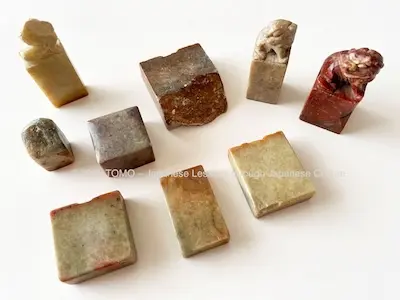
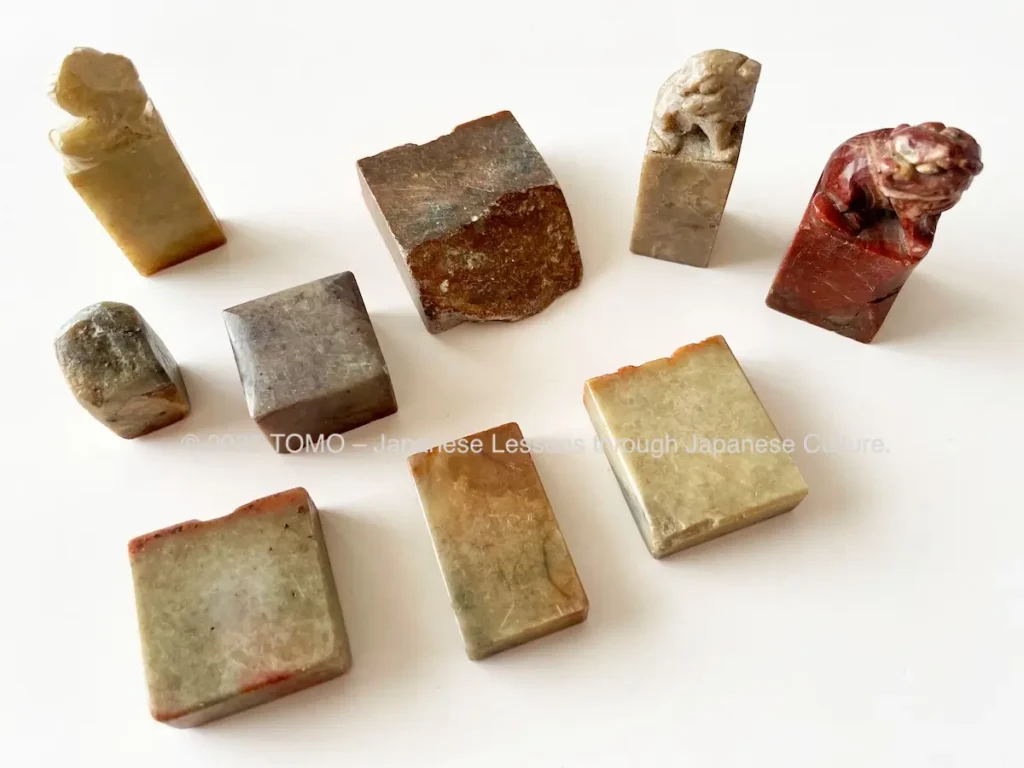
Most seals are carved from stone.
Stones come in various levels of hardness.
They are perfect for sharp and powerful expressions.
Also, stone is highly durable.
Personality in Wood and Bamboo
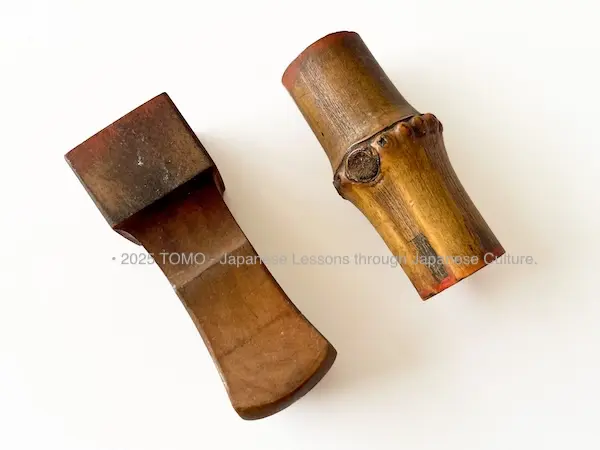
My ancestor used not only stone but also wood and bamboo from his garden.
These are wood seals and bamboo seals.
Wood and bamboo are soft and warm.
They allow for natural textures and gentle lines.
By utilizing these characteristics, they possess a unique personality.
They have a special charm that other seals do not have.
Changes in Materials in Modern Times
Today, the materials used for seals have become diverse.
Artificial materials such as plastic and acrylic are now widely used.
Some seals are also made from luxury materials like crystal or amber.
Materials may change over time.
However, the feelings people put into their seals remain the same.
The cultural significance is still preserved today.
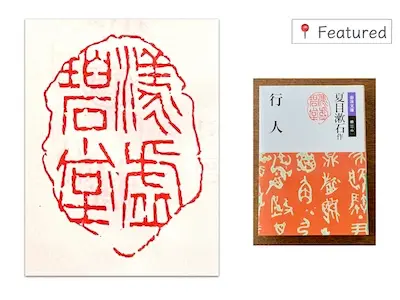
Natsume Sōseki’s Seal
My ancestor also made seals for 夏目漱石 (Natsume Sōseki.)
These seals were used as 落款印 (rakkan-in, artist’s seals.)
He stamped them on his paintings and calligraphy.
They were also used as 検印 (ken-in, verification seals) for his works.
Sōseki’s artistic sensibility and my ancestor’s engraving skills are combined in them.
Such items are special.
Ken-in were seals used to calculate royalties.
(It is said that Sōseki helped popularize this concept in Japan.)
Learn more in this article.
“My Ancestor Kōsho Made Seals for Soseki: A Surprising Connection.”
The Appeal and Cultural Significance of Japanese Seals
Inshō are practical tools.
At the same time, they possess the charm of an art form.
My ancestor cherished wood and bamboo materials.
The stories behind Sōseki’s seals are also fascinating.
These reveal the infinite possibilities of this craft.
I am not a professional seal maker.
However, these ancestral stories are an essential part of my background.
“Understand the nature of the material and give shape to its best qualities.”
This philosophy remains the foundation of my teaching today.
Learn more about Sōseki’s connection to Japanese seals.
“Did Natsume Sōseki Love Seals?”
Explore more about Japanese seal art in the Japanese Seal Art category.
Related Posts
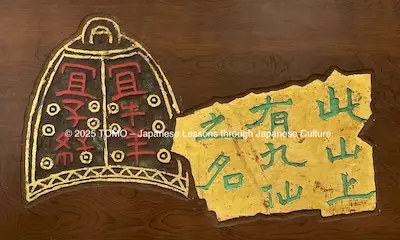
 Why Is Vermilion (朱) Important in Japan?
印章の世界と朱の色
前回の記事で、日本の鳥居に使われる朱色について紹介しました。
朱色は魔除けや生命力の象徴です。
神社の鳥居などで、深い意味を持っています。
今回はその朱色が、印章にどのように使われてきたかを見ていきましょう。
印章とは?
印章(いんしょう)、いわゆる「ハンコ」です。
日本では署名の代わりに使われる伝統的な道具です。
英語では「Japanes seal」や「personal seal」、「hanko」と呼ばれます。
文化的にもとてもユニークなものです。
実用的な印章
「印章(いんしょう)は、名前や会社名を表します。
手書きの署名の代わりに捺印するものです。
近年はデジタル化により、日常で印章を使う機会は減っています。
しかし、その文化的な価値が変わることはありません。
芸術としての印章
印章は、単なる事務道具ではありません。
そこには 篆刻(てんこく) という芸術の世界が広がっています。
篆刻とは、印章や装飾品として文字や模様を彫る技術です。
特に篆書(てんしょ)という字体を使ったものを指します。
印章に使われる朱の意味
印章で使う朱は、ただの赤色ではありません。
古くから「辰砂(しんしゃ)」と呼ばれる天然鉱石から作られていました。
深みのある鮮やかな朱色をしています。
また、朱は魔除けや生命力の象徴とされています。
そのため、押された印には特別な意味が込められています。
前回の記事で紹介した鳥居の朱と同じです。
印章の朱も「祈り」や「守り」を表します。
鳥居は、公共の場で神聖さを示します。
そして、印章では個人や組織の意思や権威を表します。
素材と篆刻技術
印章は、素材の選び方や篆刻の技術によって、表情や印象が大きく変わります。
多くの印章は石に彫ります。
石の硬さにはいろいろなものがあり、シャープで力強い表現に向いています。
また、耐久性の面でも優れています。
木や竹に込められた個性
私の先祖は石だけでなく、庭に生えていた木や竹も素材として用いました。
「木の印」や「竹の印」です。
木や竹は柔らかく温かみがあります。
そのため、自然な風合いと柔らかな線を表現できます。
素材の特性を活かすことで、他の印章とは異なる個性や味わいがあります。
現代に受け継がれる素材の変化
現代では、印章に使われる素材も多様になっています。
プラスチックやアクリルなどの人工素材が広く使われています。
また、水晶や琥珀などの高級素材を使った印章もあります。
素材は変わっても、人々が印に込める思いは変わりません。
文化的な意味は、今も受け継がれています。
漱石の印章
私の先祖は夏目漱石の印章も作っていました。
漱石の印章は、絵画や書に押される落款印(らっかんいん)として使われました。
また、著作物の印税の計算のための「検印」としても使われています。
この印章は、先祖の丁寧な篆刻技術と漱石の感性が合わさった、特別な存在です。
(日本において「印税」という考えを広めたのは夏目漱石だと言われています。)
詳しくはこちらの記事をご覧ください。
“My Ancestor Kōsho Made Seals for Soseki: A Surprising Connection.”
印章の魅力と文化的意義
印章は実用的な道具であると同時に、芸術作品としての魅力も持っています。
先祖が愛した木や竹の素材、そして漱石の印章にまつわる物語。
これらは印章が持つ無限の可能性を示しています。
私は職人ではありません。
ですが、先祖のエピソードは私の大切な背景です。
「素材の性質を理解し、その良さを形にする」
この考え方は、私の教え方の原点でもあります。
漱石と印章についてはこちらをご覧ください。
“Did Natsume Sōseki Love Seals?”
ハンコ文化についてもっと知りたい方は、Japanese Seal Art カテゴリをご覧ください。