

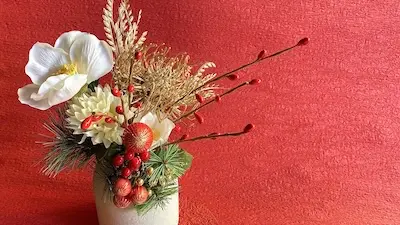
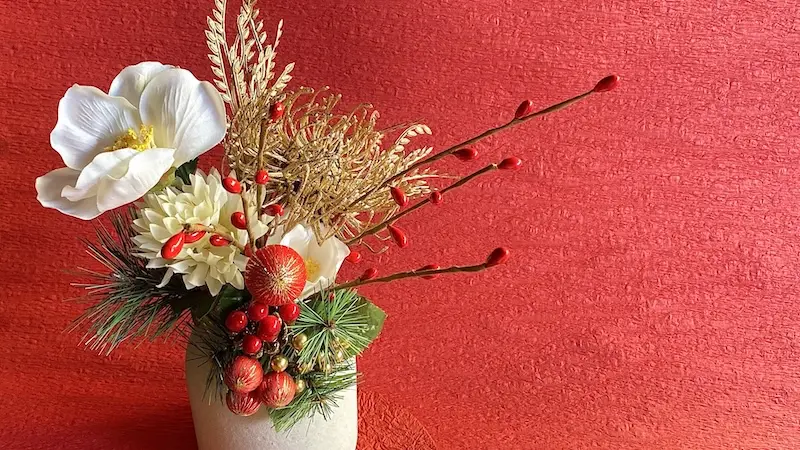
What is Kōhaku?
A 紅白幕 (Kōhakumaku, red and white curtain) at a wedding.
A 紅白 (Kōhaku) 水引 (Mizuhiki) cord on a celebratory gift.
In Japan, you see 紅白 (Kōhaku) in many situations.
So, why red and white?
Actually, 紅白 (Kōhaku) has had a lucky meaning since ancient times.
It has been cherished as a color for celebrations.
This article explains why 紅白 (Kōhaku) is considered lucky.
I will also look at how it is used today.
Why “Kōhaku” Instead of “Akashiro”?
For celebrations, 紅 (Beni, crimson) is used instead of 赤 (Aka, red).
They are not just different kanji.
The colors themselves are different.
赤 (Aka) brings to mind the sun or fire.
It has a bright and active image.
紅 (Beni) has more depth.
It is a calm yet gorgeous color.
Japanese people found a special meaning in this subtle difference.
Thus, 紅 (Beni) has been a special color since ancient times.
Therefore, the word 紅白 (Kōhaku) is used instead of 赤白 (Akashiro, red and white).
The Special Value of 紅 (Beni) from the History of Dyes
The history of dyes shows why 紅 (Beni) is special.
In ancient Japan, common 赤 (Aka) came from the roots of 茜 (Akane, madder root).
People also used minerals from the soil.
These materials were relatively easy to get.
On the other hand, 紅 (Beni) comes from 紅花 (Benibana, safflower).
It yields only a tiny amount of red pigment.
Making this dye takes a lot of time and effort.
So, it was as expensive as gold back then.
It is different from everyday 赤 (Aka).
紅 (Beni) was a special color that only certain nobles could use.
This huge difference in value is the reason why people use 紅 (Beni) for celebrations.
Why is Kōhaku Considered Lucky?
There are several theories about why 紅白 (Kōhaku) is lucky.
One theory is that it represents the milestones of life.
紅 (Beni) means birth.
白 (Shiro, white) means purity and death.
Combining these colors represents a person’s whole life.
Another theory is that it is a symbol of ハレの日 (Hare no hi).
ハレの日 (Hare no hi) means a special day away from ordinary life.
紅 (Beni) has strong vitality and the power to ward off evil.
白 (Shiro) represents sacredness and a pure heart.
Both colors have special meanings.
Therefore, 紅白 (Kōhaku) has been a lucky combination.
It expresses celebratory feelings and great joy.
Where is Kōhaku Used?
A 紅白幕 (Kōhaku maku) is used at weddings and graduations.
It shows that the event is a celebration.
Also, a 紅白 (Kōhaku) 水引 (Mizuhiki) is tied on a gift money envelope.
New Year’s Osechi dishes include 紅白かまぼこ (Kōhaku kamaboko, red and white fish cake).
People eat it to wish for a peaceful year.
The half-circle shape represents the “日の出 (hinode, sunrise)” of the new year.
Also, 紅白饅頭 (Kōhaku manjū, red and white steamed buns) are often given as celebratory gifts.
The round shape means 円満 (Enman, harmony).
It holds a wish for peaceful and lasting relationships with others.
Mizuhiki is a traditional Japanese decoration for celebrations and events.
[What is Mizuhiki? The History, Meaning, and Useful Japanese Words]
Extra: 金 (Kin, gold) with Eternal Shine
In addition to 紅白 (Kōhaku), 金 (Kin, gold) is also a very lucky color.
It has been treated as special in Japan since ancient times.
Pure gold does not rust or change color over time.
From this, it came to mean “eternity” and “unchanging.”
Also, in Buddhism, it is a sacred color.
It represents the light of Pure Land.
In the past, a lot of gold was mined in Japan.
Japan was a country that could produce its own abundant gold.
Therefore, 金 (Kin) was used a lot in Japanese art and architecture.
For celebrations, 金 (Kin) is often combined with 紅白 (Kōhaku).
The meaning of eternity is added to the luckiness of 紅白 (Kōhaku).
This makes the celebratory feeling even stronger.
Red and White Teams at Sports Days
At Japanese school sports days, children are divided into two teams.
They are the 紅組 (Akagumi, red team) and 白組 (Shirogumi, white team).
The “紅” in 紅組 (Akagumi) represents red.
This is related to Japanese history.
It comes from the 源平の戦い (Genpei no tatakai, Genpei War) in the Heian period.
Samurai of the 源氏 (Genji, Minamoto clan) raised white flags.
Samurai of the 平氏 (Heishi, Taira clan) raised red flags.
From this battle, red and white became opposing colors in Japan.
Even in modern competitions, 紅白 (Kōhaku) is used.
For example, at sports days and singing competitions.
On the other hand, 紅白 (Kōhaku) is also used for celebrations.
Competing while also respecting each other.
Such a Japanese way of thinking might also be expressed in 紅白 (Kōhaku).
Conclusion
紅白 (Kōhaku) has long been a special symbol of celebration in Japan.
It carries deep meaning rooted in Japanese history and culture.
Learning about traditions like this can help you understand Japanese more deeply.
Interested in other Japanese symbols of good luck?
[What Is a Daruma Doll? Meaning, History, and Traditions]
Discover more about Japanese culture in the Japan & Culture category.
Related Posts
 What Is a Daruma Doll? Meaning, History, and Traditions
 Torii vs. Kabuki-mon: Similar but Different
紅白とは?
結婚式の紅白幕。
お祝いの贈り物についた紅白の水引。
日本では、さまざまな場面で「紅白」を目にします。
では、なぜ赤と白なのでしょうか。
実は、紅白には古くから縁起の良い意味があります。
そして、お祝いの色として大切にされてきました。
この記事では、紅白が縁起の良い色とされる理由を紹介します。
また、現代での使われ方も見ていきます。
なぜ「赤白」ではなく「紅白」なの?
お祝いの場面では、「赤」ではなく「紅」です。
これは漢字が違うだけでなく、色そのものが異なります。
「赤」は太陽や火を連想させます。
明るく活動的なイメージです。
「紅」は深みがあります。
落ち着いた華やかさを感じさせる色です。
この微妙な色味の違いに、日本人は特別な意味を持たせました。
このように、「紅」は古くから特別な色とされてきました。
そのため、「赤白」ではなく「紅白」という言葉が使われています。
染料の歴史から見る「紅」の特別な価値
「紅」が特別な色となった背景には、染料の歴史があります。
昔の日本では、一般的な「赤」は茜の根から作りました。
または、土から採れる鉱物などを使っていました。
これらは比較的簡単に手に入るものでした。
一方で「紅」は、紅花から作られます。
紅花から取れる赤い色素は、ほんのわずかです。
染料を作るのに大変な手間がかかります。
そのため、当時は金と同じくらい高価でした。
日常的に使われる「赤」とは違います。
「紅」は一部の貴族だけが使える特別な色でした。
この圧倒的な価値の違いが、お祝い事に「紅」を使う理由です。
紅白がおめでたい理由
紅白がおめでたい理由には、いくつかの説があります。
一つは、紅白が人の人生の節目を表しているという説です。
紅は出生を意味します。
白は純潔や死を意味します。
紅と白を合わせることで、人の一生を表していると考えられています。
もう一つの説は、「ハレの日」の象徴です。
ハレの日とは、日常から離れた特別な日のことです。
紅は強い生命力や魔除けの力を持ちます。
白は神聖さや清らかな心を表します。
紅と白は、それぞれ特別な意味を持っています。
そのため、紅白は縁起の良い組み合わせと考えられてきました。
また、お祝いの気持ちや人生の大きな喜びを表わしています。
紅白はどんな場面で使われる?
結婚式や卒業式では、紅白幕が使われます。
お祝いの場であることを表しています。
そして、ご祝儀袋には、紅白の水引を結びます。
おせち料理には、紅白のかまぼこが入っています。
かまぼこは一年の平安を願って食べます。
半円の形は、新しい年の「日の出」を表します。
また、お祝いの贈り物には、「紅白饅頭」がよく配られます。
饅頭の丸い形は、「円満」を意味します。
人との関係が円満に続くようにという願いが込められています。
水引は、お祝い事や行事で使われる日本の伝統的な飾りです。
[What is Mizuhiki? The History, Meaning, and Useful Japanese Words]
番外編:永遠の輝きを持つ「金」
紅白に加えて、「金」も非常に縁起の良い色です。
日本でも、古くから特別に扱われてきました。
純金は時間が経っても錆びたり、変色しません。
そこから、「永遠」や「不変」を意味するようになりました。
また、仏教において、金は極楽浄土の光を表す神聖な色でもあります。
かつての日本では、多くの金が採掘されていました。
日本は豊かな金を自給できる国でした。
そのため、日本の美術や建築には金が多く使われました。
お祝いの場面では、紅白に金色を合わせることがよくあります。
紅白の縁起のよさに、永遠を意味する金が加わります。
これにより、お祝いの気持ちがさらに高まります。
運動会の紅組と白組
日本の学校の運動会では、子どもたちが「紅組」と「白組」に分かれます。
紅組の「紅」は、赤色を表しています。
これには、日本の歴史が関係しています。
平安時代に起きた「源平合戦」が由来です。
源氏の武士は白い旗を揚げました。
平氏の武士は赤い旗を揚げました。
この戦いから、日本では赤と白が対抗する色になりました。
現代の対決の場面でも、「紅白」が使われます。
例えば、運動会や歌の対抗戦などです。
一方で、紅白はお祝いの場面でも使われます。
競い合いながらも、お互いを認め合う。
そんな日本人の考え方も、「紅白」には表れているのかもしれません。
まとめ
紅白は、日本で古くから大切にされてきた特別なお祝いの色です。
日本の長い歴史や文化の中で、深い意味が込められてきました。
このような言葉や文化を知ると、日本語の理解もさらに深まります。
日本の縁起物に興味がありますか?
[What Is a Daruma Doll? Meaning, History, and Traditions]
Discover more about Japanese culture in the Japan & Culture category.