Japanese Nuance in the Lyrics of Ado’s 『私は最強(Watashi wa Saikyou)』
The Line 「アナタ」 That Stood Out in Ado’s Watashi wa Saikyou
Recently, I was watching a music program. At that time, I heard Ado’s Watashi wa Saikyou.
Then, one line caught my attention.
That line was 「アナタと最強」(anata to saikyo: You and I are invincible).
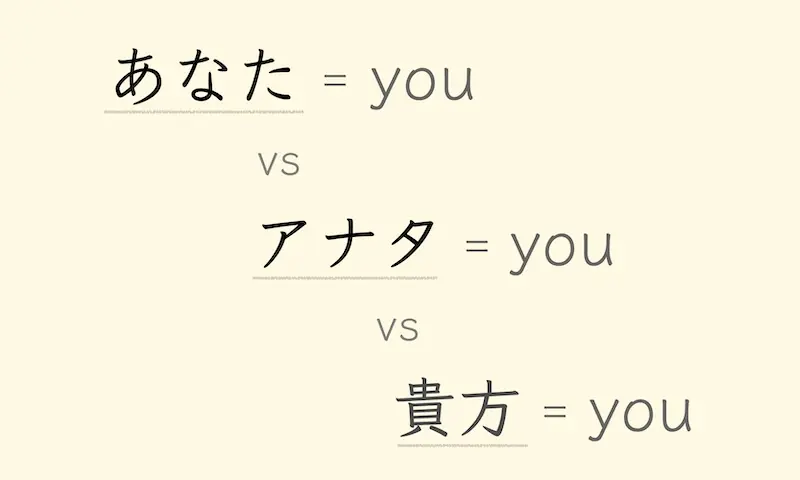
Here, the word is written as 「アナタ」(anata: you), in katakana. It is not written as 「あなた」(anata: you), in hiragana.
The pronunciation is the same. The meaning is also the same.
However, the impression feels very different. Just changing the script changes how the word feels.
Because of that, I paused and thought about it.
So, why was katakana chosen here? Why not hiragana instead?
For this reason, in this article,I would like to think about Japanese writing styles.
And I would also like to explore the nuance they create.
How Writing Creates Nuance in Japanese
In Japanese, meaning is not expressed by sound alone.
Instead, how a word is written creates nuance.
As you may know, Japanese uses three writing systems. They are hiragana, katakana, and kanji.
Because of this, the same word can carry different nuance.It depends on which script is chosen.
This is especially true in song lyrics. Writers choose scripts very carefully.
That is why the spelling 「アナタ」(anata: you) feels intentional in this song.
It adds nuance to the message. And it shapes how listeners understand the lyrics.
“you” vs. 「あなた」
One Word in English, Many Choices in Japanese
In English, the second person is usually just you.
It is the same for one person and for many people.
So, 「あなた」(anata: you) and 「あなたたち」( anata-tachi: you all) are both you in English.
However, Japanese works differently.
When speaking Japanese, people rarely use 「あなた」(anata: you). They also rarely say 「あなたたち」(anata-tachi: you all).
Instead, people often use names. Or, they use titles and roles. For example, teacher, manager, or staff.
In addition, Japanese often omits the subject. If it is clear, it does not need to be said.
Because of this, Japanese adjusts meaning through how you address someone.
In other words, word choice helps express nuance.
Why Japanese Avoid Saying 「あなた」
The Japanese word 「あなた」(anata:you) originally comes from「彼方」(kanata:far away / the other side).
Because of this origin, 「あなた」(anata:you) carries a sense of distance.
It gives a slightly detached impression rather than closeness.
In modern Japanese, 「あなた」(anata:you) is used mainly with equals or people of the same age / rank.
However, when it is used for a superior, it may sound rude.
Therefore, people often use names or titles instead. For example, a family name or a job position.
It is also common to start with phrases like「すみません」(sumimasen:excuse me / sorry) or 「あのう」(anō:um / well).
Because of this cultural background, Japanese often avoids direct second-person pronouns.
Not using 「あなた」(anata:you) can actually be more polite in many situations.
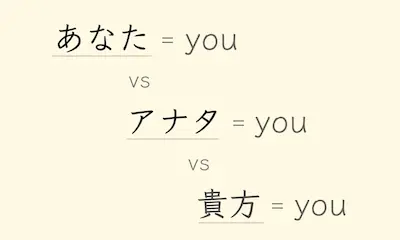
「あなた」 vs 「アナタ」 — Differences in Nuance
In Japanese, the same word can give different impressions depending on how it is written.
Here are the typical nuances:
- Hiragana「あなた」 (anata: you)
Gives a soft and friendly impression.
Feels familiar in everyday conversation and creates a sense of closeness. - Katakana「アナタ」 (anata: you)
Emphasizes emotion and the message.
Functions as a word directed at the reader or listener. - Kanji「貴方」 (anata you)
More formal, suited for written language.
Visually strong and makes a clear statement.
The choice of writing reflects emotion and relationships.
Therefore, the impression changes depending on which form is used.
Why “アナタ” Was Chosen in 『私は最強』 (Watashi wa Saikyou: I’m Invincible)
The real reason can only be known by Mr. Omori.
He (Mr. Omori: a famous singer and composer from Mrs. GREEN APPLE) wrote the lyrics.
Here, I will consider it from the perspective of a Japanese teacher.
The Worldview and Message of the Song
The title 『私は最強』 (Watashi wa Saikyou: I’m Invincible) conveys a sense of strength.
“最強” (Saikyou: the strongest) means being the very strongest.
Listening to this song can give anyone courage.
“私” (Watashi: I) and the Corresponding “アナタと最強” (Anata to Saikyou: You and I are invincible)
In the lyrics, the phrase 『私は最強』 (Watashi wa Saikyou: I’m Invincible) is used.
Its counterpart is 『アナタと最強』 (Anata to Saikyou: You and I are invincible).
Looking at the lyrics, the Katakana 「アナタ」 (Anata: you) stands out visually. Normally, Katakana is used for foreign words.
However, here, words usually written in Hiragana or Kanji are written in Katakana. This choice gives a strong sense of emphasis and message.
Katakana allows for a sense of power that Hiragana or Kanji cannot convey.
It also makes the listener feel that the message is directed at them personally.
Katakana in『私は最強』 (Watashi wa Saikyou: I’m Invincible)
This song does not only use the katakana アナタ (Anata: you).
There are three other words written in katakana:
- ココロ (Kokoro: heart) – usually written as 心 or こころ.
- ヒカリ (Hikari: light) – usually written as 光 or 光り.
- トゲ (Toge: thorn) – the kanji 棘 is uncommon, so it is often written in katakana.
(棘 is not a commonly used kanji.)
Here, let’s focus on ココロ (Kokoro: heart) and ヒカリ (Hikari: light).
In the song, these words appear in phrases like “ココロ晴れる” (Kokoro hareru: heart clears up) and “ヒカリの方へ” (Hikari no hō e: toward the light).
These words guide listeners to feel brighter and more positive.
When you read the lyrics again, you can enjoy the interesting aspects beyond just hearing the sounds.
What did you (アナタ)feel when listening to 『私は最強』 (Watashi wa Saikyou: I’m Invincible)?
What did you(アナタ) take away from this song?
Summary
In Japan, the number of music shows increases every December.
During these shows, when Ado sings, the Japanese lyrics often appear on screen.
So, people can not only listen to the songs but also read the lyrics as text.
Because of this, the use of Katakana アナタ (Anata: you) becomes noticeable.
By paying attention to the writing, Japanese feels even more nuanced.
Songs in Japanese can be a good entry point to understand the unique aspects of the language.
『私は最強』 (Watashi wa Saikyou: I’m Invincible) is a song where you can experience the charm of Japanese.
For more Japanese language and culture insights, check out Taisho Era(大正時代) Values in Demon Slayer: Learn Japanese Words on Inheritance and Tradition.
【vs series】Japanese Language & Culture Deep Dive
- Vol. 1: Shinto Shrines vs. Buddhist Temples
- Vol. 2: Kimono vs. Yukata
- Vol. 3: Himeji Castle vs. Matsumoto Castle
- Vol. 4: Tokyo Tower vs. Tokyo Skytree
- Vol. 5: anata vs. ANATA(Hiragana vs. Katakana)
- Vol. 6: Furisode vs. Kimono
Explore the depth of Japanese through these comparisons!
Japanese of the Day / 今日の日本語
- Word:ココロ (kokoro) – heart, mind, spirit
- Meaning:Refers to a person’s heart, mind, or spirit. It can describe emotions, feelings, or the essence of a person.
- Example:ココロが温かくなります 。(kokoro ga atatakaku narimasu)
(My heart feels warm.) - Fun Fact:In Japanese, ココロ is often used metaphorically in songs, literature, and everyday expressions to express feelings or emotional states.
◆ Would you like to talk about Japanese culture? ◆
In the Culture Course, you can learn to speak about Japanese culture with me.



Ado『私は最強』で目に留まった「アナタ」
先日、歌番組でAdo『私は最強』を聴いていて、ふと気になった歌詞があります。
それは「アナタと最強」という表現です。
ここでは、「あなた」ではなく「アナタ」とカタカナで書かれています。
ひらがなもカタカナも発音は同じ、意味も同じです。
しかし、表記が違うだけで、印象がずいぶんと違うんだなと感じました。
なぜ、ここでカタカナが選ばれたのでしょうか。
そこで、今回は日本語の表記について考えてみました。
日本語では「どう書くか」で表す
日本語は、音だけでなく、どう表記するかで、印象が変わることがあります。
ご存知の通り、日本語には「ひらがな」、「カタカナ」、「漢字」と3つの文字があります。
同じ言葉でも、どれを使うかでニュアンスが変わります。
歌詞では特に、その選択が意識的に行われます。
だからこそ、「アナタ」という表記にも意味があるように感じられました。
「 you」vs「あなた」
英語は一語、日本語は選択肢が多い
英語の二人称は、基本的に you だけです。相手が一人でも、複数でも同じです。
そして、「あなた」も「あなたたち」も、英語では you です。
一方で、日本語で話すとき、「あなた」や「あなたたち」を使うことは少ないです。
どちらかというと、名前で呼んだり、肩書きを使うことが多いです。
さらに、主語そのものを言わないこともあります。
日本語は、呼び方によって距離感を調整します。
日本語で「あなた」と言わないワケ
「あなた」という言葉は、もともと「彼方(かなた)」から来ています。
「彼方」とは、「遠くの方」や「向こう側」という意味です。
そのため、「あなた」には、距離を感じさせる響きがあります。親しみよりも、少し離れた印象を持つ言葉です。
現代の日本語では、「あなた」は対等、または目下の人に使われることが多いです。
目上の人に使うと、失礼に感じられることがあります。
そのため、名前や役職で呼ぶことがよくあります。
「すみません」や「あのう」で話しかけることも一般的です。
こうした背景から、日本語では直接的な二人称を避けられています。
「あなた」を使わないことが、丁寧さにつながる場面も多いです。
「あなた」vs「アナタ」ニュアンスの違い
表記によって変わる印象と役割
日本語を書いた場合、同じ言葉でも、表記が変わると印象が変わります。
それぞれの特徴は、以下のようになります。
- ひらがなの「あなた」
・やわらかく、親しみやすい印象になります。
・日常会話になじみやすく、距離が近く感じられます。 - カタカナの「アナタ」
・感情やメッセージ性が強調されます。
・読み手や聴き手に向けた言葉として機能します。 - 漢字の「貴方」
・書き言葉寄りで、やや硬い印象になります。
・視覚的な主張が強く、文章向きの表記です。
表記は、感情や関係性を映す要素です。
そのため、どの形を選ぶかで印象が変わります。
なぜ『私は最強』では「アナタ」が選ばれたのか
本当の理由はこの曲を作詞されたMrs. GREEN APPLE大森さんにしか分かりません。
そこで、ここでは日本語教師としての視線で考えてみたいと思います。
楽曲が持つ世界観とメッセージ
「私は最強」というタイトルからは、強さが感じられます。「最強」とは一番強いという意味です。
この曲を聞くと、誰しもが勇気をもらえるのではないでしょうか。
「私」と対になる存在としての「アナタ」
歌詞では、「私は最強」という言葉も使われています。
その対になるのが「アナタと最強」です。
歌詞を見ていると、カタカナは目に留まりやすいです。
本来、カタカナは外来語に使います。
しかし、普段はひらがなや漢字で表記するものを、カタカナにしています。
そうすることで、強いメッセージ性を感じます。
カタカナだからこそ出せる力強さ。
そして、聞いている人が、自分へのメッセージなんだと感じます。
『私は最強』にあるカタカナ
この曲にあるカタカナは「アナタ」だけではありません。ほかに3つのカタカナ表記の言葉があります。
- ココロ:心、こころと表記
- ヒカリ:ひかり、光、光りと表記
- トゲ:漢字の「棘」はあまり馴染みのない漢字のため、カタカナで書くことが多い
(「棘」は常用漢字ではありません)
ここで「ココロ」と「ヒカリ」の2つの言葉を考えてみたいと思います。
曲の中では「ココロ晴れる」「ヒカリの方へ」という言葉で使われています。
この2つの言葉は、聞いている人を明るく、前向きな気持ちに導いてくれます。
歌詞を改めて読むと、音として聞くだけではない面白さがあります。
アナタは「私は最強」を聞いて、何を感じましたか?
この曲から何を受け取りましたか?
まとめ
日本では、毎年12月になると歌番組が増えます。
歌番組では、Adoが歌っているときに、日本語の歌詞のテロップが表示されます。
ですので、歌を聞くだけでなく、文字として歌詞も見ることができます。
そのため、「アナタ」とカタカナで表記されていることに気がつきました。
表記に注目すると、日本語がさらに奥深く感じられます。
日本語の曲は、日本語のおもしろさを知るよい入り口になるのかもしれません。
『私は最強』は日本語のおもしろさを感じられる曲です。
日本語と文化の理解を深めたい方は、Taisho Era(大正時代) Values in Demon Slayer: Learn Japanese Words on Inheritance and Traditionの記事もご覧ください。
vsシリーズ】日本語・日本文化を深掘り!
- 第1弾: 神社 vs 寺院
- 第2弾: 着物 vs 浴衣
- 第3弾: 姫路城 vs 松本城
- 第4弾: 東京タワー vs スカイツリー
- 第5弾: あなた vs アナタ
- 第6弾: 振袖 vs 着物
これらの比較を通じて、日本語の奥深さお楽しみください。