Furisode vs. Kimono: The Secrets of Japan’s Coming-of-Age Ceremony
Japanese “Coming-of-Age Ceremony” vs. American “Prom”
In Japan, a major event called “Seijin-shiki” takes place in January.
It is the Coming-of-Age Ceremony. This ceremony celebrates becoming an adult.
This event is very similar to the “Prom” in the U.S. Both are important “milestones” in life.
However, there are interesting differences.
First, Prom is a social event for “couples” to dance.
On the other hand, the Japanese ceremony is like a “class reunion.”
Young people reunite with childhood friends in their hometowns. After the ceremony, they go to parties.
They celebrate becoming adults together with old friends.
Adulthood is 18. But the Ceremony is at 20?
In April 2022, Japan’s age of adulthood changed. It was lowered from 20 to 18 years old.
This was the first change in about 140 years.
Japan wanted to follow global standards. Also, Japan wants to include young voices in society.
Now, 18-year-olds can do the following:
- Both men and women can get married at 18.
- They have the right to vote.
- They can sign contracts (like phones or credit cards) without parents’ consent, etc.
However, some things remain the same. For example, drinking and smoking are still only for those 20 and older.
These laws are different in every country. Please be careful when you visit Japan!
Why is the ceremony still at 20?
Until 2020, every city held the ceremony for those turning 20.
They used the “academic year,” which runs from April to March.
In Japan, students born between April and the following March are in the same grade.
Therefore, the ceremony feels like a class reunion.
Even after 2021, most cities still hold the ceremony at age 20. There are two main reasons.
First, it was difficult to hold ceremonies for ages 18, 19, and 20 all at once.
Second, age 18 is a very busy time for university entrance exams.
Because of these reasons, the ceremony is still held for 20-year-olds.
Furisode vs. Standard Kimono
Most Japanese people rarely wear a Kimono (着物) in daily life.
However, many women wear a special type called “Furisode” (振袖) for the ceremony.
On the other hand, most men wear suits. But some men choose traditional “Montsuki-hakama” (formal kimono for men).
Main Differences: Furisode and Standard Kimono
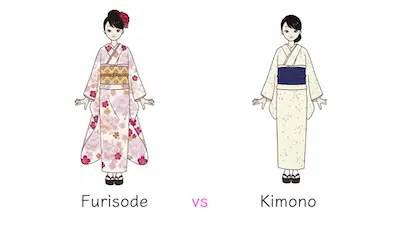
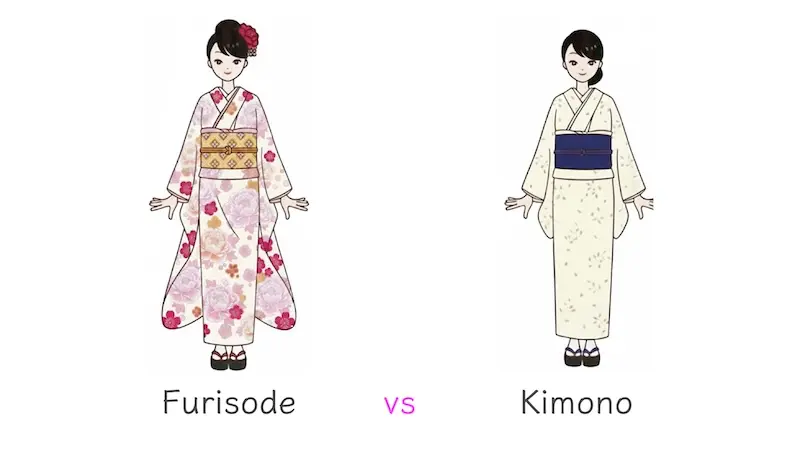
The main differences between a Furisode and a standard Kimono are:
- Sleeve Length
- Furisode: Extremely long.
- Standard Kimono: Short and easy to move in.
- Who Wears It
- Furisode: Only unmarried women.
- Standard Kimono: Everyone.
- Occasions
- Furisode: Formal events like Coming-of-Age ceremonies and weddings of relatives or friends.
- Standard Kimono: Weddings, funerals, tea ceremonies, etc.
- Accessories and Decorations
- Furisode: Hair accessories are large and colorful. Bags and sandals are also very fancy.
- Standard Kimono: Most items are simple. People choose them based on the occasion.
The Highest Rank of Formal Wear
Overall, Furisode is more gorgeous than a standard Kimono.
Many have feminine colors like pink or red.
In Japan, Furisode is the highest level of formal wear for unmarried women.
How to Prepare a Furisode?
There are three main ways to prepare a Furisode for the ceremony.
Families usually prepare these as a gift to celebrate their daughter’s adulthood.
1. Buying a Brand-New Furisode
Furisode are expensive. However, having your own favorite dress is exceptionally beautiful.
You can also choose the latest designs. Often, grandparents or parents buy this to celebrate the occasion.
2. “Mama-furi”: Inheriting a Mother’s Furisode
This style involves a daughter wearing her mother’s Furisode. “Mama-furi(ママ振り)” is short for “Mama’s Furisode.”
It is a tradition of passing a precious dress from mother to daughter.
Kimono patterns have trends. Therefore, a mother’s design is slightly different from modern ones.
Unlike renting, you won’t wear the same design as others.
Most people update the style by buying new accessories, like belts or hair ornaments.
This adds a personal and modern touch.
3. The Most Common “Full Set Rental”
Renting is the most popular choice. You can pick the latest patterns and accessories.
However, for popular designs, you must book 1 or 2 years in advance.
Renting is not cheap. It often costs 200,000 to over 300,000 yen for one use.
This price usually includes the rental, plus professional “Kitsuke” (dressing), makeup, and hairstyling.
Interestingly, for families with three sisters, buying one Furisode is often cheaper than renting three times!
“Mae-dori” : Capturing the Special Moment
Twenty is a once-in-a-lifetime age. Many people want to capture this moment in a beautiful photo.
Therefore, “Mae-dori” (前撮り) is very popular. This is a photo shoot taken before the actual ceremony day.
Some people even choose a different Furisode for the photo shoot and the ceremony.
Sometimes, the photography fee is included in a rental plan.
However, you must pay extra for the “album or digital data.”
Depending on the number of photos, an album alone can cost over 100,000 yen.
Still, for many families, these photos are a “lifelong treasure.”
Since they rarely wear Kimonos, families put a lot of heart into creating the perfect photo.
Extra: Coming-of-Age Ceremony for Men
For the ceremony, most men wear suits.
Many use the same suit they bought for job hunting or university entrance ceremonies.
Some choose to buy a new tie for the occasion.
Furthermore, almost no men do “Mae-dori” (pre-ceremony photo shoots).
Therefore, the experience of the Coming-of-Age Ceremony is completely different for men and women.
Why is it Called “Furisode”? (The Meaning of “Furu”)
The name “Furisode” comes from the Japanese verb “Furu” (振る).
It means “to swing” or “to wave.” In ancient Japan, people believed that swinging long sleeves had a mysterious power.
For example, waving sleeves was a ritual for “Yakuyoke” (厄除け).
It was used to drive away bad luck. Sleeves became long to protect young women from illness.
Also, in the past, women used their sleeves to send secret signals of love.
Waving sleeves side-to-side meant “I love you.” Waving them front-to-back meant “No.”
This is the origin of the modern Japanese romantic terms “Furu” (振る) and “Furareru” (振られる).
Today, “Furu” means to reject someone, and “Furareru” means to be rejected.
Japanese people still use these words every day in their love lives!
Summary
How was it? Japan’s Coming-of-Age Ceremony is more than just a party.
- It is a significant ritual to celebrate the milestone of age 20.
- The “Furisode” carries wishes for happiness and protection from bad luck.
- Behind its gorgeous appearance, there is deep love and careful preparation from the family.
When you understand these backgrounds, the sight of people in Furisode on the streets will look even more beautiful.
What kind of “coming-of-age” ceremonies do you have in your country? Please let me know!
【vs series】Japanese Language & Culture Deep Dive
- Vol. 1: Shinto Shrines vs. Buddhist Temples
- Vol. 2: Kimono vs. Yukata
- Vol. 3: Himeji Castle vs. Matsumoto Castle
- Vol. 4: Tokyo Tower vs. Tokyo Skytree
- Vol. 5: anata vs. ANATA(Hiragana vs. Katakana)
- Vol. 6: Furisode vs. Kimono
Explore the depth of Japanese through these comparisons!
Japanese of the Day / 今日の日本語
- Word:やくよけ (Yakuyoke ) – Warding off bad luck Meaning
- Meaning:A traditional Japanese ritual or charm used to drive away misfortune and pray for a safe, healthy life.
- Example:神社で 厄除けを しました。(Jinsha de yakuyoke o shimashita.)
(I went to a shrine to ward off bad luck.) - Fun Fact:It’s not just for when you feel unlucky.
People do it to ensure a fresh start and a happy future!ecific “unlucky years” in Japan.
◆ Would you like to talk about Japanese culture? ◆
In the Culture Course, you can learn to speak about Japanese culture with me.




日本の「成人式」とアメリカの「プロム」
日本では1月の第2月曜日に、「成人式」という大きな行事があります。
「成人式」大人になったことをお祝いする式典です。
これは、アメリカの高校生活の集大成である「プロム(Prom)」とよく似ています。
なぜなら、どちらも人生の重要な「節目」を祝う儀式だからです。
しかし、両者には興味深い違いもあります。
プロムは一般的に「カップル」で参加し、ダンスを楽しむ社交の場です。
一方で、日本の成人式は「地元の友人」と再会する同窓会のような側面もあります。
式典の後は、懐かしい友人たちとパーティーを開き、大人になったことを喜び合います。
成人は18歳。でも式典は20歳(はたち)?
2022年4月、日本の成人(成年)年齢は20歳から18歳へと引き下げられました。
これは、明治時代に20歳と定められてから、約140年間で初めて変更です。
単なるルール変更ではなく、OECD諸国の多くが採用する世界基準に合わせました。
そして、「若者の意見を国づくりに反映させようとする日本の変化」を示すものです。
これにより、18歳から以下のことができるようになりました。
- 男女ともに結婚できる年齢が18歳になった
- 選挙権が与えられた
- 親の同意なしでの契約(携帯電話、クレジットカード、賃貸契約など) など
しかし、成人が20歳の時と変わらないこともあります。
「お酒とタバコは20歳から」です。
お酒とタバコは国によって違います。ですので、20歳前後の方で日本へ来る際には、お気をつけくださいね。
どうして式典は20歳か
成人式は、2020年まではどこの自治体でも、20歳になる年度に開催されていました。
年度とは4月から翌3月までのことです。日本では、学校に通う際、4月から翌3月生まれの人が同じ学年です。
そのため、成人式は同窓会のような雰囲気になります。
しかし、2021年からも多くの自治体では、20歳になる年に式典を開催しています。
その理由は、2021年に、18〜20歳までの人たちを一斉に式典をやることが難しかったからです。
また、18歳は大学受験でとても忙しい時期というのもあります。そのため今でも20歳になる年度に開催されます。
振袖 vs 一般的な着物
現在の日本人は、普段の生活で着物を着る機会がほとんどありません。
しかし、成人式では多くの女性が特別な「振袖」を着ます。
一方で、男性の多くは「スーツ」を着用します。しかし、伝統的な「紋付袴(もんつきはかま)」を選ぶ人もいます。
振袖と着物の主な違いは、以下の通りです。
- 袖の長さ
- 振袖:非常に長い
- 着物:短く、動きやすいのが特徴
- 着用する人
- 振袖:未婚の女性だけ
- 着物:全ての人
- 着る場面
- 振袖:成人式のほか、親族や友人の結婚式などの正式な場所。(おめでたい席)
- 着物:冠婚葬祭、日常的なお茶会など
- 小物と装飾
- 振袖:髪飾りは非常に大きく華やかなものが多い。バッグや草履も華やか。
- 着物:シンプルなものが多い。場所によって選ぶ。
振袖は一般的な着物よりも全体的に華やかです。色もピンクや赤など女性らしい色合いが多いです。
また、振袖は「未婚女性の第一礼装」という最も高い格付けになっています。
振袖をどう準備する?
成人式に着る振袖の準備方法は、大きく分けて3つあります。
どれも家族が娘に成人のお祝いとして、用意します。
1. 自分だけの一着を「新しく購入する」
振袖は高価なものです。しかし自分のお気に入りの一着は格別の美しさです。
そして、最新の振袖を選ぶことができます。
この場合、祖父母や両親が、成人を祝いに準備することが多いです。
2. 母親の想いを受け継ぐ「ママフリ」
母親の振袖を娘が受け継ぐスタイルです。「ママフリ」とはママの振袖の略です。
母から娘へ。大切な振袖を譲り受けます。
着物の柄には流行があります。そのため、母の振袖の模様は今のものとは少し違います。
その分、レンタルとは違い、他の人と同じになることありません。
それでも、帯や髪飾りなどの小物を新しくし「今の流行」や自分らしさを取り入れます。
3. 最も一般的な「フルセットレンタル」
最も多くの人が利用するのがレンタルです。
最新の柄や小物を選ぶことができます。しかし、人気なものは、2〜1年前の予約が必要です。
レンタルといっても、1回の利用で20万円から30万円以上かかることも珍しくありません。
この価格には、振袖のレンタル代に加え、プロによる「着付け(Kitsuke)」「メイク」「ヘアセット」が含まれていることが多いです。
実は、3人姉妹の家庭では、1着購入した方が、毎回レンタルをするよりもお得だと言われています。
20歳という特別な瞬間を写真に残す「前撮り」
20歳は人生に一度しかない大切な瞬間です。それを美しい姿で写真に残したいと願う人は多いです。
そのため、成人式の当日ではなく、あらかじめ撮影を行う「前撮り」がとても人気です。
レンタル着物をする人は、「前撮り」と「成人式当日」と違う着物を選ぶ人もいます。
撮影料そのものはプランに含まれていることもあります。しかし「アルバムや写真データ」の購入費用が別途必要になります。
写真の枚数によっては、アルバム代だけで10万円以上かかることも珍しくありません。
しかし、多くの家族にとって、この美しい晴れ姿は「一生の宝物」です。
普段は着物を着ない分、最高の一枚を形にするために、多くの家族が心を込めて準備を進めます。
番外編:男性の成人式
男性の成人式の装いは、多くの人がスーツです。
スーツは就職や、大学等の入学式で準備するため、同じものを着用する人もいます。
ネクタイは新しいものをと考える人もいます。
そして、前撮りをする人はほぼいません。
ですので、成人式は男性と女性とでは、全く違うのです。
なぜ「振袖」という名前なの?(「振る」の由来)
「振袖」という名前の由来は、動詞の「振る(Furu)」にあります。
実は、昔の日本では、長い袖を「振る」アクションには不思議な力があると考えられていました。
例えば、袖を振ることで悪い運気を追い払う「厄除け」の意味があります。
そして、袖が長くなった理由に「年ごろの娘を病から守る厄よけとして」などがあります。
また、昔は言葉の代わりに袖を振ることで、相手に想いを伝える合図としても使われていました。
「振る」「振られる」は、昔、女性が袖を左右に振ると「好き」、前後には振ると「嫌い」という意思表示に使われました。
そこから、現代の恋愛言葉の語源になったとされます。
まとめ
いかがでしたか? 日本の成人式は、単なるパーティーではありません。
- 20歳という人生の節目を祝う大切な儀式であること。
- 「振袖」には、厄除けや幸せへの願いが込められていること。
- そして、その華やかな姿を支える家族の深い愛情と準備があること。
これらの背景を知ると、街で見かける振袖姿がより一層、輝いて見えるはずです。
あなたの国には、どのような「大人の仲間入り」の行事がありますか?ぜひ教えてくださいね。
【vsシリーズ】日本語・日本文化を深掘り!
- 第1弾: 神社 vs 寺院
- 第2弾: 着物 vs 浴衣
- 第3弾: 姫路城 vs 松本城
- 第4弾: 東京タワー vs スカイツリー
- 第5弾: あなた vs アナタ
- 第6弾: 振袖 vs 着物
これらの比較を通じて、日本語の奥深さお楽しみください。