大掃除(Osouji) – Discover Japanese Year-End Cleaning
What Is “大掃除(Osouji)”?
“大掃除(Osouji)” means a big end-of-year cleaning in Japan. It is a long tradition.
People clean their homes to remove dust and dirt from the past year.
This helps them welcome the New Year with a fresh feeling. Many families feel refreshed when their homes are clean.
It also prepares the space for 年神様(Toshigami-sama),” the New Year deity who brings health and happiness.
The History and Timing of Osouji
The Origin: “すす払い(Susuharai)”
The origin of 大掃除(Osouji)comes from “すす払い(Susuharai), ” which means “sweeping away soot.”
People cleaned dust and soot from homes, shrines, and temples.
The custom began in the Imperial Court. Later, it spread to towns and became a common year-end tradition.
At Zenkoji Temple in Nagano, Susuharai is held every year on December 29.
It is well known as a traditional year-end event.
At Zenkoji Temple in Nagano, Susuharai is held every year on December 29. It is well known as a traditional year-end event.
December 13: The Traditional Date
In the past, December 13 was the official day for すす払い(Susuharai).
It marked the start of New Year preparations. Many temples still follow this tradition.
But for most households, this strict date is no longer observed.
Modern Flexibility
Today, families choose the time that works best for them. Some start in early December.
And others clean right after Christmas. Then, some finish everything at the very end of the month.
大掃除(Osouji)can happen at any time in December, depending on the household schedule.
Osoji Tasks and Traditional Japanese Cleaning Tools
Main Areas to Clean
- Entrance(玄関 genkan): Sweep the floor, wipe the door, and remove dust from shelves. A clean entrance creates a welcoming atmosphere.
- Kitchen: Clean the stovetop, sink, microwave, and fridge. And wipe cabinets and wash cooking tools.
- Bathroom: Wash the bathtub, scrub walls, remove mold, and clean the drain.
- Living Room: Vacuum floors, wipe shelves, clean windows, and wash curtains. The living room gathers the most dust.
Traditional Japanese Cleaning Tools
Japanese 大掃除(Osouji)often uses simple, traditional tools. They work well and are easy to handle.
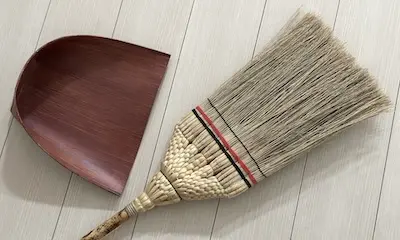
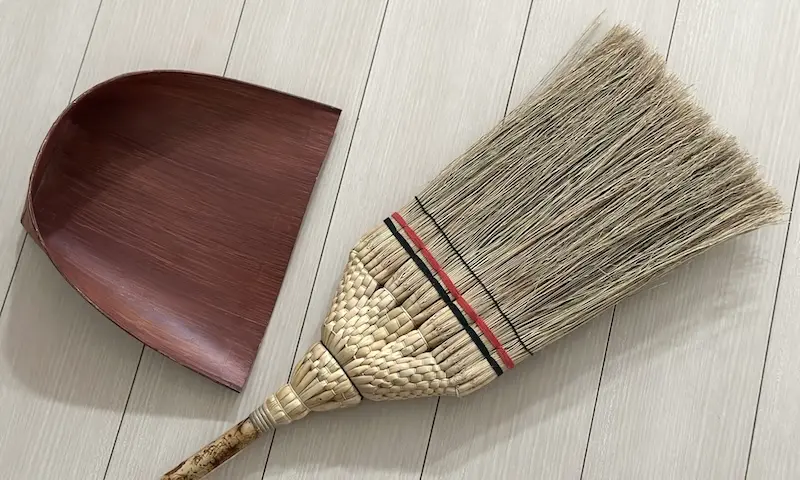
- ほうき(Houki): Used in tatami rooms and entrances. Cleans quietly.
棕櫚ほうき (Shuro Houki) is popular for collecting dust. - ちりとり(Chiritori / Dustpan): Used with a broom to collect dust and debris. Lightweight and easy to handle.
- ぞうきん(Zōkin / Cleaning Cloth): Wringed with water for floors, shelves, and windows. Often made from old towels.
- たわし(Tawashi): Brush-like tool made of strong fibers.
亀の子たわし (Kamenoko Tawashi) is made from natural materials and trusted for over 100 years. - はたき(Hataki / Dust Duster): Removes dust from shelves or high places with a light swipe.
These tools reflect the Japanese idea of “simple but effective” cleaning.
Japanese Culture and Ōsoji
Preparing for the New Year
In Japan, people prepare for the New Year to welcome 年神様(Toshigami-sama).
Cleaning the home helps reset the mind and space. It is more than just cleaning; it is a mental and spiritual preparation.
Reflecting on the Year
大掃除(Osouji) also gives people a chance to reflect on the past year.
While organizing, families think, “We accomplished a lot this year.” Cleaning together creates a warm and meaningful family experience.
Viewed from Abroad
Americans have spring cleaning, but in Japan, Osouji happens at year-end.
It is a special cultural event to prepare for the New Year.
This makes it easy for foreigners to understand Japanese year-end traditions.
Summary
大掃除(Osouji) is more than cleaning. It is a cultural tradition that refreshes both home and mind.
The practice comes from the old custom of すす払い(Susuharai)and continues today.
By cleaning step by step and using traditional tools, anyone can start the New Year with a clear mind and a clean home.
I hope this article helps you better understand 大掃除(Osouji) in Japan.
Next time, I will introduce a traditional year-end custom. Stay tuned!
【vs series】Japanese Language & Culture Deep Dive
- Vol. 1: Shinto Shrines vs. Buddhist Temples
- Vol. 2: Kimono vs. Yukata
- Vol. 3: Himeji Castle vs. Matsumoto Castle
- Vol. 4: Tokyo Tower vs. Tokyo Skytree
- Vol. 5: anata vs. ANATA(Hiragana vs. Katakana)
Explore the depth of Japanese through these comparisons!
Japanese of the Day / 今日の日本語
- Word:道具(どうぐ / dōgu) – tool
- Meaning:A tool or implement used to do a specific task. In Japan, 道具(dōgu)are often simple, practical, and long-lasting.
- Example:日本の道具はとても便利です。(にほんのどうぐはとてもべんりです。)
(Japanese tools are very practical and useful.) - Fun Fact:Some Japanese 道具 are popular overseas.
For example, たわし(tawashi) brushes and ほうき(houki) brooms are valued by people abroad for their quality and simplicity.
◆ Would you like to talk about Japanese culture? ◆
In the Culture Course, you can learn to speak about Japanese culture with me.
大掃除とは?日本の年末に行う特別な習慣
大掃除(おおそうじ)は、日本で12月に行われる年末の習慣です。
1年の終わりに、家のすみずみまできれいにします。そして、新しい年を気持ちよく迎える準備をします。
ふだんの掃除では後回しにしてしまう場所も、この時期にしっかり整えます。
大掃除には「一年の区切り」という意味があります。家を整えることで心も落ち着き、気持ちをリセットできます。
また、家族で協力して行うことで、年末らしい温かい雰囲気を感じられます。
大掃除の歴史と時期
すす払いの起源
大掃除の始まりは「すす払い(すすはらい)」と呼ばれる行事です。
これは、家や神社にたまったすすやほこりを落とすために行われました。
古くは宮中で行われ、江戸時代には町全体に広がり、年末の大切な行事となりました。
長野の善光寺でも毎年12月29日にすす払いが行われ、伝統的な年末行事としてよく知られています。
12月13日は正式な「すす払いの日」
昔は、12月13日が正式なすす払いの日でした。
この日からお正月の準備を始めるとされていたため、まず家を清めることが必要でした。
神社では今もこの日にすす払いを行うところがありますが、一般家庭ではこの習慣は簡略化されています。
現代の大掃除は柔軟なスタイル
現代では、大掃除を行う日程は家庭によってさまざまです。
12月の初めから少しずつ進める人がいます。そして、クリスマス後に一気に取りかかる家庭もあります。
また、年末ぎりぎりにまとめて行う家庭もあります。
このように現代の大掃除は、12月のどの時期に行っても問題ない柔軟な行事になっています。
家族の予定やライフスタイルに合わせて進められる点が特徴です。
大掃除の内容と日本の掃除道具
よく掃除する場所(簡潔に)
大掃除では、ふだんの掃除で手が届きにくい場所を中心にきれいにします。
- 玄関:ほこりを落とし、靴箱や扉もきれいにします。
- 窓・網戸:水拭きをすると光が入りやすくなり、部屋が明るくなります。
- キッチン:換気扇やコンロなど、油汚れが多い場所を重点的に掃除します。
- 浴室・トイレ:水あかやカビを落とし、清潔に整えます。
- 家具の裏・高い場所:ほこりがたまりやすいため、年末に掃除するのに適しています。
こうした場所を整えることで家全体がすっきりします。
日本ならではの掃除道具
日本には、大掃除でよく使われる伝統的な掃除道具があります。
どれもシンプルで扱いやすく、日本の生活文化をよく表しています。
- ほうき:畳の部屋や玄関に使われます。静かに掃除ができ、「棕櫚(しゅろ)ほうき」はほこりを集めやすいことで人気です。
- ちりとり:ほうきと一緒に使うもので、掃いたゴミやほこりを集めて捨てる道具です。
- ぞうきん:水でしぼって使う掃除布です。床や棚、窓など幅広い場所に使えます。古いタオルを再利用して作る家庭も多いです。
- たわし:丈夫な繊維で作られたブラシのような道具です。「亀の子たわし」は高品質な天然素材と100年以上の歴史があり信頼されています。
- はたき:棚の上や高い場所のほこりを落とすのに便利な道具です。軽く払うだけでほこりが落ちます。
これらの掃除道具は素朴ですが、使い勝手がよく、日本らしい生活文化を感じられます。
日本文化としての大掃除
新しい年を迎える準備
日本では、「年神様(としがみさま)」という新しい年の神様を迎えるという考え方があります。
そのため、年末に家を清めることは、新年を迎える大切な準備です。
家をきれいにすると心も整い、清々しい気持ちで新しい年を迎えることができます。
一年を振り返る時間
大掃除をしていると、一年間の出来事を自然と思い出すことがあります。
物を整理しながら「今年もいろいろあったな」と振り返る人も多いです。
家族で協力して掃除をすることで、年末らしい温かい時間が生まれます。
海外から見た“大掃除”
アメリカには春に行う「スプリング・クリーニング」があります。
しかし、日本の大掃除は年末に行われ、新年を迎えるための特別な行事です。
そのため、日本の大掃除は「日本の新年文化を象徴する行事」として海外から注目されています。
日本の年末の雰囲気を知るうえで、大掃除はとてもわかりやすいテーマです。
まとめ
大掃除は、日本の年末を象徴する大切な習慣です。
家をきれいにするだけでなく、新しい年を迎える心の準備にもつながります。
歴史的な「すす払い」の習慣や、日本ならではの掃除道具には、日本の生活文化が色濃く表れています。
12月になると、多くの家庭で大掃除が始まります。この記事が、日本の大掃除を理解する手がかりになれば嬉しいです。
次回は、年末に行われる伝統行事をご紹介します。お楽しみに。
vsシリーズ】日本語・日本文化を深掘り!
- 第1弾: 神社 vs 寺院
- 第2弾: 着物 vs 浴衣
- 第3弾: 姫路城 vs 松本城
- 第4弾: 東京タワー vs スカイツリー
- 第5弾: あなた vs アナタ
これらの比較を通じて、日本語の奥深さお楽しみください。